Most people shopping an EOTech are not really choosing between EOTech and everyone else. They have already decided they want the wide window and the ring-and-dot reticle, and the actual question is which EOTech. The 512.A65 is the answer for shooters who do not need night vision.
This review covers what the 512 is, where it differs from the EXPS3 in ways you will feel, and what the durability record actually says, including the era-specific issue worth knowing about before you buy one used.
EOTech 512.A65 Review
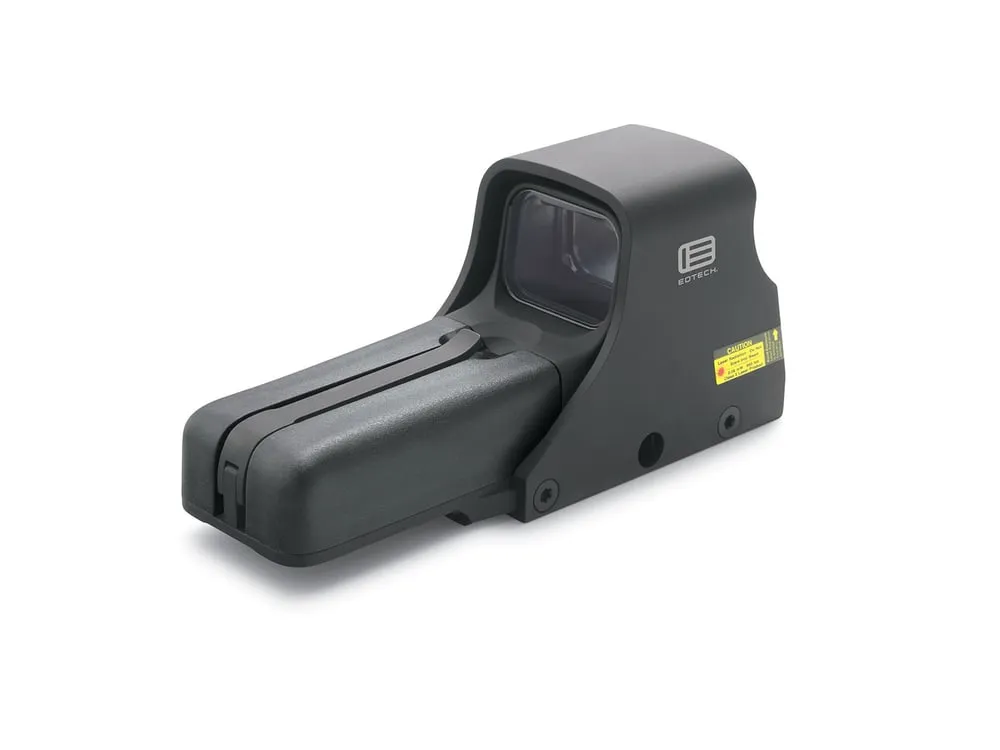
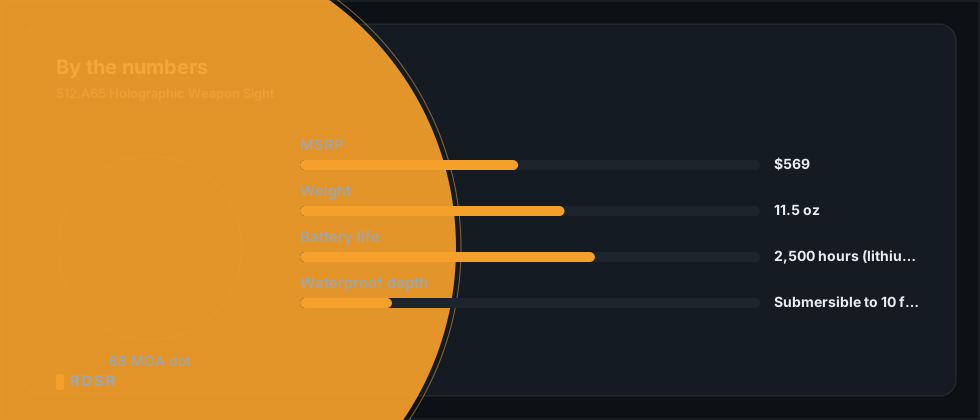
The 512.A65 is a 1x holographic weapon sight measuring 5.6 in x 2.0 in x 2.5 in and weighing 11.5 oz. It runs on two AA batteries, lithium or alkaline, rated for 2,500 hours of continuous use on lithium or 2,200 hours on alkaline at brightness setting 12. The reticle combines a 68 MOA outer ring with a 1 MOA aiming dot, adjustable in half-MOA clicks, across 20 brightness settings. It mounts to a 1-inch Weaver or MIL-STD-1913 Picatinny rail and is submersible to 10 feet. EOTech lists an MSRP of $569.
Holographic sights work differently from the LED reflex sights that dominate the market, and that difference is why the reticle looks and behaves the way it does. Our EXPS3 review walks through how the holographic engine works and why the dot stays 1 MOA behind a magnifier. Everything in that explanation applies here: the 512 uses the same underlying technology, in a bigger housing with a different power source.
512 or EXPS3: which EOTech do you buy?
There are four real differences, and none of them is reticle quality.
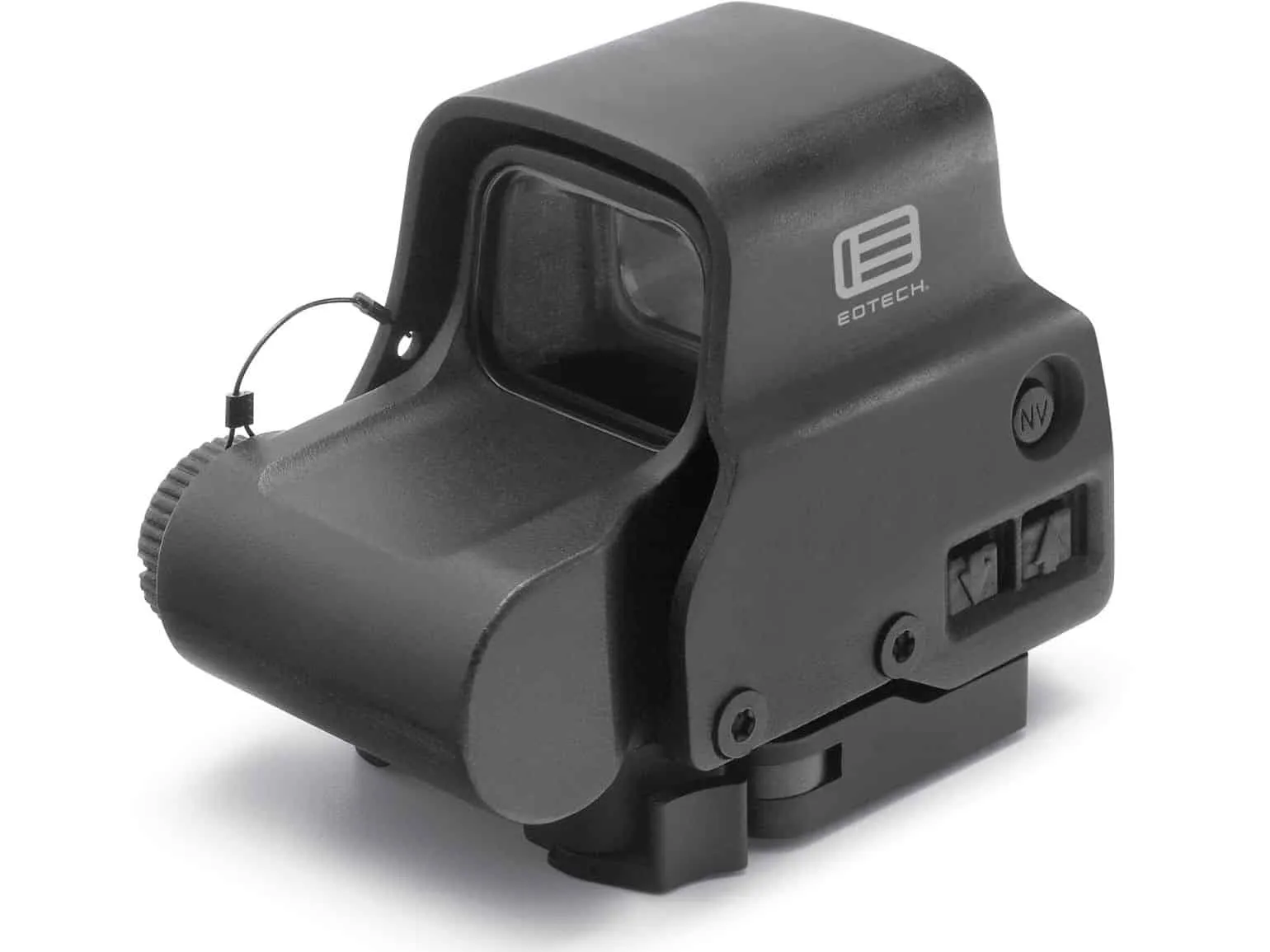
Batteries. The 512 takes two AA cells, housed in the compartment that extends forward under the hood. The EXPS3 takes a single A 3-volt lithium cell far larger than a coin cell, around 1300 to 1500 mAh. Its high capacity suits holographic and larger tube optics, at the cost of bulk.Full comparison → tucked into the body. AAs are cheaper and available anywhere; CR123As are more compact and hold up better in the cold. If you resupply from a grocery store rather than a gun store, the 512 wins this one outright.
Night vision. The 512’s 20 brightness settings are all daylight settings. The EXPS3 adds 10 night-vision-compatible settings on top of its 20 daylight ones. If a night-vision device is going behind or in front of this optic, the 512 is simply the wrong sight, and no amount of saved money changes that.
Mounting. The 512 clamps down with a thumbscrew. The EXPS3 uses a quick-detach lever, so it comes off the rail in a second and returns close to zero. That matters if you swap optics between rifles or pull the sight for a case. If the optic goes on once and stays there, the thumbscrew is fine.
Water. The 512 is rated submersible to 10 feet. The EXPS3 carries an An IEC 60529 rating for continuous immersion deeper than 1 meter, to a depth and time the manufacturer specifies and tests. The X means dust was not separately rated.Full comparison → rating to 33 feet. Both survive rain and a dunked rifle; only one is rated for a serious dive.
Price. Checked in August 2026, the 512.A65 was selling around $470 at major retailers against its $569 MSRP. The EXPS3 sits above it at both MSRP and street price, but discounting narrows that gap more than the “budget EOTech” reputation implies. Price both before you assume the 512 is half the money, because it is not.
Put simply: the EXPS3 is the duty and night-vision answer, and the 512 is the daylight answer. Buying the 512 to save money and then wishing you had NV settings is the one way to get this decision wrong.
Top Features of the EOTech 512.A65
Design
The 512.A65 houses EOTech’s holographic engine in an aluminum body with a protective hood over the window. Instead of a small round tube, you get a wide rectangular viewing window, which most shooters find faster to pick up than a narrow tube sight, especially while moving or shooting with both eyes open.
At 11.5 oz it is noticeably heavier than a modern LED reflex sight, and the AA compartment adds length out front. That is the cost of the holographic engine and the AA power source. The unit is rated submersible to 10 feet.
Reticle
The reticle pairs a 68 MOA circle with a 1 MOA aiming dot in a single holographic image. The large ring is built for fast acquisition up close, while the 1 MOA dot inside it lets you hold precisely at distance. Because both elements come from the same holographic recording, they stay locked together rather than requiring a mode switch.
Twenty brightness settings cover everything from a dim indoor range to bright sunlight. There are no night-vision settings, which is the single biggest functional difference between this sight and the EXPS3.
Operation
Brightness runs off up and down arrow buttons on the rear face of the housing, and the sight holds your last setting. There is no auto-brightness and no motion-sensing sleep mode, so power management is manual: switch it off when the rifle goes back in the safe.
The rear button placement is also the quickest way to identify what you are looking at in a photo. Side-mounted buttons mean you are looking at a 518 or 558, not a 512.
Reliability standing
EOTech 512.A65 Holographic Weapon Sight
Low confidence based on 6 sources, 1 first-hand.
- Battery
- 2x AA: 2,500 continuous hours (lithium) / 2,200 hours (alkaline) at brightness setting 12, room temperature
What those tests were
- water dunk (different EOTech model): pass . Not the 512: Pew Pew Tactical (2020) gave an EOTech EXPS3-0 a brief dunk with four other optics, mainly to check waterproofing, and it survived.
- thermal shock (different EOTech model): pass . Not the 512: Pew Pew Tactical cooled an EXPS3-0 with liquid CO2 to about -30 to -40F, then heated it with a torch to about 130F, and reported no thermal drift in its before and after groups. The testers note their readings were probably surface temperatures, far short of a military chamber test.
- drop onto rock from about 5 ft (different EOTech model): pass . Not the 512: dropped onto a large rock from about 5 ft, the EXPS3-0's shroud took the impact with some deformation and scuffs, and it held zero with no detectable point-of-impact shift.
- ballistic damage (different EOTech model): partial . Not the 512: the EXPS3-0 survived .22 rat shot, .410 birdshot and 12-gauge birdshot; a .22 LR Mini-Mag round killed it, though the hologram was still on and barely visible through a splintered rear lens and a severely limited field of view.
Aggregated from others' first-hand testing, not our own: this standing deliberately reaches past any one shooter's round count. We surface a sourced reputation tier rather than inventing a score the evidence cannot support.
Full reliability data →Mounting
The 512.A65 clamps to a standard 1-inch Weaver or MIL-STD-1913 Picatinny rail, the common footprint for AR-platform rifles and carbines. It also pairs with EOTech’s G33 magnifier, which mounts behind the sight on the same rail and flips to the side for a quick switch between 1x and 3x.
In the box
- EOTech 512.A65 Holographic Weapon Sight
- 2x AA batteries
- Battery cap tool
- User manual
Warranty
Current production EOTech holographic sights, including the 512.A65, carry the company’s 10-year Prestige Warranty against defects in materials and workmanship, running from the date of purchase or manufacture. EOTech repairs or replaces covered products at no charge for the first five years, then evaluates and repairs defects for a bench fee in years five through ten.
Warranty standing
EOTech warranty
10-yr housing, 10-yr electronics, transferable
- Housing
- 10 yrs
- Electronics
- 10 yrs
- Transferable
- Yes
- Receipt required
- No
- Registration
- No
- Support
- active
EOTECH's Prestige Warranty has no personal-use or professional-use tier: it warrants the product against manufacturing defects in material and workmanship under normal use, and the published terms do not mention professional use. The warranty does not apply to international military and government end users, who receive formal warranty statements from their International Business Development Manager for the country of end use, and EOTECH products bought from a non-authorized EOTECH international reseller are considered void of warranty.
What testers and records report
We have not run the 512.A65 ourselves, and we found no first-hand durability test of the 512 itself. Everything below comes from named third-party testing of a related EOTech and from legal and agency records, and we say which is which.
A related EOTech’s torture test. Pew Pew Tactical’s informal 2020 torture test gave an EOTech EXPS3-0 a 5-foot drop onto rock, a brief dunk in water, and a freeze and heat cycle from roughly -30F to 130F, and reported no detectable zero shift. That was a different model, so it says something about EOTech’s housings in general rather than about the 512 specifically. It still counts for something on the thermal question, which is where this gets complicated.
Cold-weather zero shift, and the 2015 settlement. This is the model line’s documented weak point, and the dates matter. On November 25, 2015, the U.S. Attorney’s Office for the Southern District of New York announced that it had filed and simultaneously settled a civil False Claims Act suit against L-3 Communications EOTech, its parent L-3 Communications Corporation, and EOTech’s president Paul Mangano. The complaint alleged that EOTech sold holographic weapon sights to the Department of Defense, the Department of Homeland Security and the FBI while the defendants knew the sights failed to perform as represented in cold temperatures and humid environments. EOTech and L-3 agreed to pay $25.6 million, and all three defendants made admissions of conduct alleged in the complaint. The release names no sight model. FBI testing reported in Denver in January 2016 found about 12 inches of drift at 100 yards at 32 degrees and 20 inches at 5 degrees, without naming the models tested. The later consumer class-action settlement names the 512 among the covered models, for sights manufactured from January 2005 to November 2016, with refunds up to the model’s MSRP plus $15 for shipping.
Frame that as settled history rather than a live warning about a sight bought new. The case concerned production from a decade ago, and the company left L-3 entirely when L3Harris completed the sale of its EOTech business to American Holoptics on July 31, 2020. The EXPS3-0 test above turned up no thermal drift, though on a different model and with surface temperature readings. We found no EOTech statement tying a fix to a serial range or production cutoff, so on the used market the date code is the thing you can check against the settlement’s January 2005 to November 2016 window. If you buy secondhand, check it, and confirm your zero in genuinely cold weather before you rely on the sight for anything serious.
Battery life. We found no measured runtime from a named tester. EOTech’s 2,500-hour rating is at setting 12, and a sight left on a brighter daylight setting will not see anything close to that. The 512 has no motion-sensing wake, so the switch is your battery management.
Pros & Cons
Pros
- Same 68 MOA ring and 1 MOA dot holographic reticle as EOTech's pricier EXPS models, at a lower price
- Runs on two common AA batteries, easy to source and swap in the field instead of a specialty cell
- A related EOTech, the EXPS3-0, held zero through an informal drop, dunk and freeze test
- Compatible with EOTech's G33 magnifier for a quick switch to 3x magnification
- Wide rectangular window that is fast to pick up with both eyes open compared to a small tube red dot
- Backed by EOTech's 10-year limited warranty on current production
Cons
- No night-vision-compatible brightness settings, so it is the wrong EOTech for anyone running an NVG
- Fixed thumbscrew clamp rather than the EXPS-series quick-detach lever, so it is slower to pull off a rail
- Heavier and bulkier than most modern LED reflex sights at 11.5 oz
- No shake-awake or auto-sleep, so the sight has to be switched off manually to save the battery
- Production from before the 2015 thermal-drift settlement carries a documented cold-weather zero-shift defect, which matters on the used market
Conclusion
The 512.A65 earns its place by being the version of an EOTech that most shooters actually need. You get the wide window, the 68 MOA ring, the 1 MOA dot, and a design with a long service record, powered by batteries you already own. The things it lacks are specific and easy to check against your own use: night-vision settings, a quick-detach lever, and a deep submersion rating.
If any of those three is on your list, buy the EXPS3 instead. If none of them is, the 512 is the better purchase, and the money you save covers a magnifier or a case of ammo. Buying used is the one situation that calls for extra care, and a date code check handles it.
Alternative Sight Options
EOTech EXPS3 is the direct step up and the sight this review is really measured against. Same holographic reticle concept and the same 68 MOA ring with a 1 MOA dot, but with a CR123A engine, 10 night-vision brightness settings, a quick-detach lever, an IPX8 rating to 33 feet, and a shorter, more compact body. It costs more. Buy it if you run night vision, swap optics between rifles, or want the toughest An optic's Ingress Protection (IP) code from IEC 60529: the first digit rates dust (0 to 6), the second rates water (0 to 8). A digit shown as X was simply not tested.Full comparison → in the line.
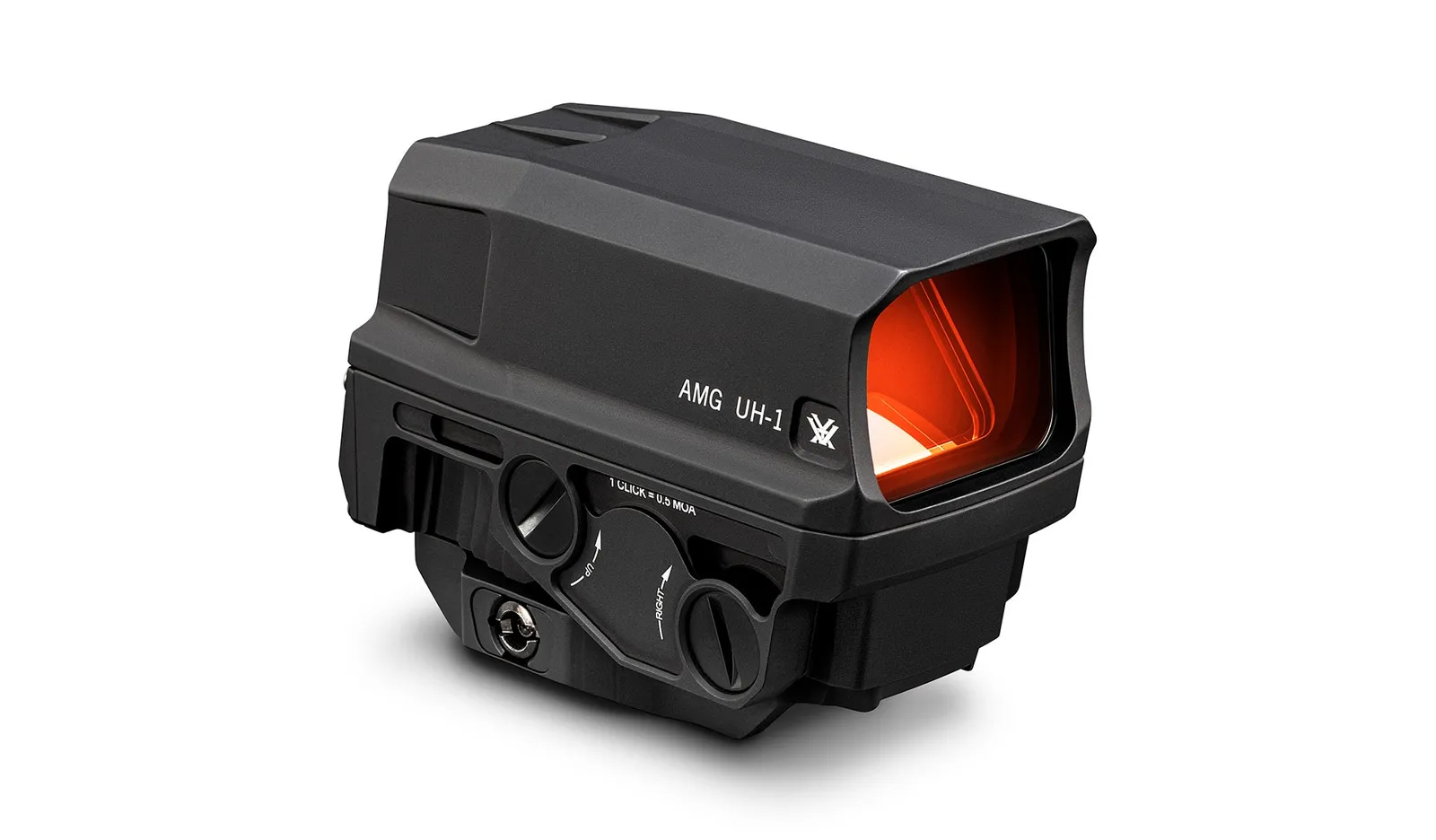
Vortex AMG UH-1 Gen II is the only genuine holographic alternative from another brand in our published reviews. It is a true holographic sight rather than an LED reflex, so the form factor matches, and it brings a distinctive segmented-circle reticle and a rechargeable battery. It is the most expensive of the three, so it is a competitor to the EXPS3 more than to the 512, but it belongs on the list for anyone who wants holographic and does not want EOTech.
Tube red dots and prism sights sit in a different category and are not substitutes here. If you are cross-shopping those, you have not actually decided you want a holographic sight yet, and that is a different decision to make first.