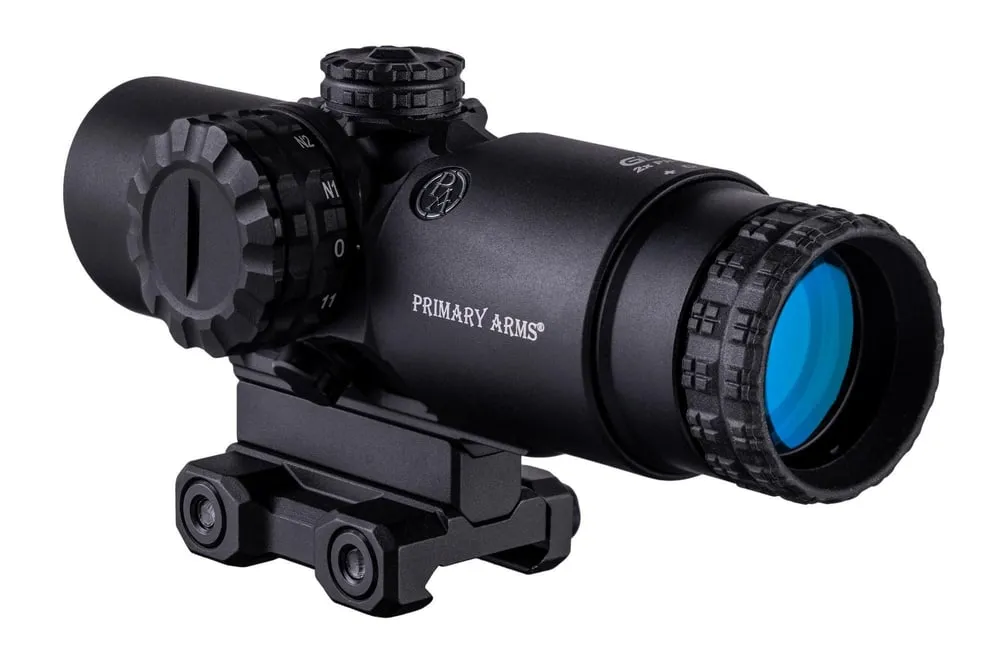
Looking for a fixed-power optic that splits the difference between a red dot’s speed and a scope’s precision? The Primary Arms GLx 2X Prism Scope with the ACSS CQB-M5 5.56 reticle is built for exactly that gap. It is a 2X prism sight aimed at AR-pattern rifles running 5.56 NATO, 5.45x39mm, 6.8 SPC, 6.5 Grendel, or select .308 Winchester loads, and it leans on Primary Arms’ ACSS reticle system to pack ranging and holdover information into a single glass-etched sight picture.
One thing to settle up front: we have not tested this optic ourselves. Every observation below is attributed to a named outlet that did handle it, or to owner reports we found in public forums. Where the evidence is thin or contested, we say so instead of filling the gap.
This review walks through the design, the reticle, how the illumination and turrets operate, and how the scope mounts to a rifle. We also cover where the GLx line sits relative to Primary Arms’ cheaper SLx MicroPrisms, then close with an honest read on where the GLx 2X fits and where the evidence runs thin.
Where the GLx 2X sits in the Primary Arms lineup
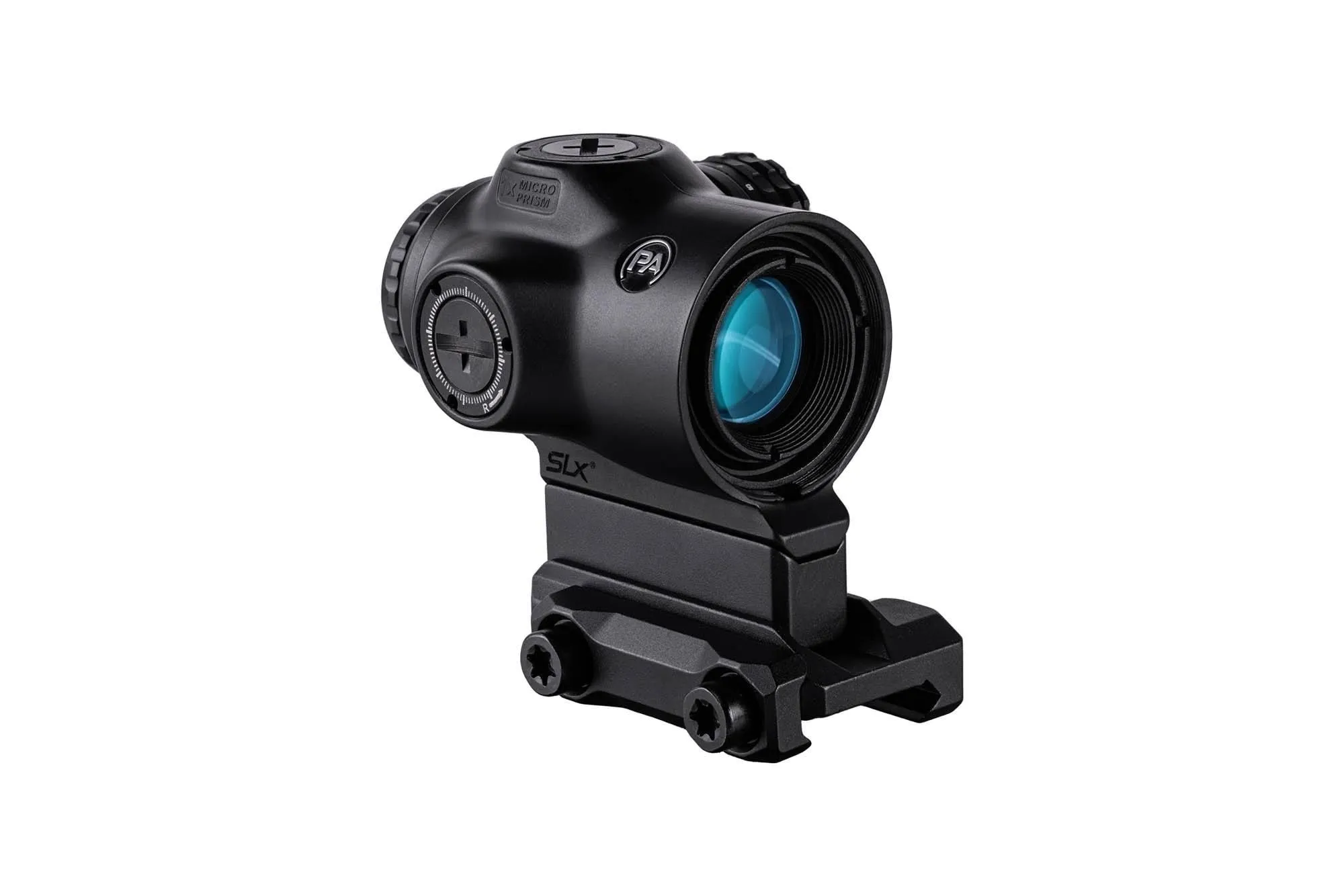
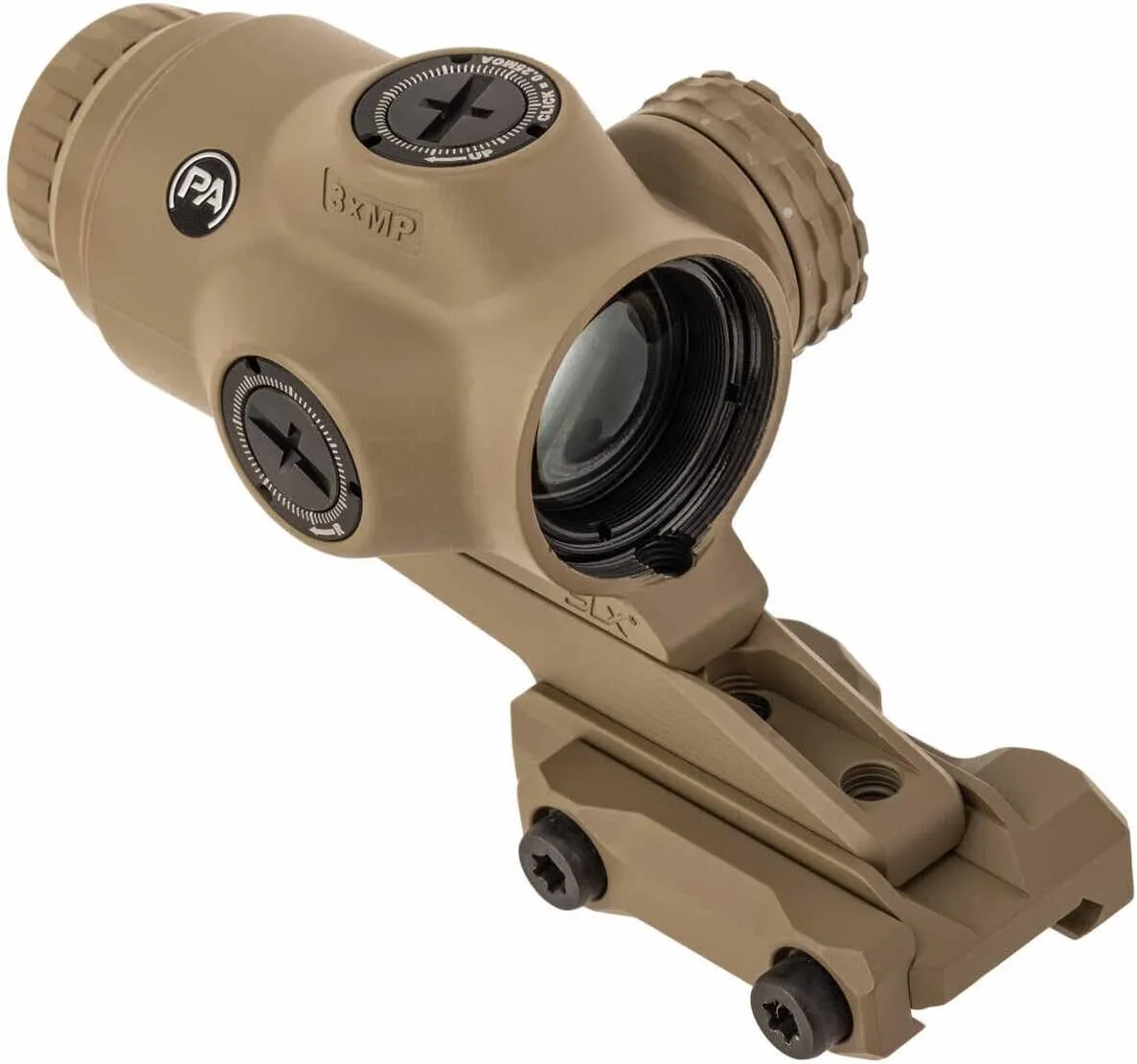
Primary Arms splits its optics into tiers, and the sub-line matters more than the magnification number here. SLx is the value tier: the SLx 1X MicroPrism and SLx 3X MicroPrism are tiny, lightweight, dedicated micro-prisms built to a price, and they are the two prisms already reviewed on this site. GLx is the step above, with better glass, more refined turret and illumination hardware, and a correspondingly higher cost of entry.
The GLx 2X is not a bigger SLx MicroPrism. It is a full-size prism scope in a different chassis, 5.3 inches long and 11.0 oz against the SLx 1X MicroPrism’s 2.48 inches and 7.6 oz, and it mounts on a Trijicon Mini-ACOG pattern rather than the MicroPrism’s compact Picatinny riser. Its 2X magnification also lands between the two published SLx reviews, which is the practical reason to consider it: 1X keeps both-eyes-open speed but gives you nothing for target identification, 3X starts to feel narrow indoors, and 2X is the compromise a lot of CQB-focused builders actually want.
Primary Arms GLx 2X Prism Scope Review
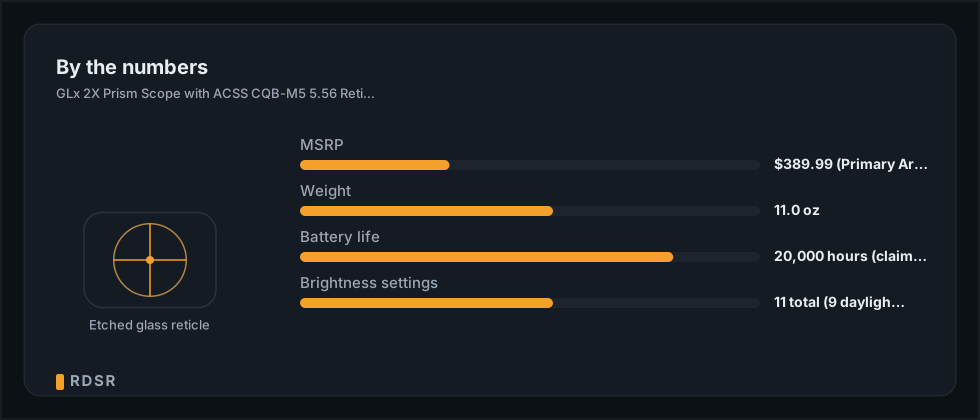
The Primary Arms GLx 2X Prism Scope is a fixed 2X magnification prism optic weighing 11.0 oz with a 5.3-inch body length, a 3.5-inch eye relief, and a 12mm exit pupil. It runs the ACSS CQB-M5 5.56 reticle, a glass-etched design combining a fast horseshoe-chevron aiming point with bullet drop compensation (BDC) holdovers, auto-ranging stadia lines, and moving-target leads calibrated out to 500 yards. Illumination comes from a single A 3-volt lithium coin cell, 20mm across, and the most common red dot battery (about 210 to 240 mAh). Stocked almost everywhere, so a field swap is easy.Full comparison → battery rated for up to 20,000 hours at a medium setting through Primary Arms’ AUTOLIVE motion activation. Turrets adjust in 1/4 MOA clicks across 40 MOA of total windage and elevation travel. Primary Arms’ list price was $389.99 when we checked on August 6, 2026, and retail listings elsewhere sat somewhat below that, so treat the figure as a ceiling rather than what you will actually pay.
Primary Arms built its reputation on delivering ACOG-style reticle features at a fraction of the price of the optics that inspired them, and the GLx 2X is a good example of that strategy. It targets shooters who want more precision and holdover reference than a plain red dot offers, without stepping up to the size, weight, or cost of a true magnified rifle scope.
Top Features
Design
The GLx 2X is a compact prism scope, 5.3 inches long and 11.0 oz, small enough to ride an AR-15 upper without adding the bulk of a variable-power scope. Primary Arms markets the housing as fog resistant, An optic's Ingress Protection (IP) code from IEC 60529: the first digit rates dust (0 to 6), the second rates water (0 to 8). A digit shown as X was simply not tested.Full comparison →, and shockproof, though the company has not published an IPX rating or a MIL-STD shock spec to quantify those claims, and neither American Rifleman nor AmmoLand performed destructive drop or water testing on the unit they reviewed.
The scope has an adjustable diopter, a feature American Rifleman called out as unusual at this price point, letting the shooter fine-tune reticle focus to their own eye rather than relying on a fixed setting.
Reticle
The ACSS CQB-M5 5.56 reticle is the headline feature. It is glass-etched rather than purely LED-projected, so the horseshoe-chevron aiming point, BDC holdovers, and ranging stadia remain visible even without illumination, whether that is a dead battery or a shooter who simply prefers an unlit sight picture. That is a meaningful reliability plus: an LED failure degrades the optic instead of blinding it.
The illumination itself has a documented limitation. American Rifleman reported the lit reticle could wash out against lighter backdrops in bright daylight, even at the highest of the 11 brightness settings (9 daylight, 2 night vision compatible). Because the etched reticle stays visible in black regardless, that washout is an illumination shortfall rather than a total loss of aiming reference.
Operation
Windage and elevation adjust in 1/4 MOA clicks across 40 MOA of total travel, and AmmoLand described the turrets as crisp and tactile with no mush or slop, a positive sign of mechanical build quality from a reviewer who mounted the scope as a primary rifle optic.
Illumination is handled by Primary Arms’ AUTOLIVE motion activation rather than a simple on/off switch. AmmoLand reported the scope powers the reticle down after about three minutes of stillness and needs a moderately abrupt movement to wake back up, a design meant to stretch the CR2032’s rated 20,000-hour life without demanding the shooter remember to shut it off manually. That runtime figure is Primary Arms’ own claim; no outlet we found independently measured battery life on this scope.
Reliability standing
Primary Arms GLx 2X Prism Scope with ACSS CQB-M5 5.56 Reticle
Low confidence based on 6 sources, 5 first-hand.
- Battery
- CR2032: 20,000 hours at medium illumination setting via AUTOLIVE motion-activation
- Warranty
- Limited Lifetime Warranty covering manufacturing defects and materials, transferable to non-first owners, applicable to units purchased on or after January 1, 2021.
What those test was
- field handling / turret feel: pass . AmmoLand reported windage and elevation turrets were crisp with no mush or slop, a positive mechanical QC signal from hands-on use as a primary rifle optic.
Aggregated from others' first-hand testing, not our own: this standing deliberately reaches past any one shooter's round count. We surface a sourced reputation tier rather than inventing a score the evidence cannot support.
Full reliability data →Mounting
The GLx 2X mounts using a Trijicon Mini-ACOG-compatible pattern rather than a red dot footprint like the RMR. It ships with the mount pre-attached along with three additional risers of different heights, so buyers can dial in cheek weld and co-witness height without sourcing separate mounting hardware. AmmoLand noted the mount secures with two large torx bolts, straightforward to install and remove for cleaning or storage.
Details
Included with your purchase:
- Primary Arms GLx 2X Prism Scope
- Pre-attached Mini-ACOG-pattern mount
- Three additional risers (different heights)
- CR2032 battery (installed)
Warranty
Primary Arms backs the GLx 2X with a Limited Lifetime Warranty covering manufacturing defects and materials. The warranty is transferable to buyers beyond the original owner and applies to units purchased on or after January 1, 2021.
Warranty standing
Primary Arms warranty
Lifetime housing, lifetime electronics, transferable
- Housing
- Lifetime
- Electronics
- Lifetime
- Transferable
- Yes
- Receipt required
- No
- Registration
- No
- Support
- active
Customer Feedback
Hands-on coverage of the GLx 2X is generally positive on the mechanical and optical fundamentals, with the reticle washout and one unresolved warranty report standing out as the honest weak points.
Reticle and construction: American Rifleman and AmmoLand both praised the ACSS CQB-M5 reticle’s speed and built-in holdover reference. American Rifleman also singled out the adjustable diopter as an unusually premium touch for a scope in this price range.
Illumination: The recurring criticism is that the lit reticle can wash out on bright, light-colored backgrounds even at maximum brightness, a limitation American Rifleman called out directly.
Quality control: One AR15.com poster described discouragement after a first unit was sent back under warranty and the replacement arrived with the same, unspecified defect, before either copy was ever mounted on a rifle. A second AR15.com thread referencing GLx 2X warranty help suggests at least one more real support case, though its specifics were not confirmed. Neither report establishes a pattern, but they are worth knowing about going in.
Pros & Cons
Pros
- Glass-etched ACSS CQB-M5 reticle stays visible even if the battery dies or the illumination washes out
- Turrets reported as crisp and tactile with no mush or slop, tracking 40 MOA of total travel in 1/4 MOA clicks
- AUTOLIVE motion-activated illumination powers down after inactivity, stretching the CR2032's runtime
- Compact 5.3-inch body and forgiving 3.5-inch eye relief work well on bullpups and standard ARs alike
- Ships with a pre-attached Mini-ACOG-pattern mount plus three additional risers of different heights, so no separate mount purchase is needed
- Backed by Primary Arms' lifetime warranty
Cons
- Illuminated reticle can wash out against light backgrounds in bright daylight even at max brightness
- No independent drop, water-immersion, or shock testing found; the waterproof and shockproof claims are unverified by any outlet
- At least one AR15.com report describes a repeat-defect warranty replacement, an isolated but unresolved QC flag
Conclusion
The Primary Arms GLx 2X Prism Scope earns its keep on fundamentals: a genuinely useful glass-etched reticle, turrets that reviewers describe as crisp and reliable, a bundled mount with mounting-height flexibility, and a price well under what a similarly featured ACOG would cost. The reticle washout in bright light is a real limitation worth knowing about before you buy, and the durability claims (waterproof, shockproof, fog resistant) remain manufacturer assertions that no outlet has independently tested. Treat it as a strong value pick for a CQB-oriented AR build, with the caveat that its long-term toughness is not yet proven one way or the other.
Alternative Sight Options
All three alternates below are fixed-power prism scopes for AR-platform rifles, the same form factor and the same platform as the GLx 2X. Nothing else is a like-for-like swap.
The two closest comparisons come from Primary Arms itself, one step down the ladder. The SLx 1X MicroPrism is the pick if size and weight matter more than target identification: it is roughly a third the length and several ounces lighter, keeps the etched-reticle, astigmatism-friendly advantage, and costs meaningfully less, but 1X gives you no magnification at all. The SLx 3X MicroPrism goes the other way, trading some close-range field of view for real reach on identification and holdovers. Choosing among the three is mostly a question of how much magnification your rifle’s job actually calls for, with the GLx 2X additionally buying you the better glass and hardware of the GLx tier rather than just a different power.
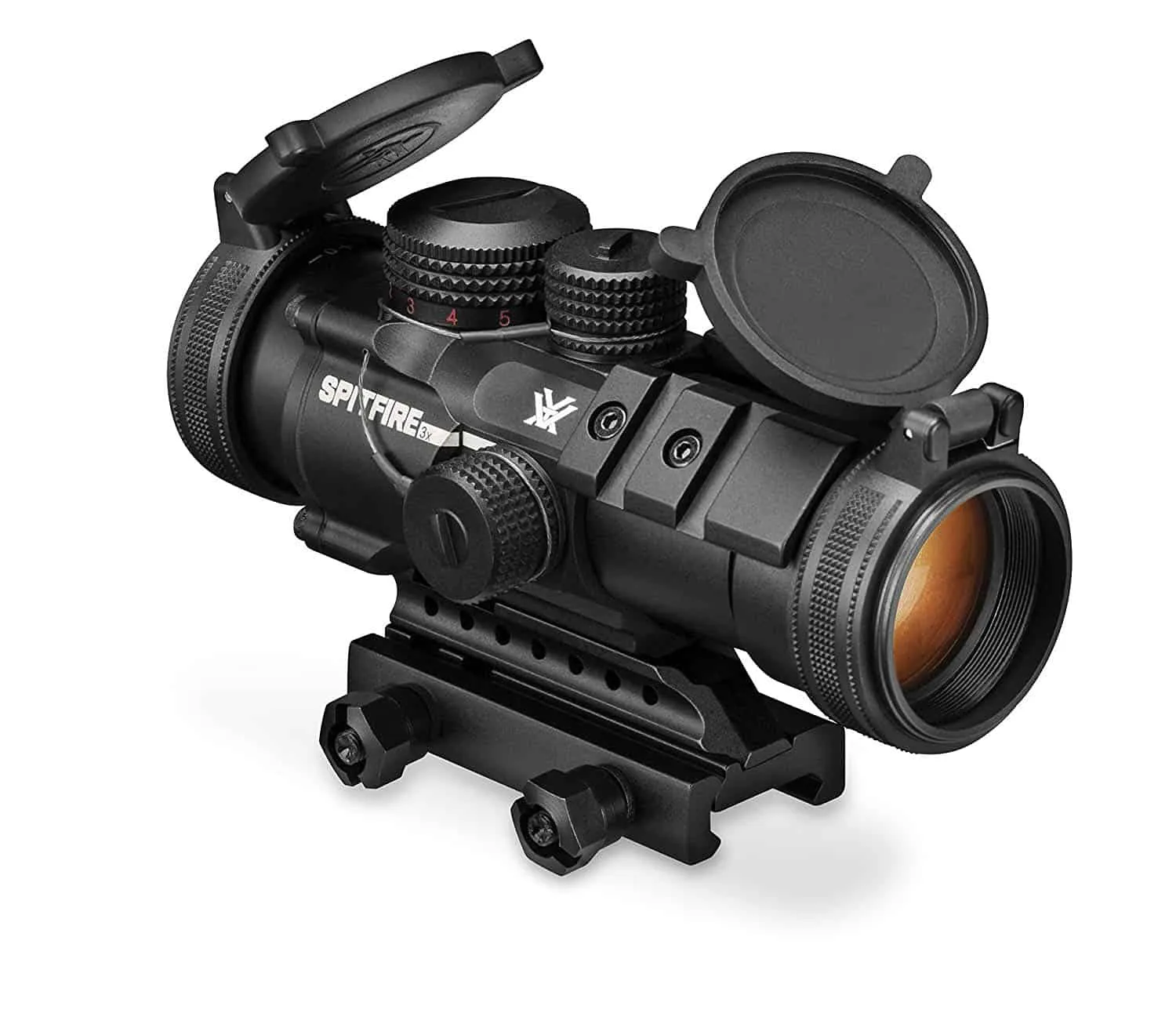
Outside the Primary Arms family, the Vortex Spitfire 3x is the other published prism in the lineup. It runs a higher 3x magnification and Vortex’s EBR-556B reticle instead of the ACSS system, so the decision there turns on reticle philosophy as much as power: ACSS packs auto-ranging stadia and calibrated leads into the sight picture, which is either the whole point or unnecessary clutter depending on how you shoot.
Red dots and holographic sights cover a similar close-range role, but they are a different optical category rather than an equivalent substitute. None of them offers the ranging and BDC reference that a magnified, glass-etched prism reticle like the ACSS CQB-M5 is built around.