Want the precision of magnification without strapping an ACOG-priced optic to your rifle? And if you have astigmatism, do you want that magnified reticle to actually look like a reticle instead of a comet? The Primary Arms SLx 3X MicroPrism was built to answer both questions at once. In this review we will take a look at the top features, specifications, pros versus cons, and what other shooters say about it.
The big thing to understand up front is that this is a prism sight, not a red dot sight (RDS) in the LED sense. A prism sight uses a reticle etched directly into the glass, a physical pattern that is always there. An LED reflex sight, by contrast, projects a glowing dot onto a lens, and that projected dot is exactly what astigmatism distorts into a smear or a starburst. Because the MicroPrism’s reticle is etched, you see a crisp pattern regardless of what your eyes do to it, and you still have an aiming reference even if the battery is stone dead. Add 3x magnification on top of that, and you get a fast, capable little optic that reaches out further than any 1x sight can.
I will walk you through the technical specifications and the standout features, then we will see what other shooters have to say. We will also point you to the best place to pick one up.
Primary Arms SLx 3X MicroPrism Review
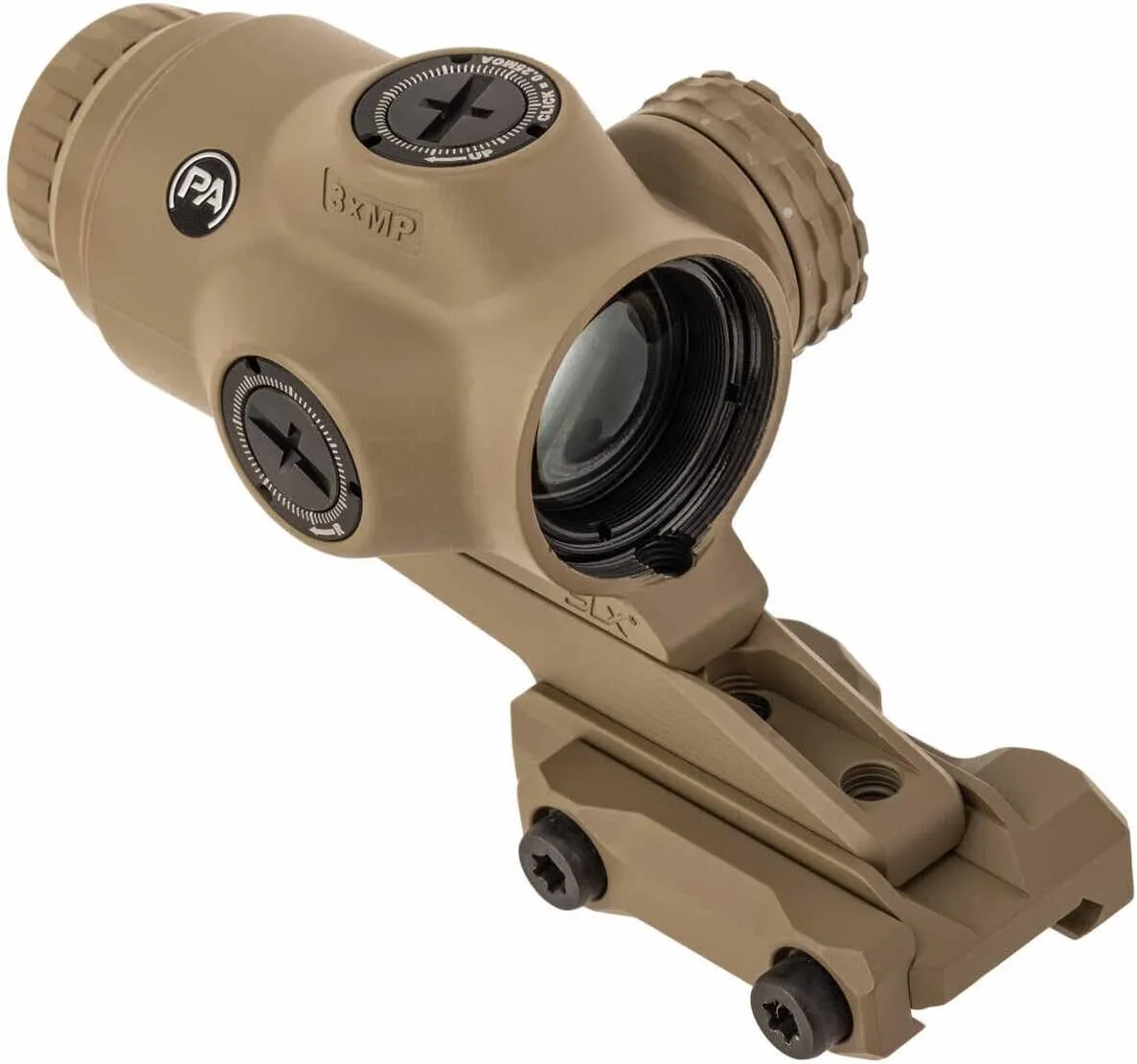
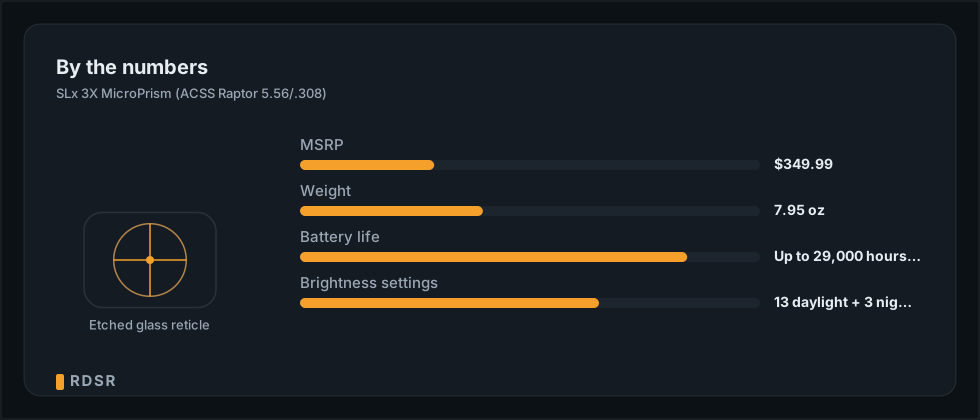
The Primary Arms SLx 3X MicroPrism is a fixed 3x prism optic measuring just 2.95 inches in length and weighing 7.95 oz, smaller and lighter than many of the magnified optics it competes with. The optics are fully multi-coated, and power comes from a single A 3-volt lithium coin cell, 20mm across, and the most common red dot battery (about 210 to 240 mAh). Stocked almost everywhere, so a field swap is easy.Full comparison → coin cell good for roughly 29,000 hours at a medium setting. The etched ACSS Raptor 5.56/.308 reticle is illuminated across 13 daylight brightness settings plus 3 dedicated night vision compatible settings, eye relief is rated at 2.70 inches, and the field of view is a generous 38 feet at 100 yards. Windage and elevation offer 80 Minute of Angle (MOA) of total adjustment in 0.25 MOA clicks. Primary Arms lists it at $349.99, though street pricing typically runs $300 to $330.
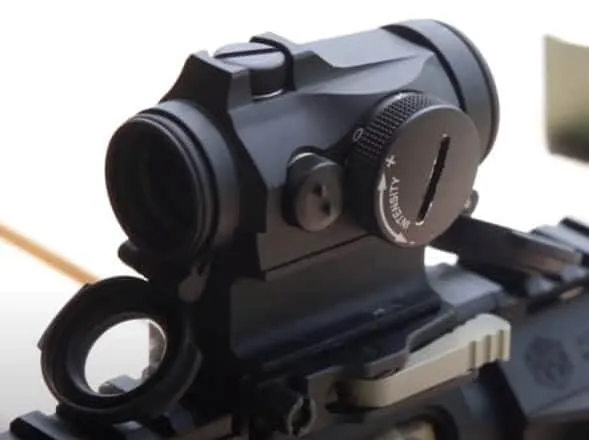
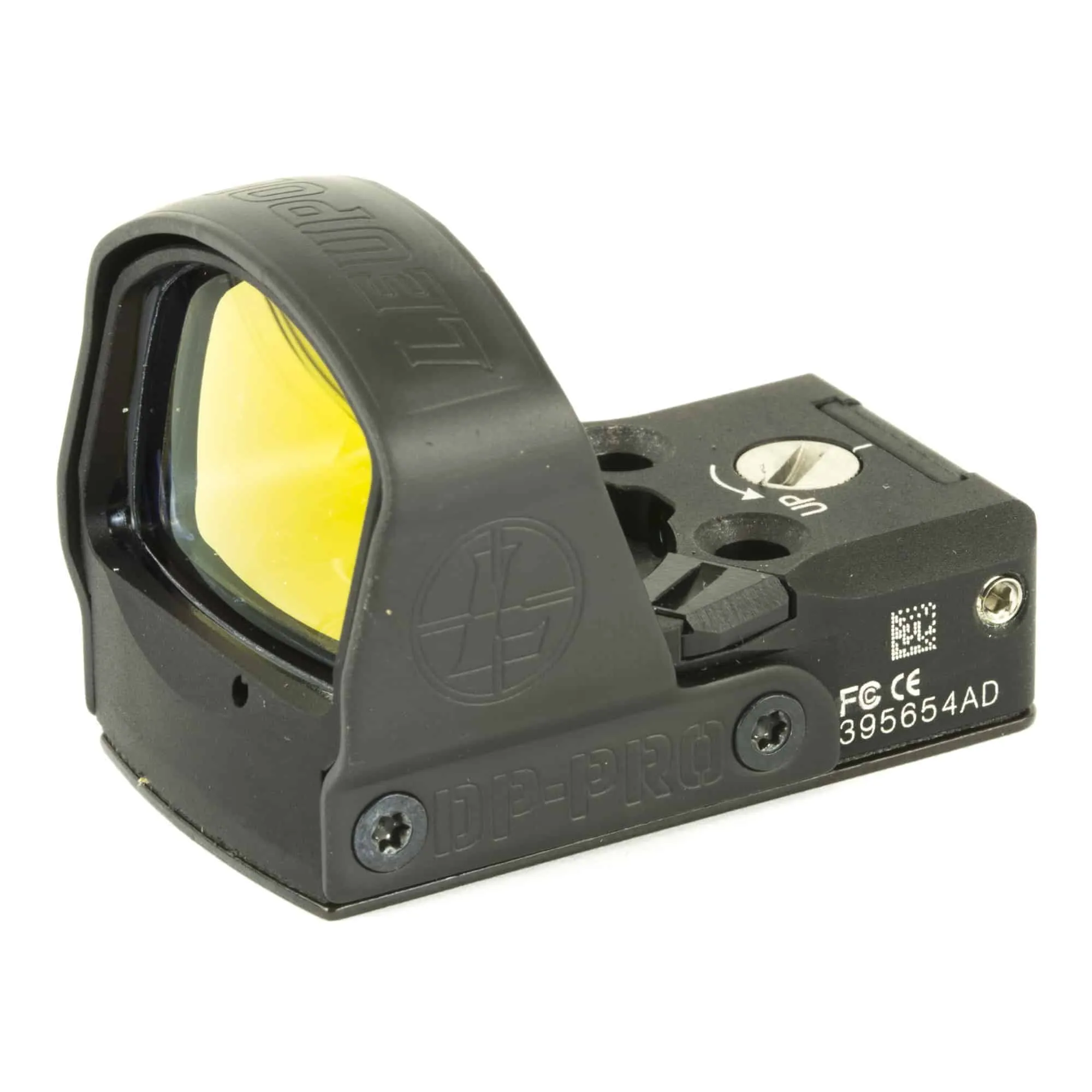
Primary Arms has earned a strong following by delivering serious optical features, most notably its ACSS reticle system, at price points well below the premium brands. The MicroPrism line is where that value reputation meets the astigmatism-friendly prism format, and the 3X model brings magnification to the party. Think of it as a budget-friendly, modern take on the magnified prism optic that the Trijicon ACOG made famous, one with a reticle that does more and a price tag that does far less damage. If you would rather run a red dot with an aspheric lens that tames astigmatism at true 1x, the Leupold DeltaPoint Pro is worth a look, though it will not give you the reach this prism does.
Top Features of the Primary Arms SLx 3X MicroPrism
Design
Because this is a prism optic, Primary Arms packed real magnified glass performance into a very compact 2.95 inch package that weighs 7.95 oz, lighter than a lot of red dot-plus-magnifier combinations and most magnified optics in this category. The chassis is milled aluminum with a matte hard-coat finish, and the fully multi-coated lenses keep the sight picture bright and reduce glare across the 3x magnification.
The result is an optic that adds magnified capability to a rifle without the bulk or weight penalty you would expect. I like that Primary Arms didn’t chase a lighter spec sheet at the expense of glass quality here. It is the kind of sight you can leave on a do-everything carbine and not feel it. Field of view comes in at 38 feet at 100 yards, which is roomy for a magnified prism and keeps both-eyes-open close-quarters work practical.
Reticle (ACSS Raptor)
The reticle is the whole point, so let’s get to it. The SLx 3X MicroPrism carries the ACSS Raptor 5.56/.308 reticle etched directly into the prism glass. That etching is the key difference from a red dot sight: the pattern is a physical part of the optic, so it stays sharp for shooters with astigmatism and remains usable with the illumination switched off.
The ACSS Raptor is a do-it-all pattern. A center chevron gives you a precise aiming point that does not cover the target the way a dot can. A ranging horseshoe surrounds it for fast close-range acquisition and target ranging, and bullet drop compensation (BDC) and wind holds drop below for reaching out to distance. The reticle is calibrated for both 5.56 NATO and .308 Winchester trajectories, with yard and meter versions offered, so the holds are real numbers, not guesses. For close-quarters work your eye snaps to the chevron and horseshoe instantly. When you need to stretch it out, the holds are right there under your aiming point.
Red illumination spans 13 daylight brightness settings plus 3 dedicated night-vision-compatible modes, with the highest settings rated daylight bright (a green-illuminated variant is also offered). Because the reticle is etched, you are not dependent on that illumination. It simply makes the chevron pop against shadowed targets.
If a red dot has ever looked like a starburst, a comet, or a fuzzy smear to you, the cause is almost always astigmatism interacting with the projected LED of a reflex sight. I have watched more than one shooter give up on red dots entirely over this, and the fix is a reticle that is not projected at all. The ACSS Raptor on the 3X MicroPrism is laser-etched into the glass, so what you see is a crisp, defined pattern no matter what your eyes do to a glowing dot, and the chevron stays sharp and pinpoint even zoomed in at 3x. Put an LED reflex sight next to this prism in an astigmatism head-to-head, and it is not a close contest: the MicroPrism wins going away.
Operation
Illumination is controlled by a rotary brightness dial, and the optic uses AutoLive, Primary Arms’ motion-sensing on and off technology. AutoLive wakes the reticle illumination the instant it senses movement and powers it down when the optic sits still, which is how a single CR2032 battery stretches to about 29,000 hours of life at a medium setting. Because the reticle is etched, even a fully drained battery leaves you with a black reticle you can still aim with, no scrambling for a spare CR2032 mid-hunt.
The optic has an adjustable diopter to focus the reticle to your eye, a nice touch on a magnified prism. I found the diopter finely threaded, so give yourself a few extra turns to dial it in rather than expecting it to snap to focus. Windage and elevation are adjusted with capped turrets offering 80 MOA of total adjustment range in 0.25 MOA clicks, giving you plenty of room to zero across platforms.
Reliability standing
Primary Arms SLx 3X MicroPrism (ACSS Raptor)
Medium confidence based on 9 sources, 7 first-hand.
- Rounds tested
- ~200
- Battery
- CR2032: Up to 29,000 hours on the medium setting on a single CR2032, per Primary Arms, with AutoLive motion sleep cited as the runtime extender.
- Warranty
- Primary Arms Lifetime Warranty on PA-branded optics: fully transferable, no proof of first ownership or original receipt required, covering manufacturer defects in materials and workmanship and normal wear-and-tear affecting function; excludes misuse, abuse, accident, alteration and lost/stolen items (s9). The manufacturer product page (s8) lists 'Lifetime Warranty' for this SKU.
What those tests were
- recoil: pass . First-hand: Jim Grant (Ammoland, s2) mounted and zeroed the optic on five different firearms including an IWI Galil ACE in .308, a TAVOR-7, a KR-103 SFS, a 7.62x39 AR SBR and a Springfield Hellion, and reported it 'held zero fine throughout every test' and 'held zero flawlessly.' Several of these are hard-recoiling .308 and 7.62x39 platforms. No round count or measured zero-shift figure was published.
- recoil: pass . First-hand: Jim Maybrick (Breach Bang Clear, s4) fired about 200 rounds and reported the optic 'endured plenty of hard knocks coming in and out of a safe' without losing zero. Informal handling abuse plus live fire, no measured zero-shift figure.
- submersion: pass . First-hand but informal: Jim Maybrick (Breach Bang Clear, s4) reported the optic survived 'a thunderstorm soak' with no loss of zero or function. This is incidental rain exposure, not a controlled depth/duration submersion, and no ingress or zero-shift figure was published.
- recoil: pass . First-hand: RE Factor Tactical (s7) found the optic 'dead on all the way out to 200 yards without any further adjustments needed' and reported it held zero 'even after hundreds of rounds and rough handling.' The accompanying 'shockproof, fog-resistant, and waterproof' wording reads as a spec paraphrase rather than a test the reviewer ran, so only the hold-zero-after-rounds-and-handling finding is treated as first-hand here.
Aggregated from others' first-hand testing, not our own: this standing deliberately reaches past any one shooter's round count. We surface a sourced reputation tier rather than inventing a score the evidence cannot support.
Full reliability data →Warranty standing
Primary Arms warranty
Lifetime housing, lifetime electronics, transferable
- Housing
- Lifetime
- Electronics
- Lifetime
- Transferable
- Yes
- Receipt required
- No
- Registration
- No
- Support
- active
Mounting
The MicroPrism uses an industry-standard mini-prism footprint, the same pattern as the Trijicon Mini-ACOG, and Primary Arms includes a modular mounting system in the box. That system stacks cantilever sections, a riser, and spacers to provide 8 different height options, so you can set up either an absolute or a lower 1/3 co-witness, or push the optic forward to get your eye relief right. It drops onto any Picatinny or MIL-STD-1913 rail and bolts down with beefy fasteners and integrated recoil lugs that hold zero under recoil. My favorite part of the whole package is honestly this mount: it is how you tame the tighter eye box, by placing the sight exactly where your natural head position lands instead of fighting the optic to find it.
Details
Included with your purchase:
- Primary Arms SLx 3X MicroPrism optic
- Modular mounting system (cantilever sections, riser, and spacers: 8 height options)
- CR2032 battery
- Lens covers
- Hardware and instructions
Customer Feedback
The SLx 3X MicroPrism carries strong ratings across retailers, and shooters consistently single out the astigmatism-friendly reticle, the magnified capability, and the value.
Astigmatism: Owners who see LED red dots as smears repeatedly report that the etched ACSS reticle finally gives them a crisp sight picture they can shoot with, now with magnification on top of it.
Reticle: Reviewers highlight the Raptor’s fast chevron for close work and its usable BDC holds when they need to stretch past iron-sight range.
Value: A common theme is that it delivers what a magnified prism should for a fraction of ACOG money, with no battery to baby.
Eye box: The most frequent caveat is that the eye box is tighter than a red dot, so it rewards a correct mount, though the modular riser system makes getting behind it straightforward.
Pros & Cons
Pros
- Etched glass reticle works for shooters with astigmatism, with no smeared or starbursted dot like an LED reflex sight
- Reticle is visible without illumination, so the sight still aims if the battery dies
- 3x magnification meaningfully improves hit probability at distance over a 1x optic while staying compact and under 8 oz
- ACSS Raptor 5.56/.308 reticle bundles a chevron aiming point, ranging horseshoe, and bullet-drop and wind holds in one fast package
- 13 daylight brightness settings plus 3 dedicated night-vision modes, with daylight-bright top settings
- AutoLive motion-sensing power management wakes the illumination on movement and sleeps it when idle
- Modular mounting system with 8 height options dials in eye relief and co-witness right out of the box
- Backed by Primary Arms' transferable lifetime warranty
Cons
- Tighter eye box and 2.7" eye relief are far less forgiving than a parallax-free, unlimited-eye-relief reflex sight
- Heavier than a comparable micro red dot at 7.95 oz
- Red illumination is moderate: bright, but not the eye-searing intensity of a dedicated LED dot against dark targets
Conclusion
The Primary Arms SLx 3X MicroPrism solves a real problem that no LED red dot can. It gives astigmatic shooters a clean, dependable sight picture, and it backs that up with 3x magnification, a genuinely capable ACSS Raptor 5.56/.308 reticle, AutoLive power management, and a flexible mounting system, all at a mid-tier price. The trade is a tighter eye box and a fixed eye relief, the price of admission for prism glass. But if you want magnified precision that astigmatism cannot ruin and that does not need a battery to function, this is one of the best values on the market and our standout pick for a magnified prism. We think it earns that nod on the reticle alone.
Alternate Options
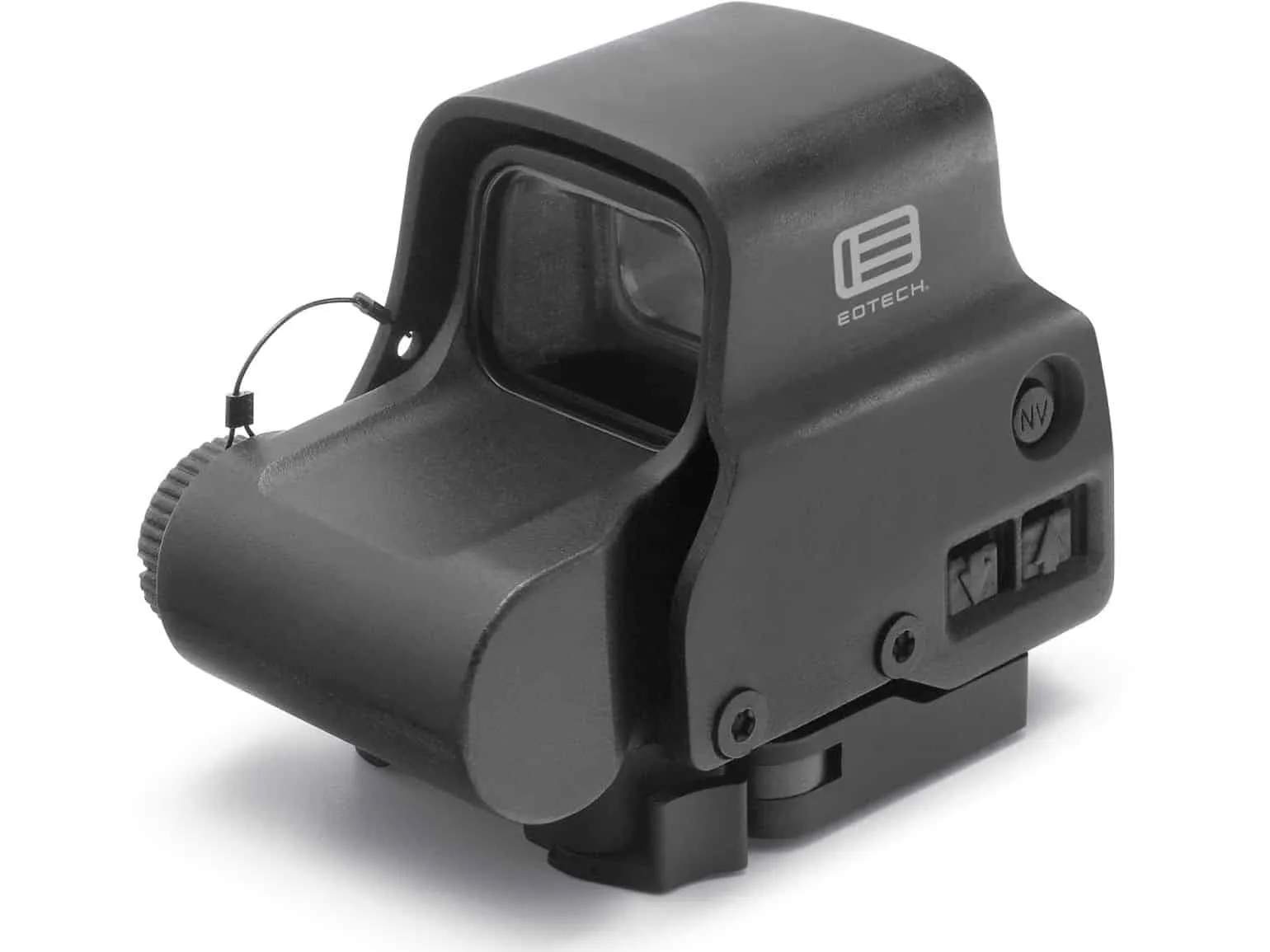
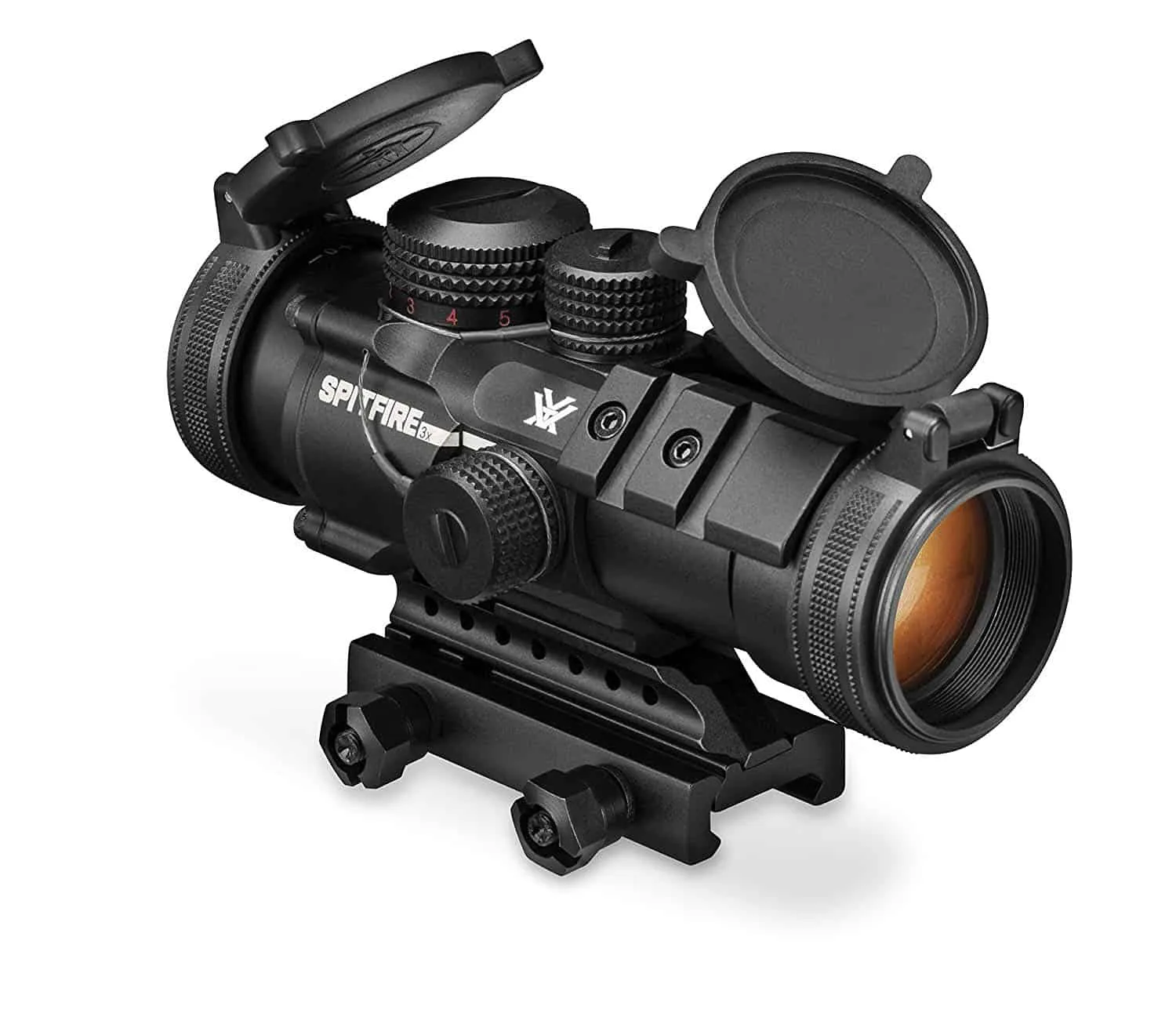
If you would rather stay at true 1x and fix astigmatism with an aspheric lens instead of etched glass, the Leupold DeltaPoint Pro is our pick, though you give up the reach the MicroPrism provides. For another magnified prism in the same spirit, the Vortex Spitfire 3x is the other etched-reticle 3x optic we have reviewed, and it is a genuine rival worth cross-shopping. If the 3x magnification is more than you need and you would rather keep the same etched-reticle, battery-independent format at true 1x, the Primary Arms SLx 1X MicroPrism is the closer sibling to look at, same family, same reliability, just without the added reach. If you would rather run a red dot with a flip-to-side magnifier instead of a fixed prism, the EOTech EXPS3 is the holographic sight we would build that combo around, though that route costs considerably more and is not astigmatism-proof the way an etched prism is. And if magnification is not the priority at all and you just want a rugged, no-nonsense duty-grade 1x reflex, the Aimpoint T2 is the battle-proven standard we keep coming back to.