Fixed-power prisms live or die on whether you picked the right power. The Primary Arms SLx 5X MicroPrism is the far end of a line we have already reviewed twice, and the question worth answering is not whether it is a good optic, but whether 5X is the number you actually want.
Choosing 5X over the 3X
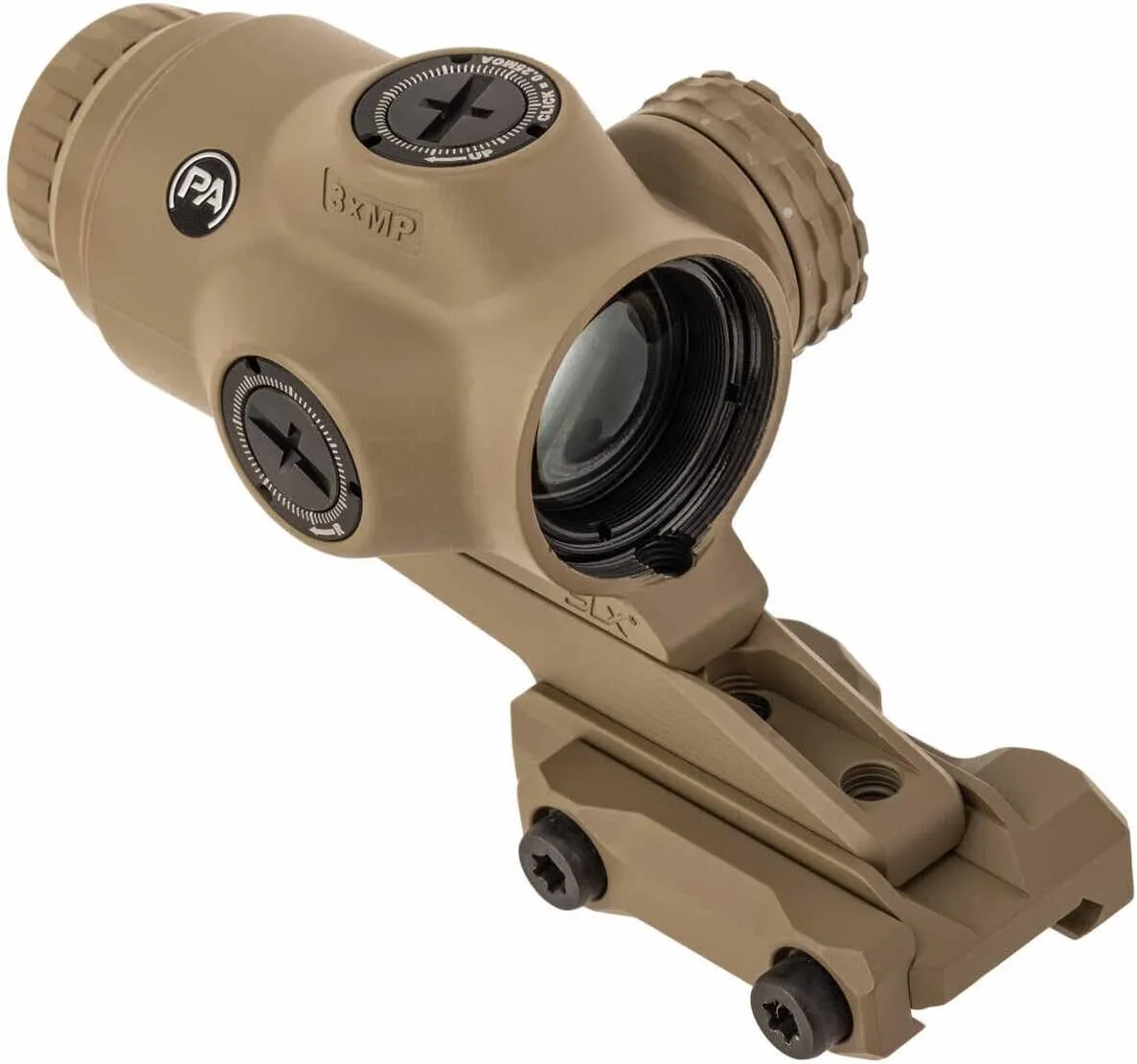
We have published reviews of the SLx 1X MicroPrism and the SLx 3X MicroPrism, and the three share a chassis concept, a mount, and an illumination system. Picking between them is almost entirely a question of distance and what else is on the rifle.
The 3X is the generalist. It stays usable at close range with both eyes open, and it carries a reticle that most shooters can run as their only optic. The 5X gives that up. Field of view narrows, the eye box gets less forgiving, and inside roughly 25 yards the magnification is working against you. In exchange you get real target identification at distance and a BDC that is fine enough to use rather than approximate with.
Three situations make the 5X the right pick. The first is a rifle that shoots past 300 yards regularly, where 3X leaves you guessing at what you are looking at. The second is a .308 or other heavier chambering, since the ACSS Aurora 5.56/.308 Yard reticle carries holds calibrated for both and the extra magnification is easier to justify on a rifle already built around reach. The third is as a lightweight substitute for a low-power variable: an LPVO plus mount runs well over a pound, and this is 8.5 oz with the mount included. If none of those describe your rifle, the 3X will make you happier.
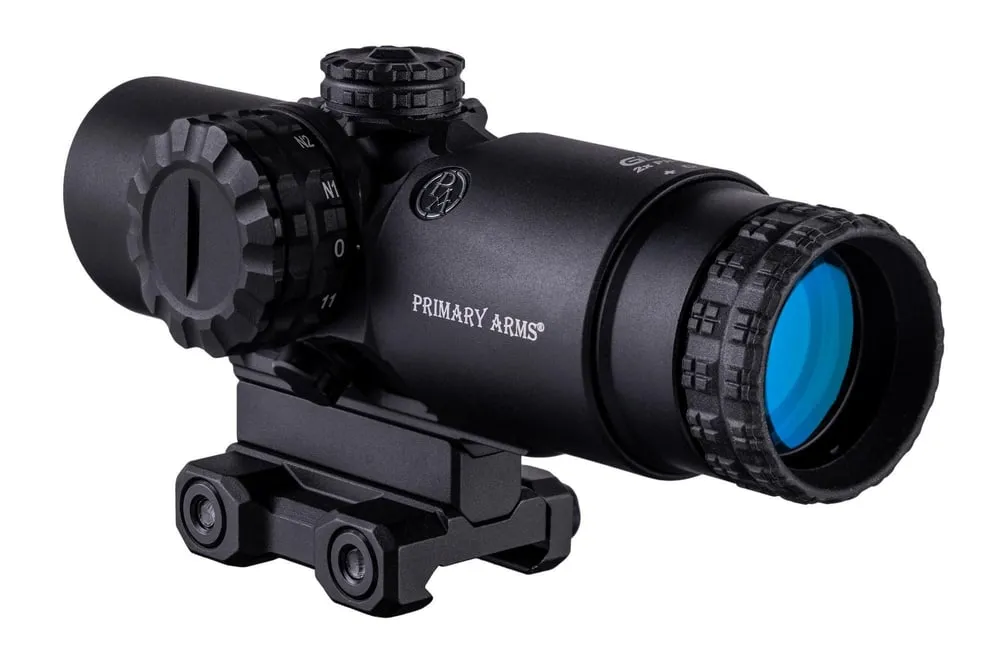
There is also a fourth option worth naming. The GLx 2X Prism is a different sub-line entirely, not a lower-power MicroPrism, and it is aimed at close-quarters work rather than distance. It is the opposite end of the same decision.
Primary Arms SLx 5X MicroPrism Review
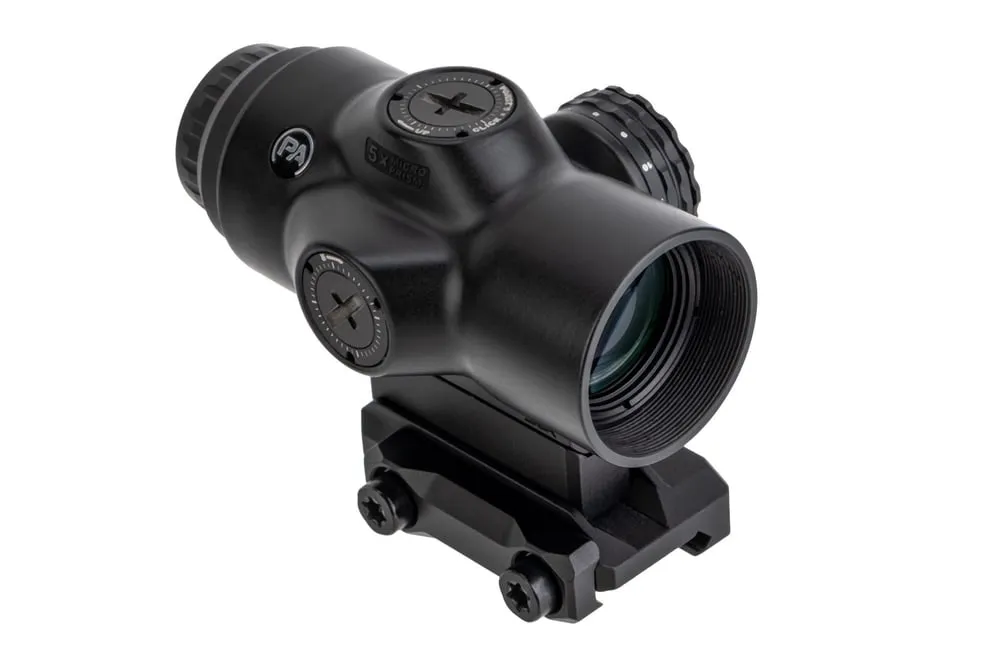
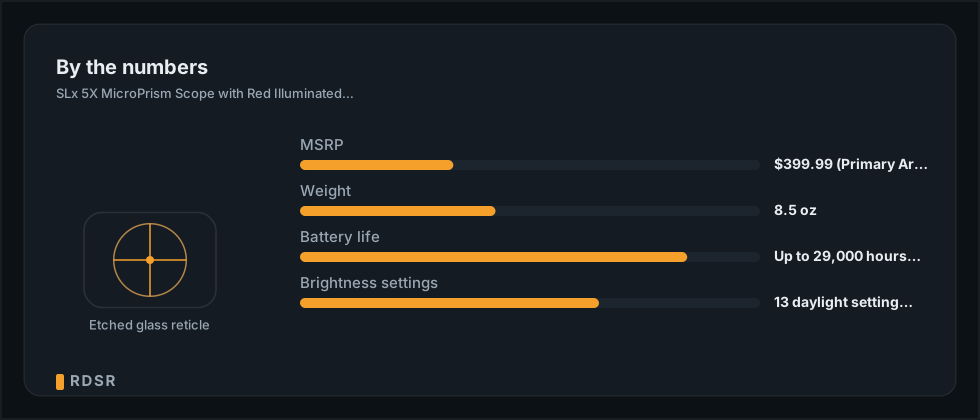
The SLx 5X MicroPrism is a fixed 5X prism scope, 3.31 inches long and 8.5 oz, built around the red illuminated ACSS Aurora 5.56/.308 Yard reticle. A single A 3-volt lithium coin cell, 20mm across, and the most common red dot battery (about 210 to 240 mAh). Stocked almost everywhere, so a field swap is easy.Full comparison → drives 13 daylight brightness settings and 3 night-vision settings, with Primary Arms claiming up to 29,000 hours on medium through the AutoLive motion sensor. Adjustments are 0.25 MOA per click across 50 MOA of total travel. Primary Arms lists it at $399.99, checked on August 7, 2026.
The strategic pitch is the same one Primary Arms has made for a decade: ACSS reticle features at a fraction of what the optics that inspired them cost. What is different about the 5X specifically is that it sits in a gap almost nothing else occupies. Magnified prisms this small are rare, and the ones that exist mostly stop at 3X.
Top Features
Design
The prism optical system is what makes the size possible. Folding the light path lets Primary Arms fit 5X into a housing shorter than most 1X tube sights, where a conventional magnified scope would need three or four times the length. TheFirearmBlog’s reviewer, running the 5X alongside a red dot on a 12 o’clock mount, noted the combined setup came in well under the weight of a comparable magnified competitor rig despite offering more magnification.
Durability is where the 5X has accumulated the most evidence of any optic in this family. A filmed torture test by Beyond Seclusion dropped it about 15 feet from a second-story balcony onto a deck, submerged it in 105 degree Fahrenheit water for 20 to 30 minutes, and ran it through freezer exposure to stress the seals. Separately, a Rokslide forum member ran a 52-inch multi-orientation drop test onto a mat over uneven gravel and snow. Neither found a lost zero, a seal failure, or optical damage. Primary Arms does not publish an IPX or MIL-STD figure, so those tests are the durability record, not a spec sheet.
Reticle
The ACSS Aurora is etched into the glass rather than projected. If the battery dies mid-hunt the reticle is still there in black, which on a BDC reticle matters considerably more than it does on a plain dot: you keep the holdovers, not just an aiming point. Only the chevron illuminates, so turning the brightness up does not light the entire subtension tree and clutter the picture.
The Yard variant our links ship carries yards-based bullet drop compensation calibrated for both 5.56 and .308, plus wind holds and ranging stadia. TheFirearmBlog’s field review put those holds on steel at 475 yards and reported them working. An adjustable diopter handles reticle focus, which is the standard fix for shooters with astigmatism and also the first thing to check if the reticle looks soft.
The Armory Life’s reviewer found the reticle daylight-visible and quick to pick up in low light. Reports of blurring at close range circulate on forums; we could not access the original threads to confirm whether those describe a hardware problem or an unset diopter, so we are noting them without weighting them.
Operation
Turrets move in 0.25 MOA clicks with 50 MOA of total windage and elevation travel. The one dissenting note in the sourced material comes from the Rokslide tester, who described the clicks as a little finicky and not perfectly consistent from click to click. That was a subjective comment about feel, not a tracking failure, and the same optic held zero through his drop testing.
AutoLive shuts the illumination down after roughly three minutes without movement and brings it back the instant the rifle is picked up. On an optic likely to sit in a safe between range trips, that does more for practical battery life than the headline hour figure does.
Reliability standing
Primary Arms SLx 5x MicroPrism Scope with Red Illuminated ACSS Aurora Reticle
Medium confidence based on 4 sources, 3 first-hand.
- Battery
- CR2032 3V lithium coin: up to 29,000 hours on medium setting; separately rated in the 25,001-50,000 hour bracket for overall battery life across settings
- Warranty
- Primary Arms Lifetime Warranty
What those tests were
- 15 foot drop onto deck: pass . Beyond Seclusion torture test: dropped from 15 feet onto a deck, kept zero, hit steel at 500 yards immediately after.
- submersion (105F water, 20 30 min): pass . Beyond Seclusion torture test: submerged in 105F water for 20-30 minutes with no seal failure noted.
- freezer exposure: pass . Beyond Seclusion torture test: freezer exposure used to test seals, no failure noted.
- 52 inch drop test (top and both sides): pass with caveat . Rokslide forum tester ran an independent 52-inch drop test onto a folded yoga mat over uneven gravel/snow, mounted on an ultralight .223 rifle. Held zero through all drops with no group expansion or damage. Only complaint was that the 0.25 MOA click adjustment felt a little finicky and not perfectly consistent per click, a mechanical gripe unrelated to the drop test itself.
- field use, zero retention 100 475 yards: pass . TheFirearmBlog reviewer held zero from 100 out to 475 yards in field use with the BDC reticle performing well. Flagged a mount-compatibility caveat (overly long screws on a 12 o'clock mount can push the mounting plate away from the optic) as an installation issue, not an optic defect.
Aggregated from others' first-hand testing, not our own: this standing deliberately reaches past any one shooter's round count. We surface a sourced reputation tier rather than inventing a score the evidence cannot support.
Full reliability data →Mounting
The included mount uses the industry mini-prism footprint and breaks down into 8 height and offset configurations, covering absolute and lower 1/3 co-witness. For a scope that many buyers will pair with a piggybacked red dot, that flexibility is not a bonus feature, it is load-bearing.
One caveat surfaced in TheFirearmBlog’s install: on a 12 o’clock RDS mount, screws that are too long can push the mounting plate away from the optic body. That is a fit problem between the optic and a particular accessory mount rather than a defect, and it was resolved before the 475-yard shooting.
Details
In the box:
- SLx 5X MicroPrism scope
- Mount with adapters for 8 height configurations
- Hex tool
- Thread locker
- Lens covers
- CR2032 battery
Warranty
Covered by the Primary Arms lifetime warranty against defects for as long as you own it.
Warranty standing
Primary Arms warranty
Lifetime housing, lifetime electronics, transferable
- Housing
- Lifetime
- Electronics
- Lifetime
- Transferable
- Yes
- Receipt required
- No
- Registration
- No
- Support
- active
What reviewers report
Durability: Two independent testers deliberately tried to break this optic, through height drops, hot water, and cold, and neither found a failure point. That is the strongest evidence file of any prism scope currently reviewed on this site.
Precision: A named field review confirmed the yard-based BDC holds working on steel at 475 yards, past where a compact prism is usually expected to be useful.
Mechanical feel: One tester’s complaint about click consistency is the only recurring mechanical gripe, and it is a single voice rather than a pattern.
Unverified: The manufacturer’s 29,000 hour battery figure and scattered forum mentions of close-range blur both remain unconfirmed.
Pros & Cons
Pros
- 5X magnification in a 3.31 inch, 8.5 oz housing, roughly the footprint of a full-size red dot
- ACSS Aurora reticle is etched into the glass, so the BDC and wind holds still work with the illumination off or the battery dead
- More published third-party durability testing than the 1X or 3X MicroPrism: a filmed 15-foot drop plus hot-water submersion and freezer exposure, and a separate 52-inch multi-orientation drop test on a hunting forum
- TheFirearmBlog's reviewer confirmed the yard-based BDC holds working on steel out to 475 yards
- AutoLive motion-sensing illumination sleeps after inactivity and wakes on movement
- Included mount covers 8 height and offset configurations, including absolute and lower 1/3 co-witness
- Backed by the Primary Arms lifetime warranty
Cons
- Fixed 5X is genuinely bad inside about 25 yards, which is why most owners run it with a piggyback red dot rather than alone
- The eye box is tighter than the 1X or 3X MicroPrism, an unavoidable consequence of the magnification
- One Rokslide tester described the 0.25 MOA clicks as finicky and not perfectly consistent
- On a 12 o'clock RDS mount, overly long mounting screws can push the plate off the optic body, a hardware pairing caveat TheFirearmBlog hit during installation
- The 29,000 hour battery claim is Primary Arms' own number and has not been independently measured
Conclusion
The SLx 5X MicroPrism does one job and does it in a package that should not be able to. Five power, an etched BDC that survives a dead battery, and a documented record of surviving abuse that most optics twice its price have never been subjected to publicly, all at 8.5 oz.
It is not a do-everything optic, and treating it like one is the most common way to be disappointed by it. If your rifle lives past 200 yards, or you want LPVO-class reach without LPVO weight, this is a well-evidenced choice. If it lives closer than that, buy the 3X and spend the difference on ammunition.
Alternative Sight Options
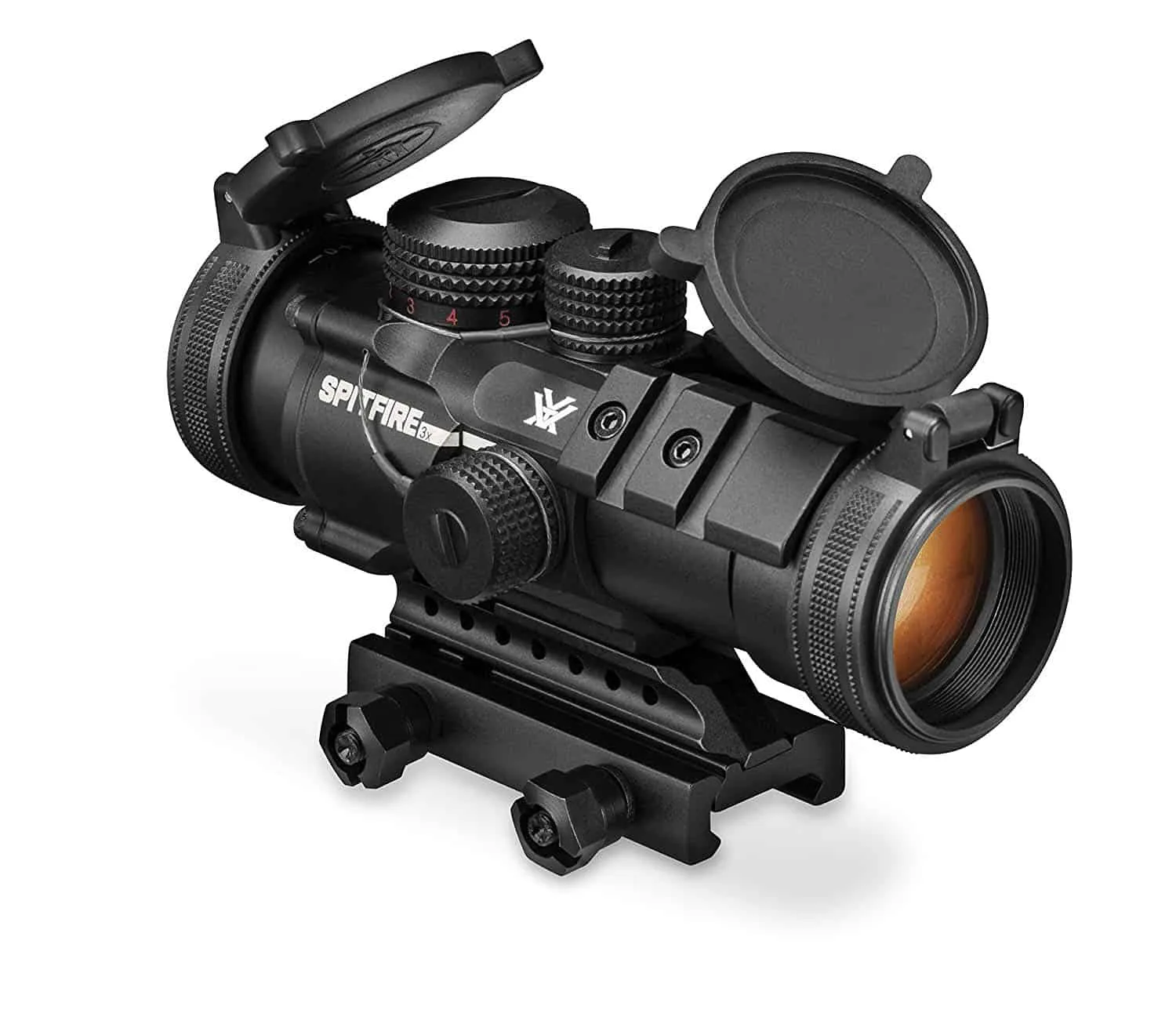
The closest match in our lineup is the SLx 3X MicroPrism, the same optic concept with a more forgiving power for general use, and the right call for most buyers who are not shooting at distance. The Vortex Spitfire 3x is the other fixed-power prism we have reviewed, though its original SPR-1303 model has been superseded by the Spitfire HD Gen II. For close-quarters work in prism form, the GLx 2X Prism is the deliberate opposite choice, and the SLx 1X MicroPrism drops magnification entirely while keeping the etched reticle.
A reflex sight is not an alternate to this optic, it is a companion to it. Many 5X MicroPrism owners run a piggybacked red dot for anything close, which is a different purchase rather than a substitute.