Looking for a pistol reflex sight that can flex between a wide-open window and a fully sealed emitter depending on the job? The Sig Sauer Romeo2 is built around exactly that idea. In this review we cover the housing, the reticle options, how the optic operates day to day, and how it mounts to a slide. We also round up what independent reviewers found when they put the Romeo2 through drop, water, and freeze testing, then close with an honest read on where it fits in your kit.
Sig Sauer Romeo2 Review
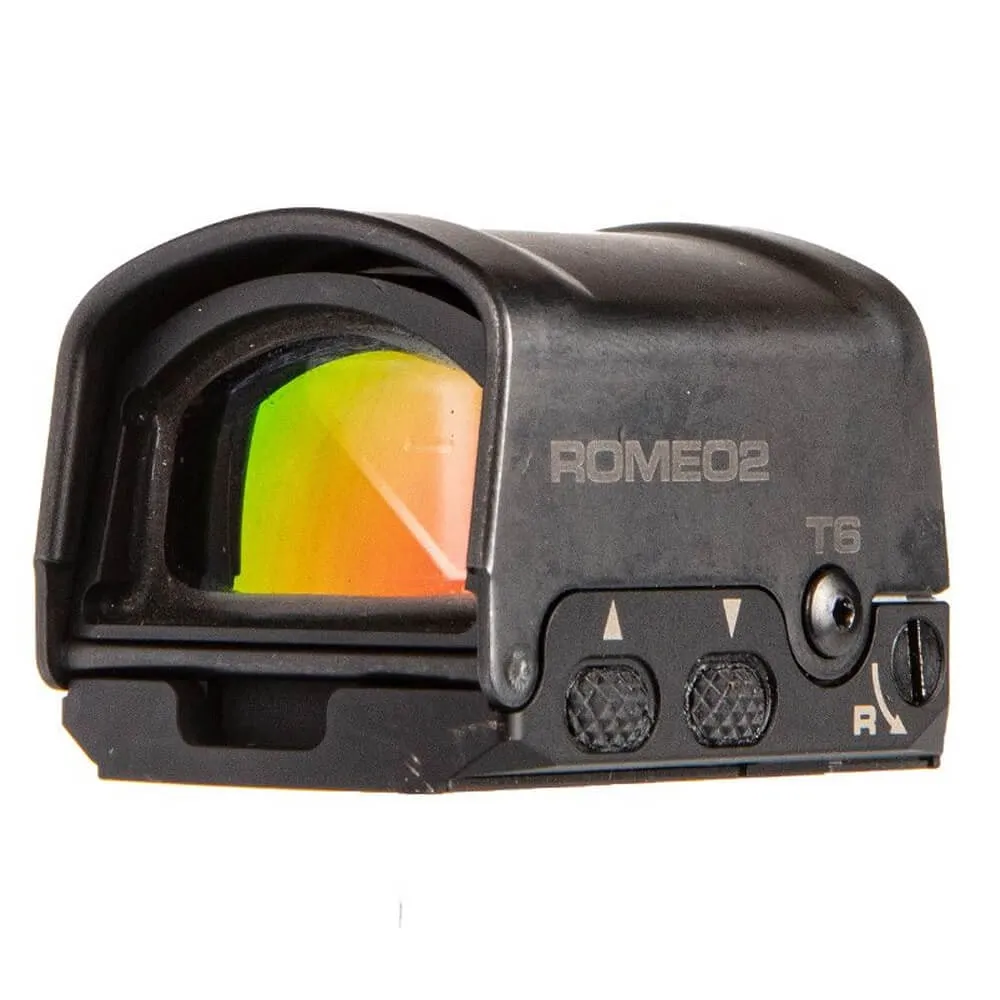
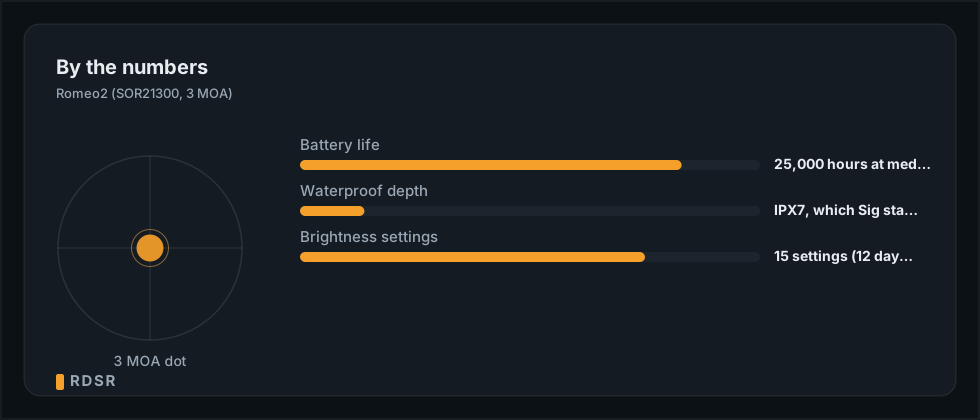
The Sig Sauer Romeo2 is a modular 1x30mm reflex sight measuring 1.84 (in) x 1.32 (in) x 1.12 (in), built on a A high-strength aerospace aluminum alloy (yield about 503 MPa / 73 ksi, roughly 1.8x that of 6061-T6) for only a few percent more weight. The go-to for duty and hard-use pistol optics, often forged.Full comparison → aluminum housing with swappable steel shrouds. It runs a 3 Minute of Angle (MOA) red dot in the SOR21300 configuration reviewed here, with 6 MOA and a Circle Dot Dual Reticle also available as separate SKUs. Fifteen brightness settings (12 daylight, 3 night vision compatible) cover everything from a bright range day to low light under night vision gear. A single A 3-volt lithium coin cell, 20mm across, and the most common red dot battery (about 210 to 240 mAh). Stocked almost everywhere, so a field swap is easy.Full comparison → battery is rated for 25,000 hours at medium brightness, and the sealed unit carries an An IEC 60529 rating certifying the optic survived temporary immersion in 1 meter of water for 30 minutes. The X means dust ingress was not separately rated.Full comparison → An optic's Ingress Protection (IP) code from IEC 60529: the first digit rates dust (0 to 6), the second rates water (0 to 8). A digit shown as X was simply not tested.Full comparison → (Sig specs it to 1 meter; the IPX7 standard defines that as a 30-minute immersion).
Sig Sauer designed the Romeo2 for military and law enforcement hard use, and it mounts on the footprint Sig adopted from Leupold’s DeltaPoint Pro pattern when the M17/M18 slide cut was specified. Whether or not it ends up on an issued duty belt, that mil-spec design target is the throughline for every feature on this sight.
Top Features of the Sig Sauer Romeo2
Design
The Romeo2’s defining feature is its modular shroud system. The optic ships as a bare open-emitter reflex sight, but two included steel shrouds let you reconfigure it into a half-shrouded or fully enclosed setup with a polycarbonate rear window, all without buying a second optic. That flexibility means the same Romeo2 can run wide open for the fastest possible target acquisition, or buttoned up for maximum protection against mud, lint, and holster wear.
Independent reviewers have pushed that durability claim hard. Guns & Ammo’s Eric Poole reported the Romeo2 was repeatedly dropped from 10 feet onto concrete and kept functioning, and the article cites unnamed third-party lab testing showing the optic meets military durability requirements. The Firearm Blog’s Luke C. went further, throwing a mounted pistol and optic into a pool from three stories up, then putting it in a freezer for six to eight hours; the optic handled the water and kept running through the freeze, though the pistol itself iced up. He is careful to note the Romeo2 is not nitrogen purged, so trapped moisture could still fog the interior, and Sig’s manual carries the same caution about installing the rear window in a humid environment. None of this was run against a single formal, standardized protocol, but the pattern across multiple independent testers is consistent: no failures.
The glass-molded aspherical lens carries a red notch reflector coating for brightness and light transmittance, and Guns & Ammo described that lens as clear, scratch resistant and void of distortion.
Reticle
The reviewed SOR21300 configuration runs a 3 MOA red dot, a good middle ground between fast target acquisition and precision at distance. Sig’s manual also lists 6 MOA and 10 MOA dots and a 2 MOA dot inside a 32 MOA circle, all sold as separate part numbers rather than as a reticle you can switch on one unit.
Reviewer feedback on dot quality is uniformly positive. Pew Pew Tactical’s Travis Pike scored clarity a full 5 out of 5 and called the dot remarkably crisp, The Firearm Blog praised minimal bloom thanks to the Point Source Emitter, and Guns & Ammo highlighted the glass-molded aspherical lens. No reviewer we found reported fogging or clarity loss across humid, cold, and hot range sessions, though Pike notes he deliberately assembled the shroud and rear window in a dry environment to keep moisture out in the first place.
Operation
Power management runs through Sig’s MOTAC system: the sight automatically shuts off after roughly two minutes without motion and reactivates instantly when the pistol moves again. A second feature, MAGNETAC, uses a magnet in a compatible holster to shut the optic off when holstered and turn it back on the instant the pistol is drawn. Together they are meant to deliver the “leave it on and forget it” convenience of a manual optic without burning through battery life while the pistol sits idle.
The CR2032 battery is rated for 25,000 hours at medium brightness by Sig; Guns & Ammo cited a slightly more conservative 20,000-plus hours in its own writeup. No independent, long-term battery measurement has been published by any reviewer we found, and no tester reported a premature battery failure. The battery loads through a side spring-activated tray that requires no tools and does not require removing the optic or disturbing zero, a real convenience compared to bottom-loading designs on some competing pistol dots.
Windage and elevation adjust in 1 MOA clicks using the included tool, and Pew Pew Tactical’s testing found the Romeo2 held zero across repeated checks through extended use with no drift reported.
Reliability standing
Sig Sauer Romeo2
Medium confidence based on 7 sources, 3 first-hand.
- Battery
- CR2032: 25,000 hours at medium brightness (manufacturer and most reviewers); Guns & Ammo cites 20,000+ hours
What those tests were
- drop: pass . Guns & Ammo: repeatedly dropped from 10 feet onto concrete, remained functional; article also cites unnamed third-party lab testing showing the optic meets the military's durability requirements. Separately, Sig Sauer's own internal testing (not third-party) fired thousands of rounds of 10mm, believed to produce a harder recoil impulse on a slide-mounted optic than .40 S&W, with no failures reported.
- water: pass . The Firearm Blog: reviewer dropped mounted pistol/optic into a pool from three stories up; optic handled the water fine with no fogging.
- cold/freeze: pass . The Firearm Blog: optic frozen for 6-8 hours and kept functioning (the host pistol itself iced up, optic did not fail).
- environmental (humid/cold/hot use): pass . Pew Pew Tactical: used across humid, cold, and hot conditions with no fogging or clarity loss; no formal drop/water/freeze test performed by this reviewer.
Aggregated from others' first-hand testing, not our own: this standing deliberately reaches past any one shooter's round count. We surface a sourced reputation tier rather than inventing a score the evidence cannot support.
Full reliability data →Mounting
The Romeo2 uses the ROMEO1PRO footprint and, per Sig’s manual, mounts directly to any Sig optics-ready pistol with the PRO or R2 slide cut. That footprint is the Leupold DeltaPoint Pro pattern Sig adopted when the Army specified a slide cut for the M17 program, with a pair of rear indentations added so the sight clears cuts and plates that carry the DeltaPoint Pro’s bosses; The Firearm Blog describes the result as the ROMEO1PRO pattern without the two front bosses. It is still worth confirming the exact plate with Sig or the plate maker for a non-Sig slide, because plate makers cut for the RMR pattern by default. The mounting screws torque to a specified 28 in/lbs with the included wrench.
The tradeoff is the same one buyers weigh with Aimpoint’s Acro system: a bit more planning at purchase in exchange for a mounting interface built around this optic rather than the RMR pattern everything else defaults to.
Details
Included with your purchase (SOR21300 configuration):
- Sig Sauer Romeo2 reflex sight
- Two steel shrouds enabling open, half-shrouded, and fully enclosed configurations
- Polycarbonate rear window for the enclosed configuration
- CR2032 battery (installed)
- Mounting hardware, T6 shroud screws, and a torque wrench
- Rubber sight cover with MAGNETAC technology, a ROMEO LensPen, liquid threadlocker, and two LCI deflectors
- Operator’s manual
Warranty
The Romeo2 is covered by Sig Sauer Electro-Optics’ Infinite Guarantee, an unlimited lifetime, fully transferable, no-receipt warranty on the housing and optical components, plus a separate 5-year limited warranty on the electronic components that runs from the date of manufacture rather than the date of purchase. Two limits are worth knowing before you buy this one as a duty optic: Sig’s manual states the warranty applies to commercial customers only and does not extend to government, military, law enforcement, or non-US customers, and the Infinite Guarantee excludes cosmetic damage, misuse, loss, theft, and unauthorized repair. Warranty service requires an RMA from Sig Sauer customer service before you return the unloaded optic freight-prepaid. Our research did not turn up independent data on quality-control or infant-mortality rates for the Romeo2, so treat the warranty terms as the verified fact and the real-world claims-experience as an open question.
Warranty standing
Sig Sauer warranty
Lifetime housing, 5-yr electronics, transferable
- Housing
- Lifetime
- Electronics
- 5 yrs
- Transferable
- Yes
- Receipt required
- No
- Registration
- No
- Support
- active
Warranty applies to COMMERCIAL customers only and does NOT apply to government, military, law enforcement, or non-US customers (verbatim from the official operator's manual). Non-US commercial customers must purchase through an authorized SIG SAUER dealer within their country of residence for the warranty to apply.
Customer Feedback
Independent first-hand reviewers who put real range time on the Romeo2 are consistently positive on core performance. Pew Pew Tactical’s Travis Pike used the sight across humid, cold, and hot conditions without fogging or clarity loss and repeatedly rechecked zero without finding drift. The Firearm Blog’s Luke C. called it “far more durable and adaptable than any of my other pistol-mounted red dot optics” after his pool-drop and freeze testing.
The most consistent documented gripe, straight from The Firearm Blog’s own review, is bulk: Luke C. noted that “most competitive shooters would probably scoff at the shorter window, and concealed carriers would probably think that the optic is a bit too chunky to be concealed properly.” That lines up with the design tradeoff of building in shroud options for durability. No first-hand reviewer we found reported a malfunction, a dead battery, or a failure to hold zero, and no recalls turned up in research. What is still missing from the public record is independent, standardized long-term battery-life measurement and any meaningful sample of QC or warranty-claim experiences, which is why the reliability picture here rates medium confidence despite the uniformly positive first-hand reports.
Pros & Cons
Pros
- Modular shroud system lets you reconfigure the sight open, half-shrouded, or fully enclosed to match the job
- Held zero and kept functioning through reviewer-run drop, pool-submersion, and freeze tests, with no malfunctions reported by any first-hand reviewer found
- MOTAC motion-activated power management and MAGNETAC magnetic-holster shutoff extend battery life without a manual on/off routine
- Tool-free, side-loading battery tray swaps the CR2032 without removing the optic or losing zero
- Glass-molded aspherical lens that Guns & Ammo described as clear, scratch resistant and void of distortion, with positive clarity reports across every first-hand review found
- 7075 aluminum housing with swappable steel shrouds built to a mil-spec durability standard
Cons
- Boxier, bulkier profile than a minimalist open reflex sight, and one reviewer called the window on the short side for competition use
- The ROMEO1PRO footprint is less universal than the ubiquitous RMR pattern, so plan the slide cut or adapter plate before you buy
- Premium price sits well above budget and mid-tier pistol dots
Conclusion
The Sig Sauer Romeo2 delivers on its central pitch: a pistol reflex sight that adapts from open to fully enclosed without buying a second optic, wrapped in a housing that has survived improvised drop, water, and freeze testing from multiple independent reviewers without a reported failure. The dot is crisp, the MOTAC and MAGNETAC power features cut down on babysitting the on/off switch, and the tool-free battery tray is a genuine convenience. You pay a premium price and commit to the ROMEO1PRO footprint, or to an adapter plate, to get there, and the housing runs bulkier than a stripped-down open reflex sight. For a duty, home-defense, or hard-use pistol where you want the option to armor up the emitter later, the Romeo2 is a strong choice.
Alternative Sight Options
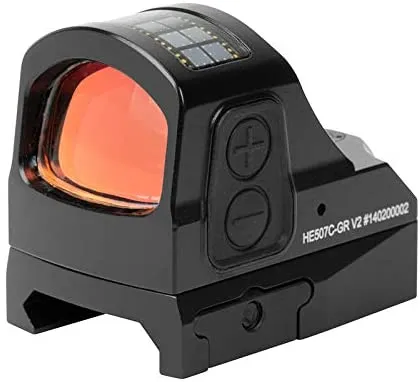
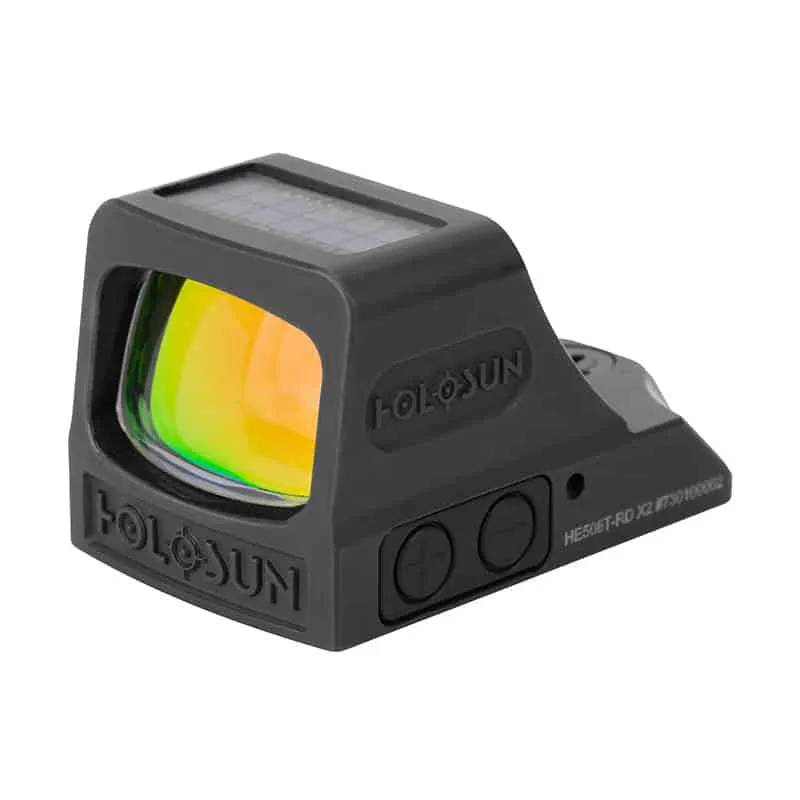
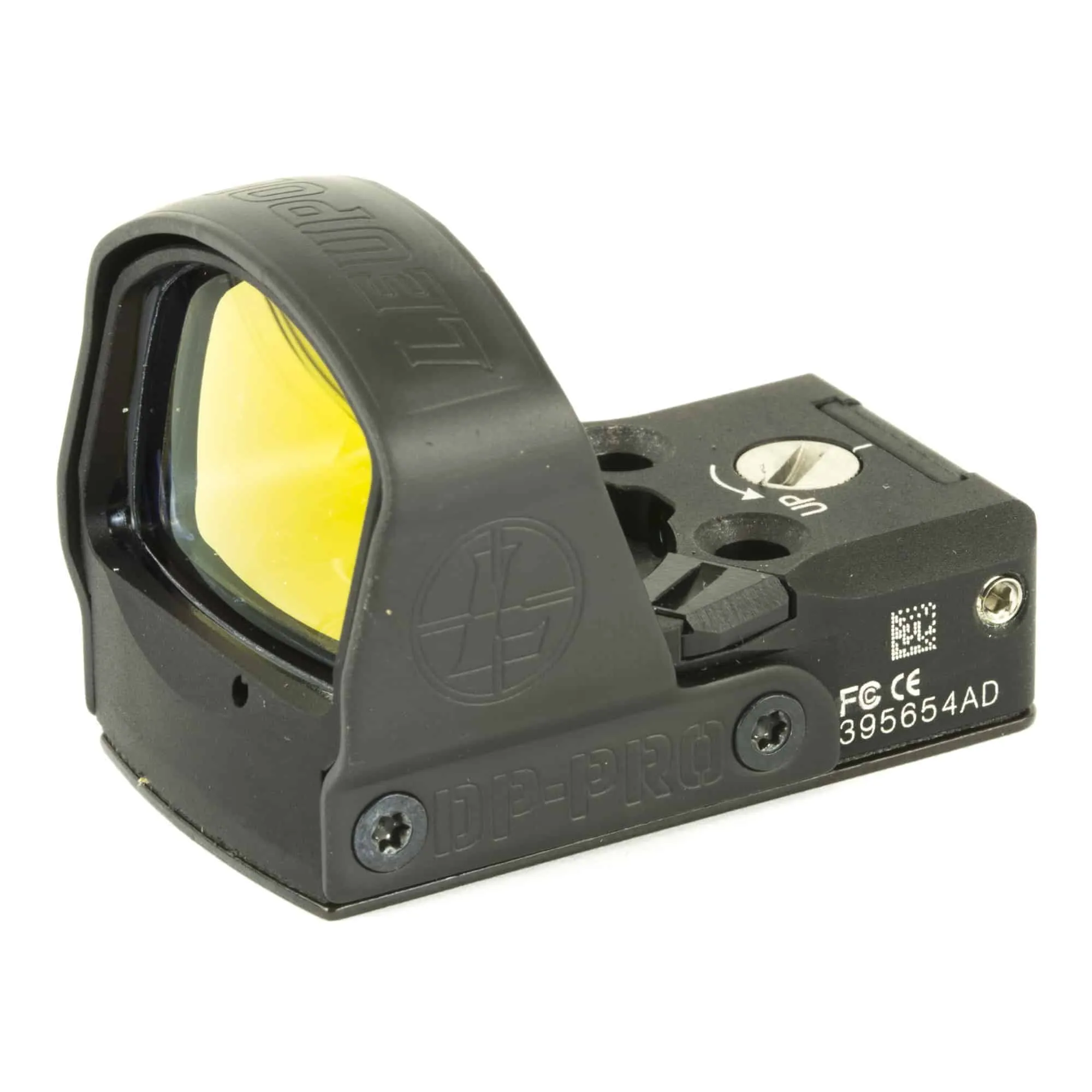
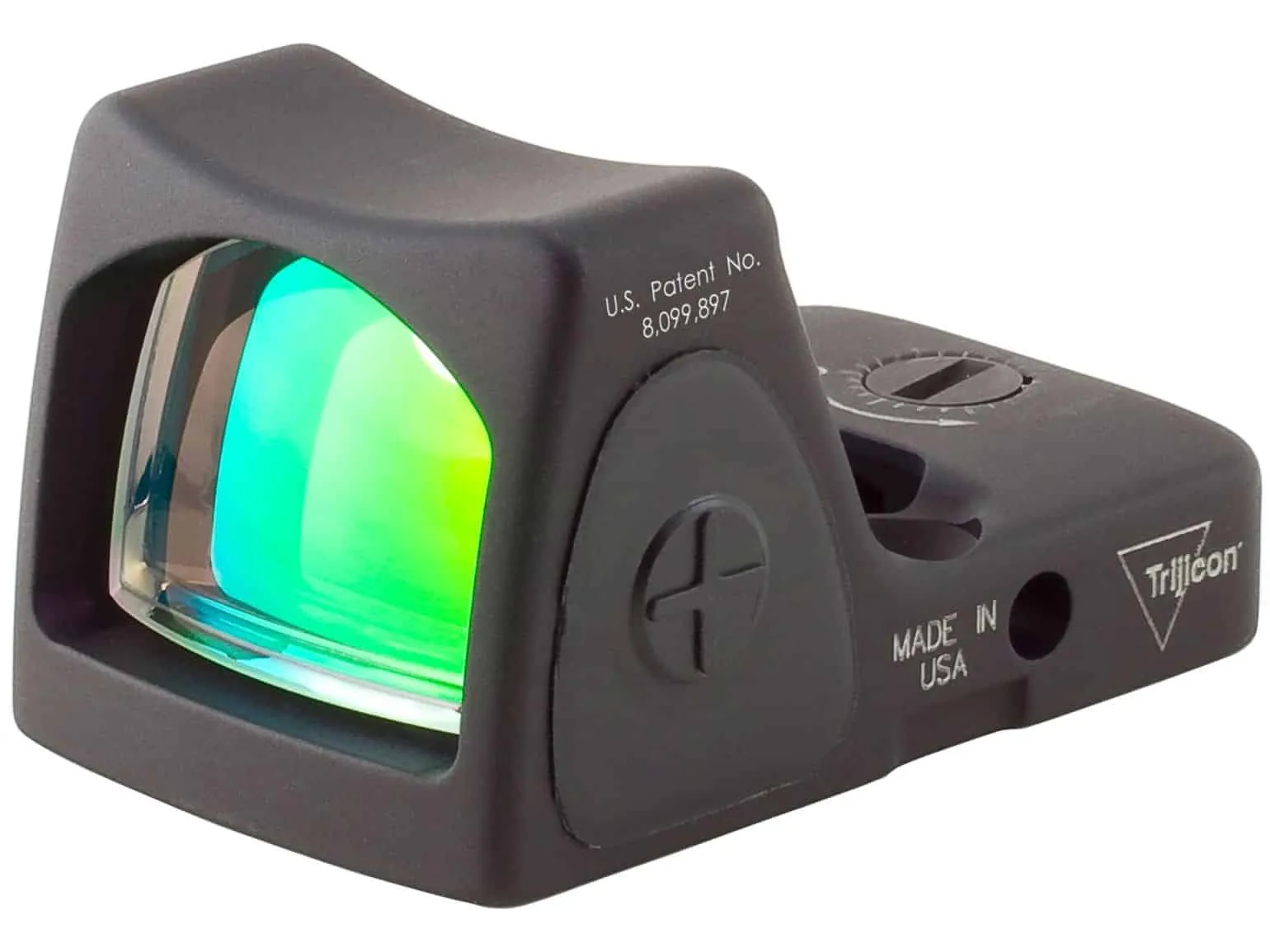
If the ROMEO1PRO footprint gives you pause, the Trijicon RMR remains the open-reflex gold standard on the far more common RMR footprint, with a high reliability reputation and high confidence behind it. The Holosun 507C covers similar open-reflex territory on that same RMR footprint at a friendlier price, and shooters who want a A premium housing metal that is stronger than either aluminum grade and effectively corrosion-proof, with excellent strength-for-weight. Found on high-end enclosed optics like the Holosun 508T and 509T.Full comparison →-housed open reflex sight built for duty abuse should look at the Holosun HE508T. Because the Romeo2 rides the DeltaPoint Pro pattern Sig adopted for the M17 slide cut, our Leupold DeltaPoint Pro review covers the sight that footprint is named for, though that one’s own reliability track record is more mixed. All four are open-emitter reflex sights on pistol-compatible platforms, so none of them ask you to give up the open-reflex form factor the Romeo2 starts from.