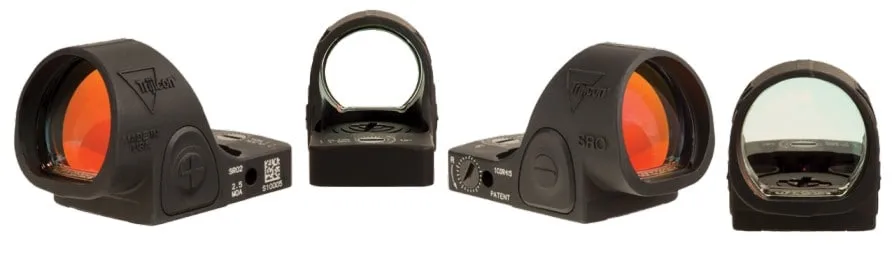
What happens when Trijicon takes the most trusted miniature reflex sight on the market and rebuilds it from the ground up? You get the RMR HD.
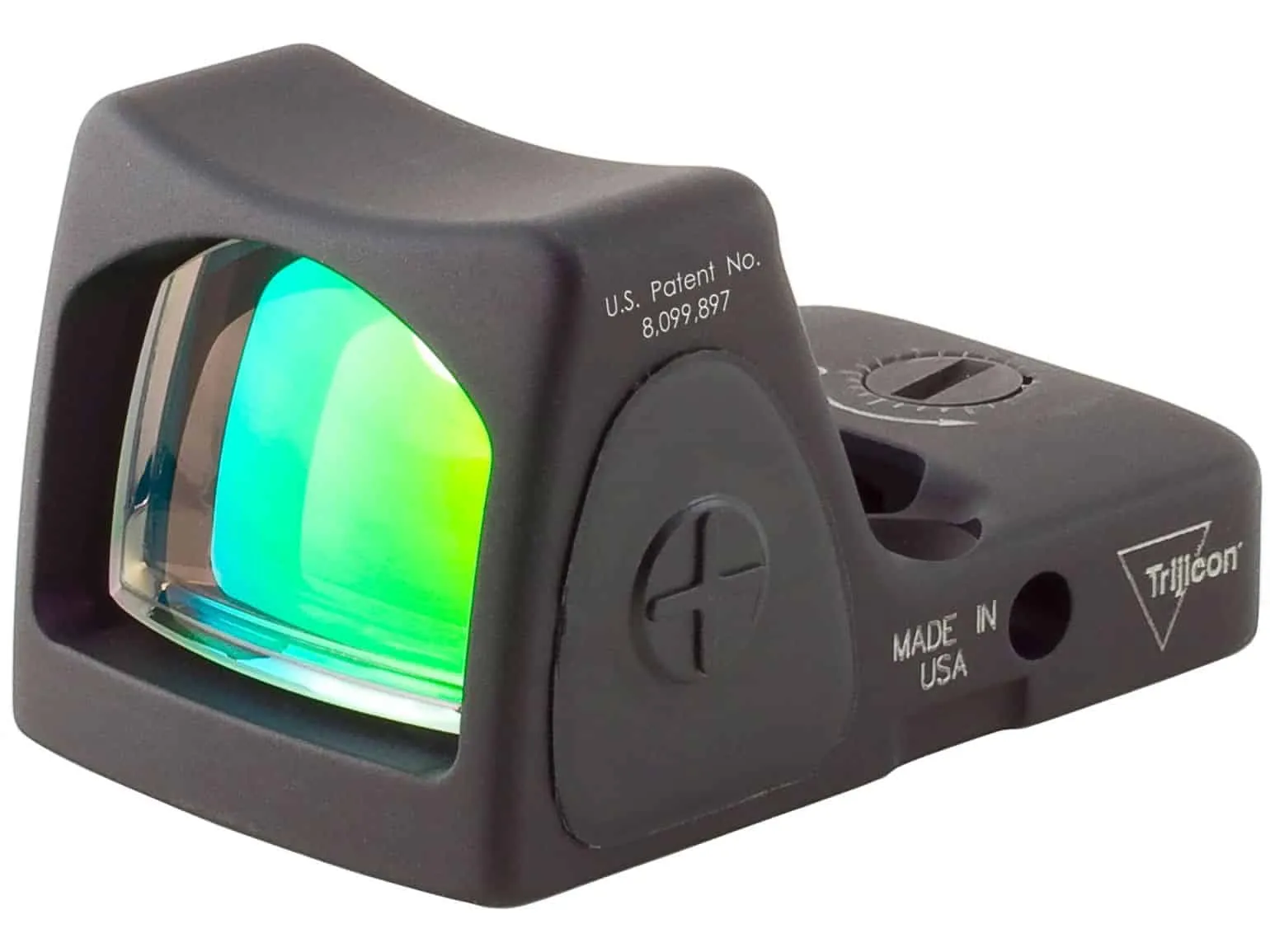
In this review of the Trijicon RMR HD (RMHD2-C-3200002), we will take a look at the features, specifications, and the pros vs cons of this 2024 open-emitter pistol optic, and we will line it up against the standard RMR Type 2 that earned the original its reputation.
If you have read our Trijicon RMR Type 2 review, you already know the bar Trijicon set for rugged reliability. The RMR HD keeps that DNA but answers the most common complaints shooters had about the original: a small window and a battery you could only reach by dismounting the sight.
As always, we will also cover what other shooters say about this micro red dot sight (MRDS) so you can decide whether the upgrade is worth the premium.
Trijicon RMR HD Review
The Trijicon RMR HD is an open-emitter reflex sight built on a forged A high-strength aerospace aluminum alloy (yield about 503 MPa / 73 ksi, roughly 1.8x that of 6061-T6) for only a few percent more weight. The go-to for duty and hard-use pistol optics, often forged.Full comparison → aluminum housing measuring 2.15” long, 1.27” wide, and 1.19” tall, and weighing 1.69 oz. It runs a single A 3-volt lithium coin cell, 20mm across, and the most common red dot battery (about 210 to 240 mAh). Stocked almost everywhere, so a field swap is easy.Full comparison → lithium coin battery (now top-loading) for a 3+ year continuous battery life. The headline change is the reticle: you choose a 1 MOA or 3.25 MOA center dot at purchase, and either one pairs with a 55 MOA segmented ring you can toggle on or off. Minute of Angle (MOA) windage and elevation adjust in 1 MOA clicks. Trijicon’s current retail price, its MSRP, is $1,019; the HD launched at $849.
Trijicon’s RMR series has long held the status of a gold-standard duty optic, selected by units that put their gear through genuine abuse. The HD takes that proven foundation and modernizes it for shooters who wanted a more open sight picture and easier maintenance without giving up the toughness the RMR name is built on.
I have read through a mountain of owner feedback on the standard RMR over the years, and the same two complaints surface again and again: the window feels tight and the battery swap is a hassle. Trijicon clearly heard the same feedback.
Top Features of the Trijicon RMR HD
Design
The RMR HD is forged from 7075-T6 aluminum, the same alloy family that made the original RMR famous for taking a beating and staying zeroed. The sight measures 2.15” x 1.27” x 1.19” and weighs 1.69 oz, larger and a touch heavier than the 1.2 oz Type 2, a deliberate trade to make room for the top-loading battery and a lens set higher in the housing.
The HD keeps the patented angled chassis that absorbs impact and protects the lens, and it adds an indexing ridge on top of the housing to aid point-shooting if the dot is ever lost. The housing is submersible to 66 ft (20 m), so water ingress is a non-issue for any realistic environment.
The most visible design change is the window, and the published figures disagree on how much it grew. Freedom Gorilla lists the HD’s window at 0.89 x 0.67 inches against 0.87 x 0.63 inches for the RMR Type 2. American Rifleman gives 0.9 x 0.67 inches and says the pane is “actually no larger than the original RMR’s”, but that it looks “substantially more view-filling” because the lens sits higher. Trijicon’s product page prints no window size. Either way, the change you notice is more of the pane in view as the pistol comes up on target, not a dramatically bigger piece of glass.
Reticle
This is where the HD separates itself from every RMR before it. Instead of a single fixed dot, the RMR HD uses a selectable reticle. You pick your center aiming point when you buy (a fine 1 MOA dot for precision, or a 3.25 MOA dot for faster acquisition), and either dot can be paired with a 55 MOA segmented ring.
With the press of a button you toggle the ring on or off. Run the bare dot when you want a clean, precise aiming point, or bring up the 55 MOA ring/dot combo for rapid target acquisition at close range, where the large ring draws the eye and the dot confirms the shot. You can even adjust the relative brightness between the ring and the dot. Reviewers who have run similar circle-dot systems generally find the ring earns its keep most on a fast close-range drill, then gets tucked away for precision work.
The reticle is driven by an LED with nine manual brightness settings plus an automatic mode, including a new super-bright daylight setting and three settings compatible with night vision (NV) devices. That is a meaningful jump over the original RMR’s brightness range.
Operation
The RMR HD’s standout operational feature is its forward-facing light sensor. Where most reflex sights read ambient light at the shooter’s position, the HD’s sensor looks downrange and gauges the brightness at the target in auto mode, then sets reticle brightness to suit what you are actually aiming at, a smarter approach for shooting from shadow into light or vice versa.
Brightness is controlled by buttons on the sides of the housing, and like the Type 2 the sight returns to automatic mode roughly 16.5 hours after the last manual change to guarantee readiness. Windage and elevation adjust in audible, tactile 1 MOA clicks.
Power comes from a single CR2032 lithium coin battery delivering 3+ years of continuous runtime at a mid-level brightness setting. The single biggest quality-of-life upgrade is the top-loading battery tray: you can swap the cell from the top of the optic without dismounting it, so you never break your zero or need a separate sealing plate. That was exactly the pain point that defined battery changes on the original RMR.
Reliability standing
Trijicon RMR HD
Medium confidence based on 6 sources, 4 first-hand.
- Rounds tested
- 180 rounds on one HD after a two day launch course (about 6,000 rounds across 14 HD and RCR optics)
- Battery
- CR2032: 3 years continuous use on setting 5, dot only (Trijicon spec, printed by TFB; Frag Out gives over three years)
- Warranty details
- Trijicon's Limited Lifetime Warranty text, reproduced by UK dealer Beechwood Sport, covers the optical system and metal structure for the original owner's lifetime but not the illumination system, and lists five years on electronics for RMR LED and adjustable LED versions. That list does not name the RMR HD, so the HD's electronics term is not confirmed here.
What those tests were
- drop: pass . Kelly Young (American Rifleman) at Trijicon's launch course with Scott Jedlinski: after about 6,000 rounds over two days, attendees racked the slides one handed using the optics, bashed the dots repeatedly into a sawhorse and threw some into the air; all 14 RMR HD and RCR optics stayed operational and kept their zeros. Only RCRs were kicked in the dirt. A maker hosted event with maker supplied optics, mixing HD and RCR units.
- recoil: pass . Young (American Rifleman) then fired 180 rounds through his RMR HD 3.25 MOA on an FN 545 Tactical with no change in function or zero. Scott Conditt (The Armory Life) on a Springfield Echelon saw no point of impact change in one range session.
Aggregated from others' first-hand testing, not our own: this standing deliberately reaches past any one shooter's round count. We surface a sourced reputation tier rather than inventing a score the evidence cannot support.
Full reliability data →Warranty standing
Trijicon warranty
Lifetime housing, 5-yr electronics, non-transferable
- Housing
- Lifetime
- Electronics
- 5 yrs
- Transferable
- No
- Receipt required
- Unstated
- Registration
- Unstated
- Support
- active
Mounting
The RMR HD keeps the original Trijicon RMR footprint, so it drops onto the enormous existing ecosystem of RMR-cut slides and adapter plates. Trijicon kept the deck height identical to the Type 2 and the HD even accepts the same mounting screws, which makes upgrading from a Type 2 about as painless as a sight swap gets.
For rifle and carbine use, you will need to add a Picatinny-compatible RMR mount to match your platform, sold separately.
Details
Included with your purchase:
- Trijicon RMR HD reflex sight (1 MOA or 3.25 MOA)
- CR2032 lithium coin battery
- Mounting screws
- Torx wrench
- Instruction manual
What Testers Reported
The hands-on record on the RMR HD is short and clean. Kelly Young (American Rifleman, December 2023) attended Trijicon’s launch course with maker supplied optics: after close to 6,000 rounds over two days, attendees racked slides one handed on the optics, bashed them into a sawhorse and threw some in the air, and all 14 RMR HD and RCR units stayed working and kept their zeros. He then fired 180 more rounds through his own RMR HD 3.25 MOA on an FN 545 Tactical with no change in function or zero. Scott Conditt (The Armory Life, August 2023) saw no point of impact change in a range session on a Springfield Echelon and liked the “large, unobstructed and crisp field of view,” with no washout or bloom moving between lighting conditions. Pete (The Firearm Blog, October 2023) found a bright segmented circle with a dimmer dot “the sweet spot,” and notes the top-loading screw plate allows battery swaps “without the need to re-confirm a zero.”
Reliability: The only abuse test ran at Trijicon’s own event, and no source has more than 180 rounds on one HD. Battery life is Trijicon’s three-year rating; nobody measured it.
Trijicon RMR HD vs. RMR Type 2
The two sights share a footprint and a philosophy, but the HD modernizes the formula. The biggest differences:
- Window: 0.89 x 0.67 inches vs 0.87 x 0.63 by Freedom Gorilla’s figures; American Rifleman calls the HD’s pane no larger, only set higher.
- Reticle: the Type 2 has a single fixed dot; the HD offers a selectable 1 or 3.25 MOA dot with a toggleable 55 MOA ring.
- Battery: the Type 2 requires dismounting to change the battery; the HD is top-loading.
- Light sensor: the HD adds a forward-facing sensor that reads brightness at the target.
- Brightness: the HD adds a super-bright setting and a third NV setting.
- Size and weight: the HD is larger and heavier (1.69 oz vs 1.2 oz).
Call it a rematch between two members of the same family: the Type 2 still wins on price and weight, but the HD takes the rest of the card.
Pros & Cons
Pros
- Selectable reticle: toggle between a clean single dot and a 55 MOA ring/dot combo
- Choice of a fine 1 MOA or a faster 3.25 MOA center dot at purchase
- Window set higher than the Type 2's, so more of the pane is in view
- Top-loading CR2032 battery: swap the cell without removing the optic or breaking zero
- Forward-facing light sensor reads brightness at the target for smarter auto adjustment
- Drops onto existing RMR footprint plates with the same deck height as the Type 2
- Forged 7075-T6 aluminum housing, submersible to 66 ft, with a 3+ year battery life
Cons
- Premium price: MSRP sits well above the standard RMR and most competitors
- Larger and heavier than the original RMR, so dedicated RMR holsters may not clear it
- No solar backup or true shake-awake, unlike some rivals in the price class
Conclusion
The RMR HD is the most refined miniature reflex sight Trijicon has ever shipped. It keeps everything that made the RMR a trusted duty optic and fixes the two complaints shooters had with the original, a cramped window and an awkward battery swap, while adding a genuinely useful selectable reticle and a smarter light sensor. If you want the best RMR money can buy and the price does not scare you off, this is it.
Alternate Options
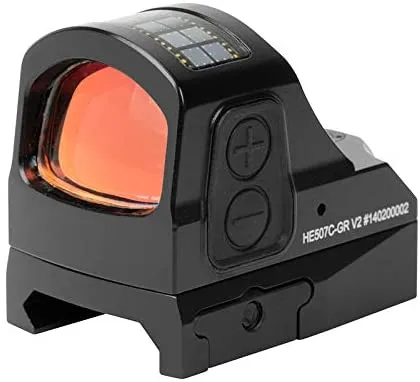
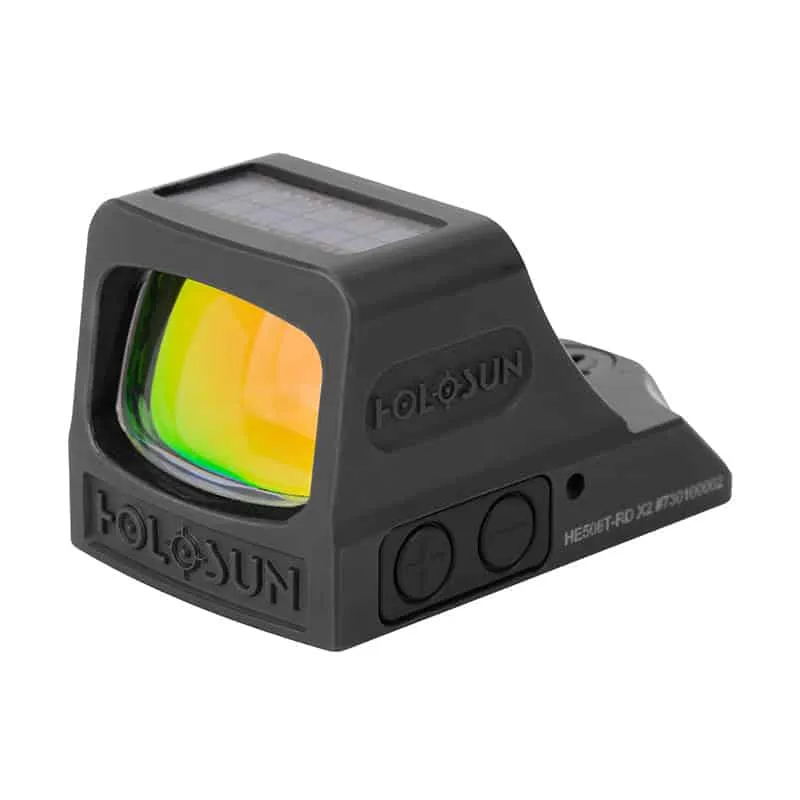
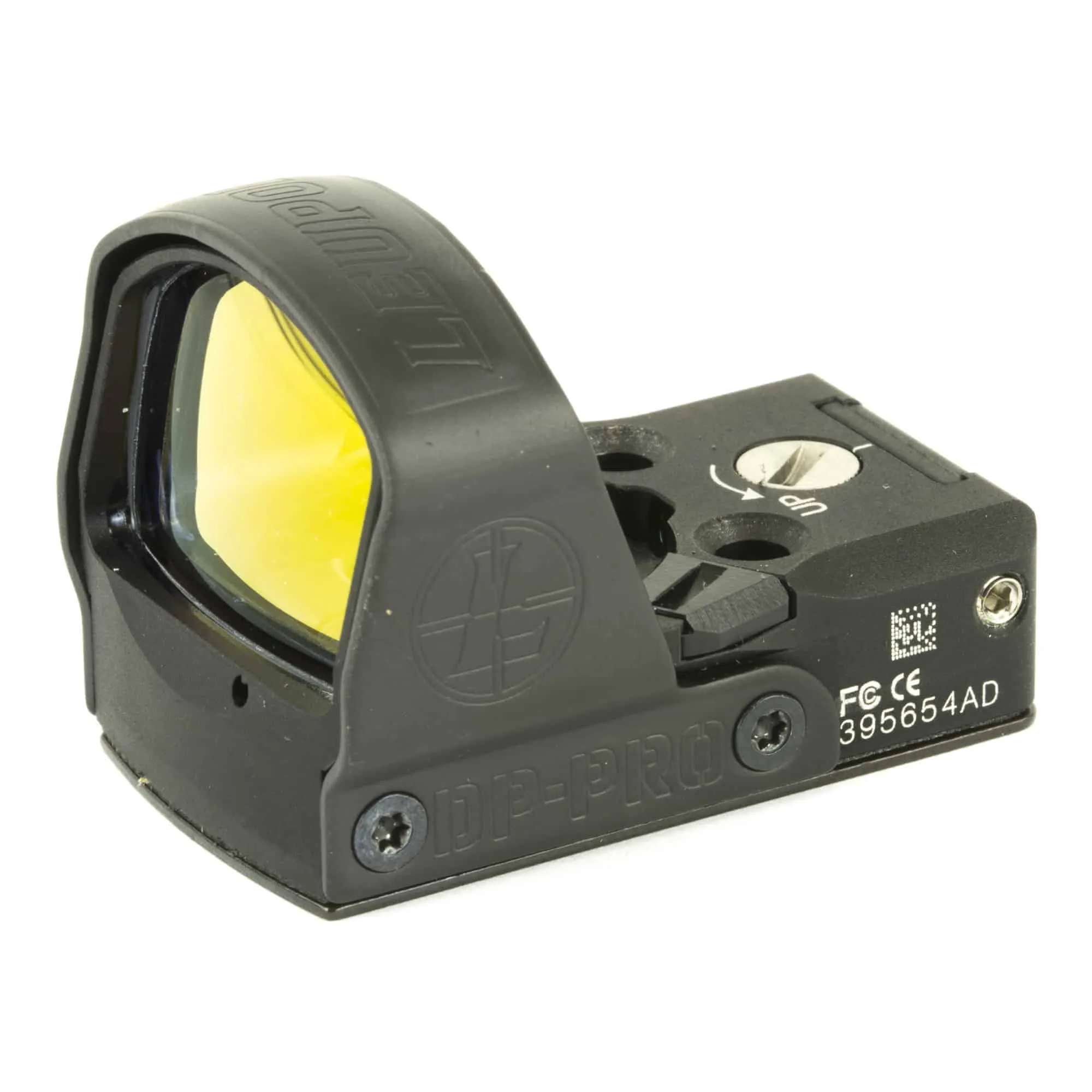
If the HD’s premium is more than you want to spend, the standard Trijicon RMR Type 2 remains a battle-proven choice at a lower price. For a feature-rich alternative with a multi-reticle system and solar backup, take a look at our Holosun HE508T review. Shoppers who want a green reticle on the same RMR footprint at a lower price should look at the Holosun 507C, and duty-minded buyers comparing footprints across brands will want to see our Leupold DeltaPoint Pro review too. And if you like the HD’s open sight picture but want an even larger window for competition, the Trijicon SRO is worth a look.