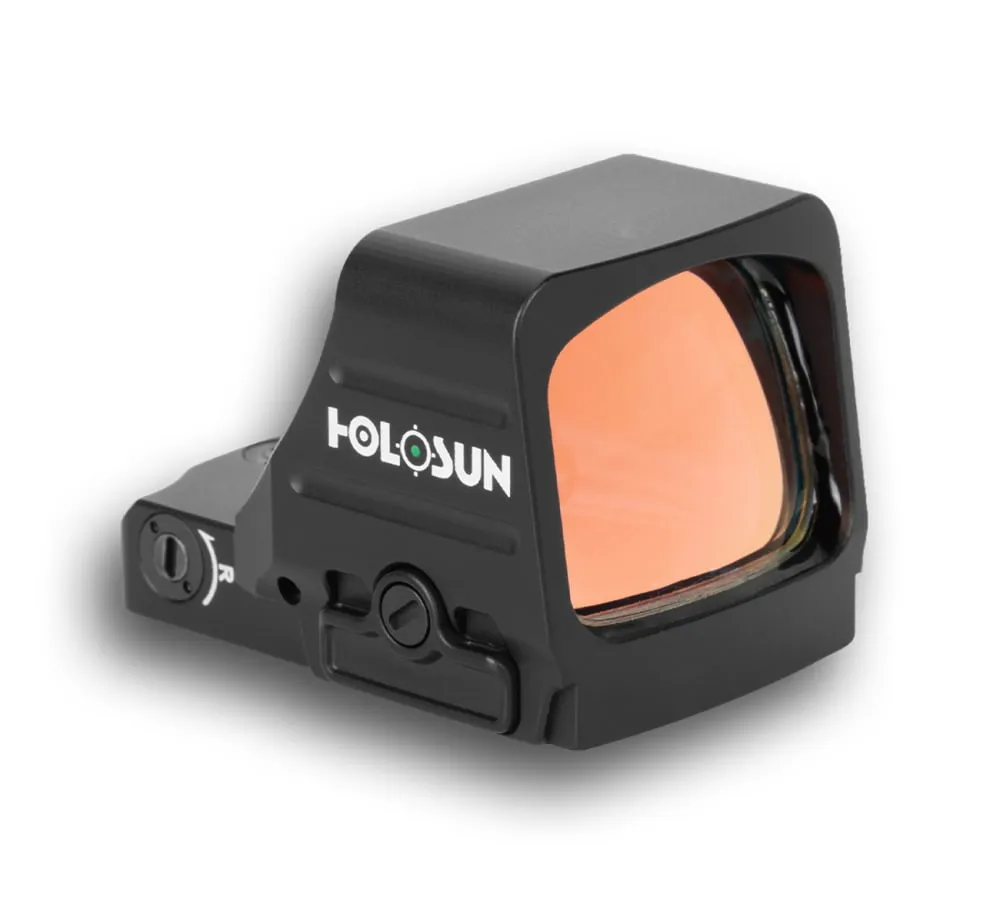
Looking for a pistol red dot with a window big enough to make target transitions feel effortless? The Holosun 507COMP takes the familiar RMR-footprint 507 series and reworks it for the competition crowd, with a much larger objective lens and a reticle you can reconfigure between precision and speed without touching your zero.
Holosun 507COMP Review
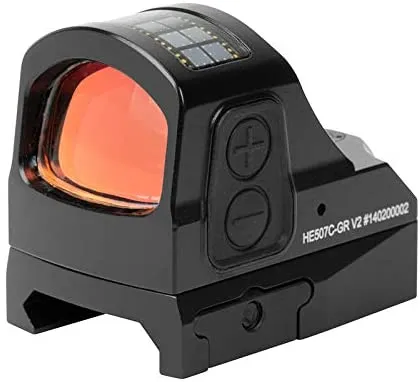
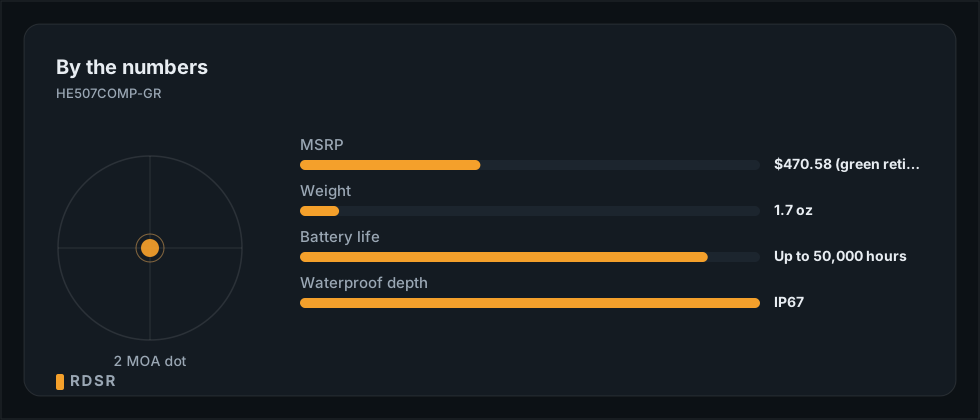
The Holosun HE507COMP-GR is an open-emitter reflex sight built around a 1.1-inch by 0.87-inch viewing window, roughly two thirds more glass than the standard 507C. It measures 1.8 x 1.3 x 1.3 inches and weighs 1.7 oz. The reticle stacks a 2 Minute of Angle (MOA) dot with an 8, 20, or 32 MOA ring, giving four selectable sight pictures from one optic. Holosun launched this as the Competition Reticle System (CRS), and its current product pages call the same feature the Performance Reticle System (PRS), so both names describe the optic you will find on the shelf. Power comes from a single side-loading A 3-volt lithium coin cell, 16mm across, holding about 120 to 140 mAh. It powers many micro and subcompact pistol optics that trade runtime for a smaller footprint.Full comparison →, rated up to 50,000 hours. Holosun lists the green-reticle HE507COMP-GR at an MSRP of $470.58, with the red HS507COMP-RD priced lower.
Holosun built its reputation on the 507C, and the 507COMP is a purpose-built variant of that platform aimed at the competition market. It is not a replacement for the 507C so much as a specialized sibling.
507COMP vs 507C
These two share a footprint, a battery, a brand and most of a model number, which makes them easy to confuse and easy to buy wrong. The differences are worth laying out plainly.
| 507COMP | 507C X2 | |
|---|---|---|
| Window | 1.1” x 0.87” | 0.63” x 0.91” |
| Reticle options | 2 MOA dot, plus 8 / 20 / 32 MOA rings | 2 MOA dot, plus 32 MOA ring |
| Solar backup | No | Yes |
| Battery claim | Up to 50,000 hours | Up to 100,000 hours |
| Weight | 1.7 oz | 1.5 oz |
| MSRP | $470.58 | $309 |
Read that table and the split is obvious. The 507COMP buys you glass and reticle choice; the 507C buys you a smaller profile, a solar panel and a longer battery claim for a good deal less money. A wider window helps most when you are moving the gun fast between targets and want to find the dot without a precise cheek-to-slide index, which is a competition problem far more than a carry problem. Meanwhile the solar failsafe on the 507C is a carry feature: it matters when an optic sits in a safe or a holster for months and you want it lit even on a dead cell.
The extra ring sizes follow the same logic. An 8 MOA circle around a 2 MOA dot is a plate-rack tool. A 32 MOA circle is a close-range speed tool. Neither is something most defensive shooters will change between strings.
So the honest split: if the gun is a competition gun, the 507COMP is the one worth paying for. If it is a carry gun, the 507C is the better buy and the bigger housing on the COMP works against you in a holster.
Top Features
Design
The defining feature is the window. At 1.1 x 0.87 inches it is noticeably larger than the 507C’s, and it is the first thing every published reviewer comments on. The housing is CNC-machined A high-strength aerospace aluminum alloy (yield about 503 MPa / 73 ksi, roughly 1.8x that of 6061-T6) for only a few percent more weight. The go-to for duty and hard-use pistol optics, often forged.Full comparison → T6 aluminum with a hard-anodized finish, carrying an A full IP code meaning dust-tight (first digit 6) plus temporary immersion to 1 meter for 30 minutes (second digit 7).Full comparison → water and dust rating along with a manufacturer-claimed 5000G shock resistance.
At 1.7 oz the 507COMP stays light for a pistol optic, adding only about two tenths of an ounce over the standard 507C despite the much larger window, so the extra glass costs almost nothing on the slide.
Reticle
You get a 2 MOA dot on its own for precision work, or you can add an 8, 20, or 32 MOA ring around it for faster pickup, cycling through the combinations without losing zero. Brightness runs across 12 settings: 8 for daylight and 4 that are night vision compatible.
The system is not without rough edges. The bare 2 MOA dot can feel small and easy to lose inside such a large window when the ring is switched off, and reviewers who have run it note a slight blue tint to the glass. Scott Conditt, writing for The Armory Life in September 2023, liked the 2 MOA and 8 MOA ring combination but found one of the other ring options less intuitive for his eye.
Operation
Shake Awake motion sensing is built in, so the optic wakes on movement and returns to sleep after a period of inactivity, which is how the 50,000-hour figure is reached. A lockout mode prevents accidental brightness changes in a holster or bag. Unlike the solar-equipped 507C, the 507COMP relies on the CR1632 alone.
The battery tray loads from the side of the housing, so a cell swap does not require pulling the optic or re-zeroing. It is a small thing that turns into a large thing the first time you need it the morning of a match.
Reliability standing
Holosun HS507COMP (HE507COMP-GR)
Medium confidence based on 4 sources, 3 first-hand.
- Rounds tested
- ~3,000 rounds (Dyal, firsthand)
- Battery
- CR1632: 50,000 hours at setting 6 (manufacturer rating)
What those tests were
- impact (holstered pistol struck against door post, 15 times per side): pass . No effect on zero from repeated deliberate strikes against a door post.
- drop (cased pistol dropped ~12 times per orientation, optic up and down, from waist height): pass . Zero unaffected across all drop orientations tested.
Aggregated from others' first-hand testing, not our own: this standing deliberately reaches past any one shooter's round count. We surface a sourced reputation tier rather than inventing a score the evidence cannot support.
Full reliability data →Mounting
The 507COMP uses the same RMR footprint as the 507C and the Trijicon RMR, so it drops onto the same slide cuts, plates and holsters built around that pattern. Adjustment is 1 MOA per click across roughly 30 MOA of windage and elevation travel. Chris Christian, reviewing the sight for NRA Shooting Sports USA in September 2023, found the clicks precise enough to settle a 25-yard zero in three corrections.
In the box
- Holosun HE507COMP-GR sight with a CR1632 pre-installed
- Mounting and adjusting tool
- Screws for different mounting surfaces
- Lens cloth
- Instruction manual and warranty documentation
Holosun’s manual points out that the factory-installed battery may already be partially depleted from testing, so replace it before you rely on the optic.
Warranty
Holosun’s Limited Lifetime Warranty covers the metal housing and optical system for the life of the product under normal personal use, with the illumination system covered for 10 years from the manufacture date. Registration with Holosun is required to activate coverage, and the warranty does not apply to units bought from unauthorized resellers.
The important limit here is that the warranty covers manufacturing defects, not physical damage. That distinction is not academic on this optic, for reasons covered below.
Warranty standing
Holosun warranty
Lifetime housing, 10-yr electronics, non-transferable
- Housing
- Lifetime
- Electronics
- 10 yrs
- Transferable
- No
- Receipt required
- Yes
- Registration
- Yes
- Support
- active
Holosun tiers coverage by use. Standard consumer models are warrantied for "normal, personal use" only; using them professionally (duty/LE/commercial) voids the manufacturer's warranty. Professional-designated models are marked with an "LEM" suffix in the model number and carry a 3-year warranty from date of purchase (unless otherwise specified by individual contract terms). This LEM-suffix designation is stated on the official holosun.com/warranty page.
What published reviewers found
Three named reviews carry most of the useful information on this sight.
Wyatt Sloan at Pew Pew Tactical ran the 507COMP on three handguns for a review published in June 2026: a Walther PDP Pro-X for 650 rounds, a Canik Rival-S for about 1,000, and a S&W TRR8 revolver for 300 rounds of .38 Special plus 200 of .357 Magnum. Across roughly 2,150 rounds he reported no flickering and no loss of zero. He also reported the failure that anchors the con list: the optic took a spill from a short table, struck the ground at the rear right corner, and the glass developed a single stress crack near the top right. The reticle stayed fully visible and functional, but the crack was permanent, and it falls outside warranty coverage as physical damage. His conclusion was that the housing could stand a durability revision.
Scott Conditt at The Armory Life put about 250 rounds through a Springfield Armory Echelon 9mm at 15 to 50 yards in September 2023 and reported the zero rock solid, with enough brightness range to hold the reticle against sun-lit Arizona berms.
Chris Christian, writing for NRA Shooting Sports USA the same month, zeroed the sight on a Ruger MKIV .22 LR at 25 yards and came away impressed with the reticle system’s range, singling out the ability to dial the sight picture up or down depending on the precision a stage demands.
Window size is the most consistently praised feature across all three, with target acquisition described as clearly easier than on a standard 507C-sized window.
Reticle flexibility drew praise for letting shooters match the sight picture to the shot, with the bare 2 MOA dot inside the big window as the recurring gripe.
Reliability under recoil looks good on the evidence available. Impact resistance is the open question: one cracked lens from one short drop is a single data point, not a pattern, but it is the only drop event in the published record and it did not end well.
Pros & Cons
Pros
- Large 1.1" x 0.87" viewing window, roughly two thirds more glass than the standard 507C, built for fast target transitions
- Selectable four-element reticle: a 2 MOA dot alone, or paired with an 8, 20, or 32 MOA ring
- RMR footprint fits the same wide range of slide cuts and mounting plates as the Trijicon RMR
- 7075 T6 aluminum housing with an IP67 rating and a manufacturer-claimed 5000G shock resistance
- Side-loading CR1632 battery tray rated up to 50,000 hours, so the optic never has to come off the slide to swap a cell
- Held zero across roughly 2,150 rounds on three handguns in Pew Pew Tactical's testing, and through a 250-round Springfield Echelon session at The Armory Life
Cons
- No solar backup, unlike the standard 507C
- A single drop from a short table cracked the glass in Pew Pew Tactical's sample, and Holosun's lifetime warranty does not cover physical damage
- The bare 2 MOA dot can be easy to lose inside the large window when no ring is engaged
- Reviewers report a slight blue tint to the glass
- Costs substantially more than the 507C while serving a narrower purpose
Conclusion
The Holosun 507COMP delivers on its core promise: a bigger, clearer window on the same trusted RMR footprint, with a reticle flexible enough to serve both precision and speed shooting. Recoil durability across published testing has been clean. The one reported drop was not, and buyers should weigh that against the price.
Given that price and the competition-first design, this is a sight for shooters who specifically want the largest window available in this footprint, not a general-purpose upgrade over the standard 507C. At the time of writing in August 2026 the green model streets well below its $470.58 MSRP, which narrows the gap to the 507C but does not close it.
Alternative Sight Options
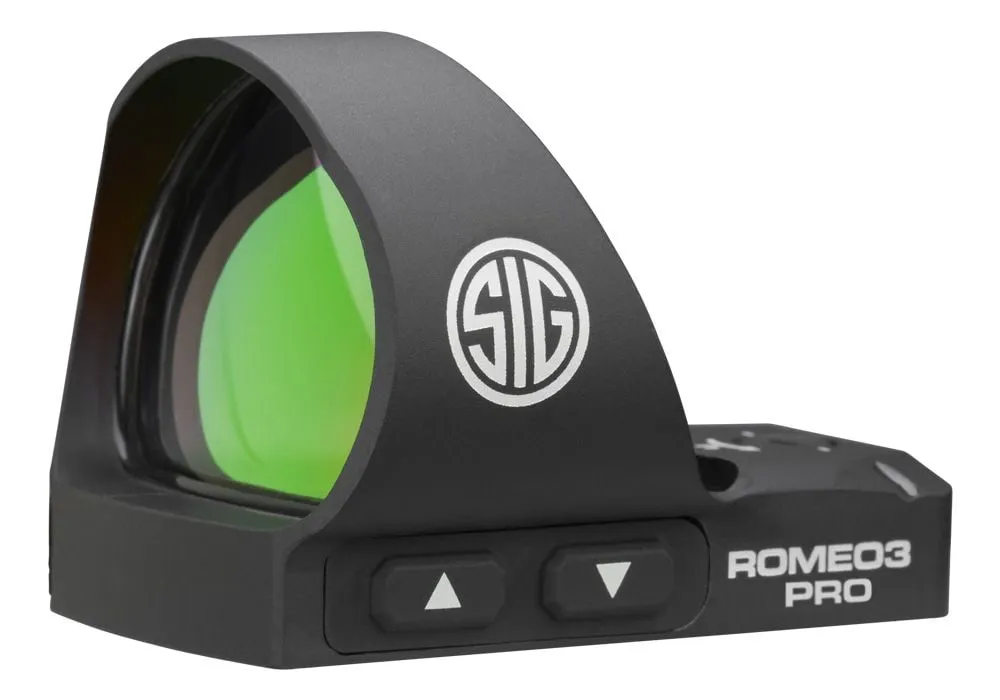
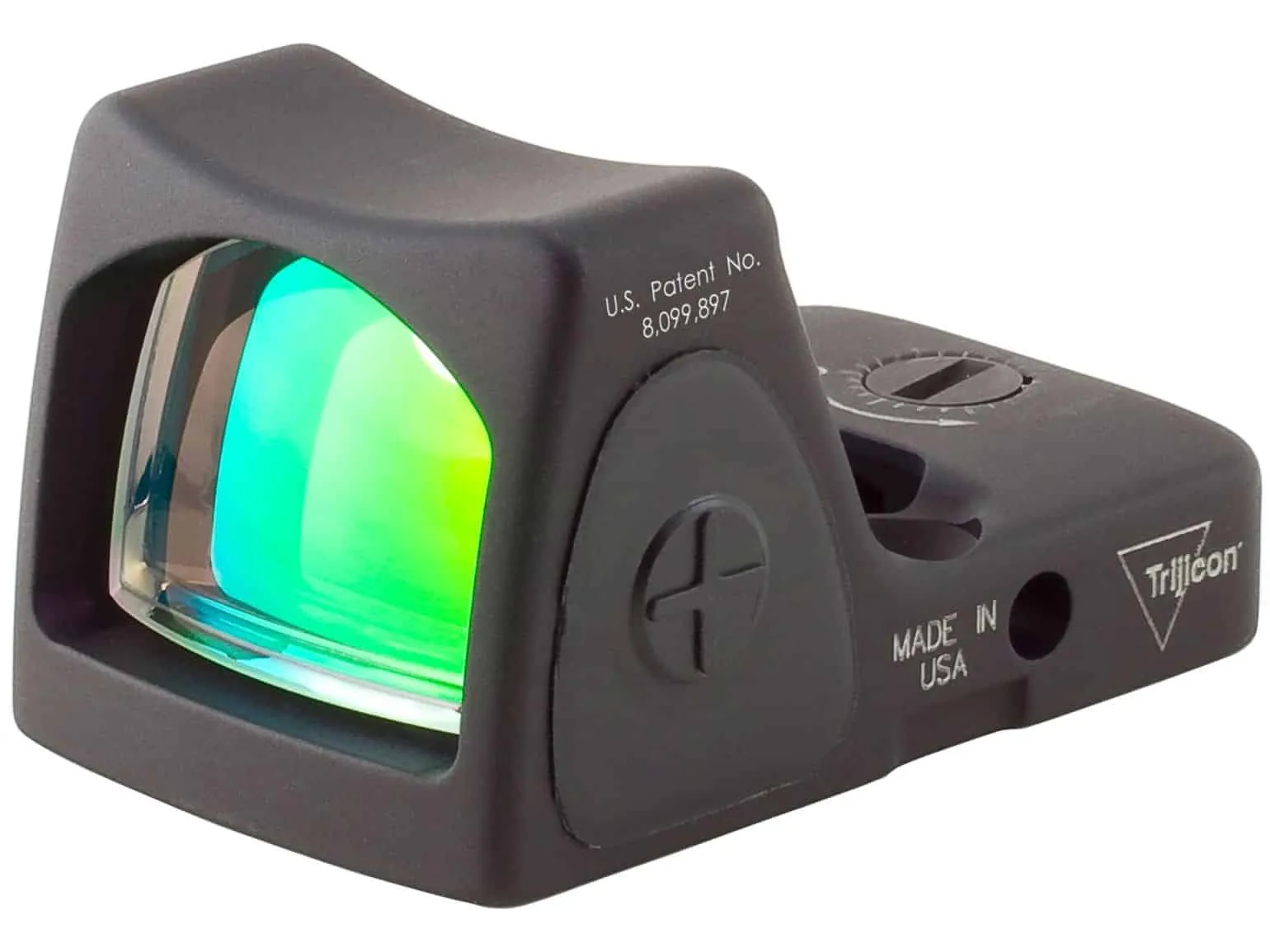
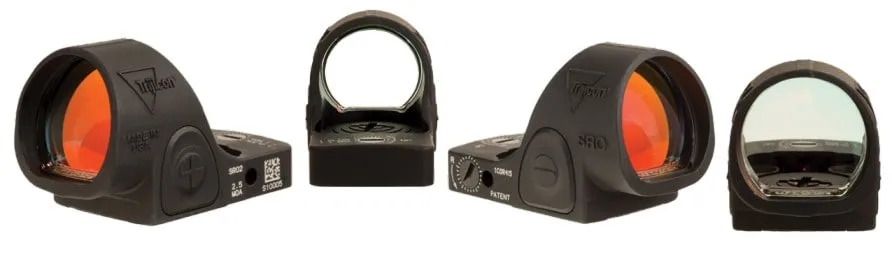
If the RMR footprint is the draw but you want a more concealment-friendly package for daily carry, the Holosun 507C is the more compact, solar-equipped sibling on the same footprint. The Trijicon SRO is the most direct competitor here, an open reflex built around the same big-window competition idea with Trijicon’s build quality and price to match. The Sig Sauer Romeo3 Max Pro is another large-window competition open reflex, though it uses a DeltaPoint Pro footprint rather than an RMR one, so plates and slide cuts are not interchangeable. And for the open-emitter benchmark that established this footprint in the first place, the Trijicon RMR remains the durability standard, with a much smaller window as the trade.