Are you searching for an enclosed pistol dot that carries the RMR name? In this review of the Trijicon RCR, we take a close look at the features, specifications, and pros and cons that define Trijicon’s enclosed pistol optic. The RCR, short for Ruggedized Closed Reflex, is Trijicon’s answer to the closed-emitter trend. It takes the housing shape and reputation that made the RMR a carry standard and seals the emitter behind protective glass.
We will walk you through the housing, the reticle, how it operates, and how it mounts to your handgun or carbine. We will also cover what other shooters say about it, then close with an honest recommendation on where the RCR fits in your kit.
Trijicon RCR Review
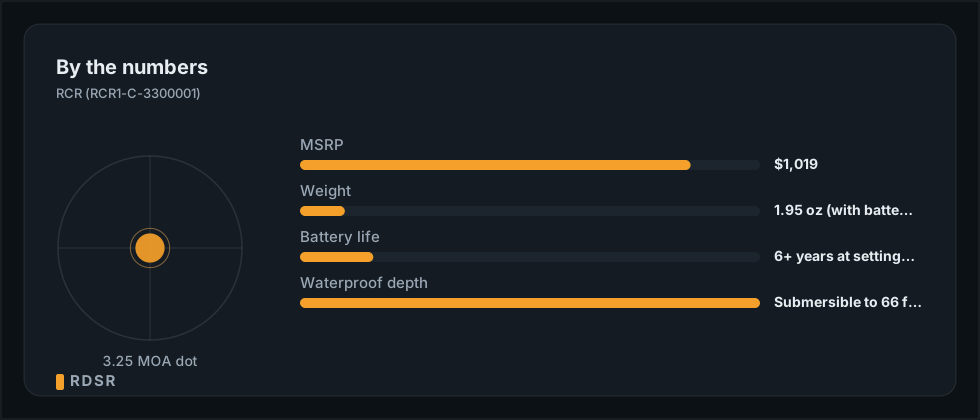
The Trijicon RCR is a fully enclosed miniature red dot sight (MRDS) measuring roughly 1.8 (in) x 1.2 (in) x 1.3 (in) and weighing 1.95 oz with the battery installed. It runs a single 3.25 Minute of Angle (MOA) red dot from one A 3-volt lithium coin cell, 20mm across, and the most common red dot battery (about 210 to 240 mAh). Stocked almost everywhere, so a field swap is easy.Full comparison → lithium coin battery, rated for 6+ years of life at setting 5. Ten brightness settings, including three night vision compatible settings and a dedicated super bright daylight mode, cover everything from a dark room under image intensifiers to a bright range day. The sealed housing is submersible to 66 feet (20 meters), and Trijicon lists the MSRP at $1,019, though street pricing usually runs lower.
Trijicon is the company behind the RMR, the open-emitter sight that effectively defined the modern pistol red dot and earned a place on duty and military handguns worldwide. That pedigree is the whole point of the RCR. It carries the same patented housing geometry and reputation for ruggedness into a closed-emitter package, finally giving RMR-footprint shooters a sealed option from the brand that started the category.
Top Features of the Trijicon RCR
Design
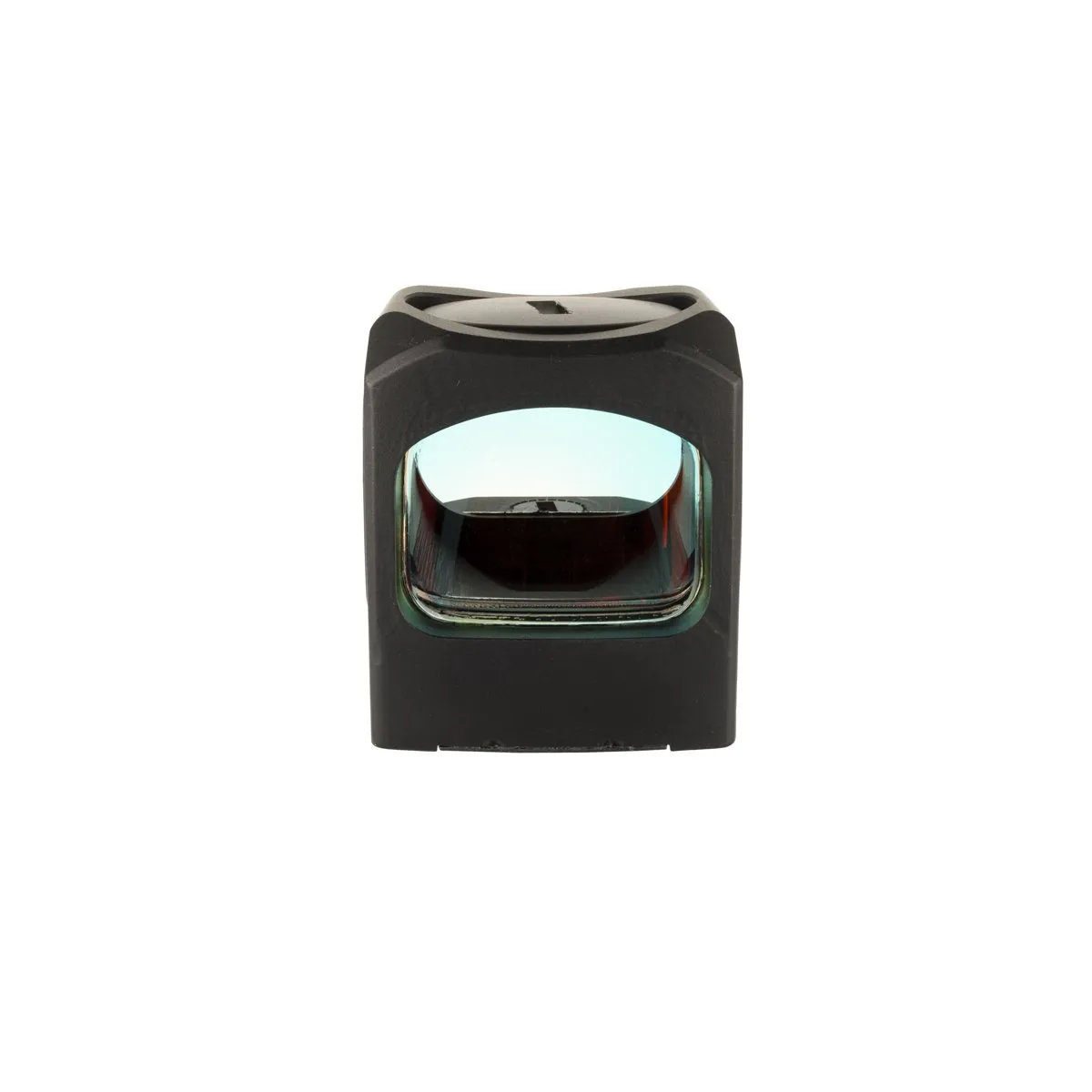
The defining design choice of the RCR is its fully enclosed optical channel. The open-emitter Trijicon RMR exposes its LED to the elements, leaving it vulnerable to rain, snow, mud, and the lint that collects in a holster. The RCR seals the emitter behind protective front and rear glass instead. The reticle simply cannot be smeared or blocked by gunk on an exposed emitter well, because there is no exposed emitter well.
The housing is built from A high-strength aerospace aluminum alloy (yield about 503 MPa / 73 ksi, roughly 1.8x that of 6061-T6) for only a few percent more weight. The go-to for duty and hard-use pistol optics, often forged.Full comparison → aluminum and hard-coat anodized, carrying forward the patented Trijicon chassis geometry built to shrug off slide reciprocation, one of the harshest environments any miniature optic can live in. It measures about 1.8 (in) x 1.2 (in) x 1.3 (in) and weighs 1.95 oz with the battery installed. That makes the RCR a touch heavier and taller than the open RMR. In our view, it is a trade worth accepting for the sealed channel and the top-loading battery.
That toughness extends underwater. The RCR is submersible to 66 feet (20 meters), more than enough margin for any weather or environment you are likely to put a carry pistol through. Combined with the sealed channel, the sight resists both water and particulate intrusion.
Reticle
The RCR uses a single 3.25 MOA red dot, the same reticle size that helped make the RMR a carry favorite. That is a smart size for a defensive pistol optic. It is big enough to pick up fast during a draw, but small enough that it will not blot out a target at distance the way a 6 or 8 MOA dot can.
There are ten brightness settings in total, running from dim up through a dedicated super bright mode for the harshest daylight. Three of those settings are night vision compatible for use with image intensifiers. Reviewers who have run the sight describe the dot as clean and round behind the multi-coated glass, with the crisp edge Trijicon optics are known for.
Operation
Operation will feel familiar to any RMR owner. Brightness is cycled with the side buttons, and the headline operational upgrade is power: the RCR is rated for over six years of life at setting 5 from a single CR2032 lithium coin battery. In practice, you leave the optic on, change the battery on a calendar, and never wonder whether it will be ready.
The bigger quality-of-life change is the battery itself. The original RMR requires you to dismount the optic and re-confirm zero just to swap a cell. The RCR loads its CR2032 from the top under an aluminum cap, so you change the battery without breaking the mount and your zero stays put. Windage and elevation adjust in 1 MOA clicks with a generous travel range, and owner reports describe the firm, audible adjuster feedback Trijicon is known for.
Reliability standing
Trijicon RCR (RCR1-C-3300001, 3.25 MOA)
Medium confidence based on 9 sources, 6 first-hand.
- Rounds tested
- ~2,000-3,000
- Battery
- CR2032: 6+ years of continuous operation at Setting 5 (stated equivalently as 50,000+ hours)
- Warranty
- Trijicon limited lifetime warranty on the optical system and metal housing for the lifetime of the original owner; electronics/illumination are covered separately (Trijicon's documented standard for its LED optics is 5 years from date of manufacture). CAVEAT: the readable Trijicon warranty card (s8) predates and does not name the RCR, so the RCR-specific electronics term could not be confirmed from a primary readable source; the current Trijicon warranty page returned HTTP 403.
What those tests were
- drop: pass . At Trijicon's launch event the reviewer personally dropped, threw, smashed lens-first into tables, pounded on workbenches, and dropped optics into dirt; not a single optic stopped working and the RCR still placed two rounds into a 1-inch square afterward (zero held qualitatively). CAVEAT: this was a manufacturer-hosted abuse demonstration, not independent long-term testing.
- slide-ride recoil: pass . ~2,000-3,000 rounds over ~1 year slide-mounted (patrol carry plus classes); no failures of any kind, the capstan mounting screws 'never loosened or sheared' (checked after every range session), and the top-load CR2032 had not yet needed replacement. Zero retention qualitative ('boring reliable'), no measured MOA. Tester explicitly did NOT drop or water test.
- slide-ride recoil: pass . ~1,100-1,200 rounds over ~9 months across multiple pistols; no failures, housing described as 'seriously beefy' / 'pretty bulletproof'. No formal drop or environmental test by this reviewer.
- recoil: pass . ~500 rounds (AAC 115gr ball + Hornady Critical Duty 124gr) on a Gen4 Glock 17 MOS, shot in up to 109F heat and indoor low light; no failures, mount described as an 'incredibly solid fit'. Loaner optic, so not torture-tested.
Aggregated from others' first-hand testing, not our own: this standing deliberately reaches past any one shooter's round count. We surface a sourced reputation tier rather than inventing a score the evidence cannot support.
Full reliability data →Warranty standing
Trijicon warranty
Lifetime housing, 5-yr electronics, non-transferable
- Housing
- Lifetime
- Electronics
- 5 yrs
- Transferable
- No
- Receipt required
- Unstated
- Registration
- Unstated
- Support
- active
Mounting
The RCR uses the established Trijicon RMR footprint, so it drops onto the single most widely cut optic pattern in the handgun world, with no new slide cut or adapter plate pattern to source. That is the big mounting advantage over proprietary-footprint enclosed dots. If your slide is already milled for an RMR, the bolt pattern lines up.
The one catch is the hardware. Rather than standard RMR screws, the RCR ships with proprietary capstan-style mounting screws designed to resist over-torque and cross-threading. They mount to the RMR bolt pattern, but you use Trijicon’s supplied screws and tool, and you cannot simply reuse a set of generic RMR hardware. Zero the sight and torque the capstan screws to spec, and published reviews report the RMR interface holding point of impact through hard use on a pistol or a carbine.
Details
Here is what is typically included:
- Trijicon RCR enclosed reflex sight
- CR2032 lithium coin battery (installed)
- Proprietary capstan mounting screws
- Mounting tool
- Instruction materials
Customer Feedback
Early owner and reviewer feedback singles out the same themes that define the sight: the enclosed emitter, the multi-year battery, and Trijicon’s reputation for ruggedness are the reasons to buy it. Price is the recurring sticking point.
Reliability: Reviewers describe the closed-emitter design and rugged housing as the features that let them trust the optic in bad weather and hard use.
Battery Life: The 6+ year runtime on a common CR2032, paired with the top-loading tray, draws consistent praise.
Price: The most common criticism is cost. Shooters value the durability but feel the premium is steep against other enclosed options.
Pros & Cons
Pros
- Fully enclosed optical channel shields the emitter from mud, lint, and debris that can dim or block an open RMR
- 6+ year battery life at setting 5 from a single common CR2032 cell
- Top-loading battery: swap the cell from above without removing the optic or losing zero
- Uses the familiar RMR footprint, so it mounts to the most widely cut slide pattern in the industry
- 7075-T6 aluminum housing built to survive duty and carry abuse, submersible to 66 ft
- Crisp 3.25 MOA dot: the same reticle size that made the RMR a fast, precise carry standard
Cons
- Premium price point in line with other top-tier enclosed dots
- Proprietary capstan mounting screws, so you cannot reuse standard RMR screws or hardware
- Heavier and taller than the open-emitter RMR it is based on
Conclusion
The Trijicon RCR is one of the strongest enclosed pistol red dot sights on the market, and for a duty or defensive handgun it is a natural pick, especially for shooters already invested in the RMR footprint. The sealed optical channel, top-loading 6-year battery, and 7075-T6 housing add up to a sight you can genuinely stop worrying about. You pay a premium for that peace of mind and commit to Trijicon’s capstan hardware, but we think the reliability is the real product here.
Alternate Options
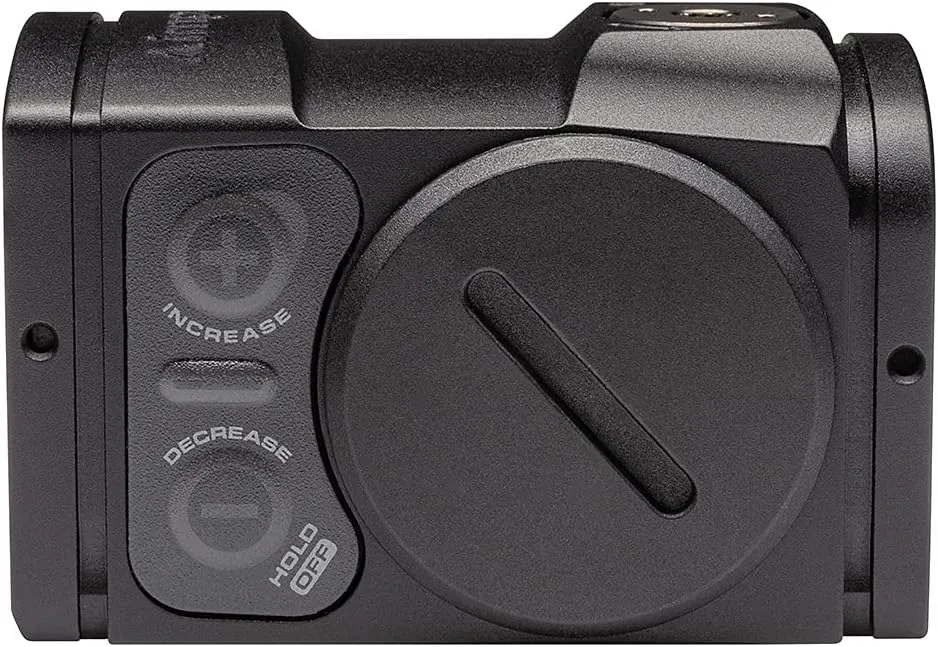
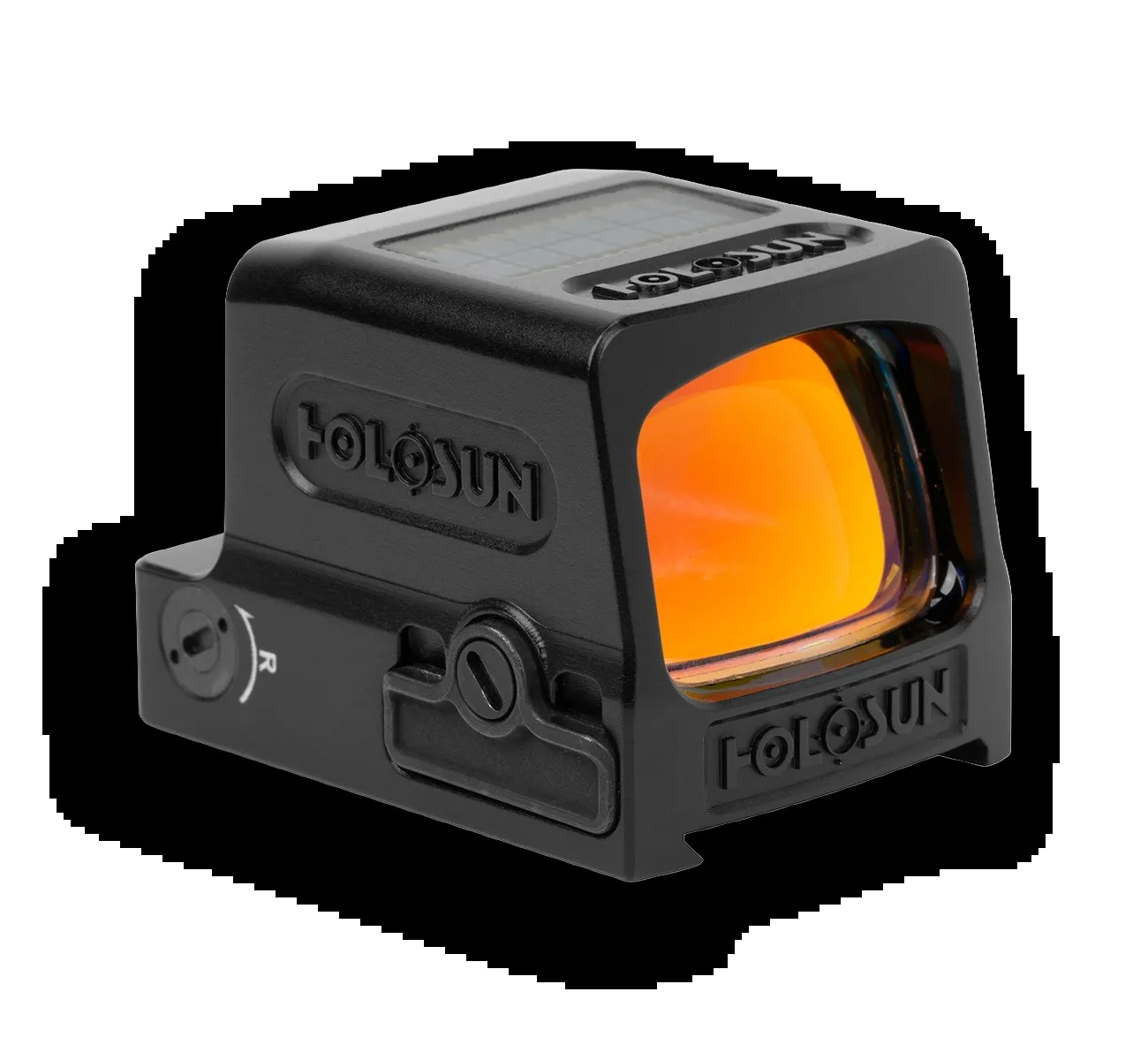
If you want to stay in the enclosed-emitter category rather than trade down to an open reflex, a few sights compete directly with the RCR. The Aimpoint ACRO P-2 is the closest match: it runs on both pistol and carbine, it carries the same premium price tag, and its reliability reputation is right there with Trijicon’s. The Holosun 509T X2 is the other premium enclosed pistol dot we would put in the same conversation, with a A premium housing metal that is stronger than either aluminum grade and effectively corrosion-proof, with excellent strength-for-weight. Found on high-end enclosed optics like the Holosun 508T and 509T.Full comparison → housing and a solar failsafe the RCR does not offer. The Steiner MPS belongs on the cross-shopping list too, though we have not published a review of it yet.
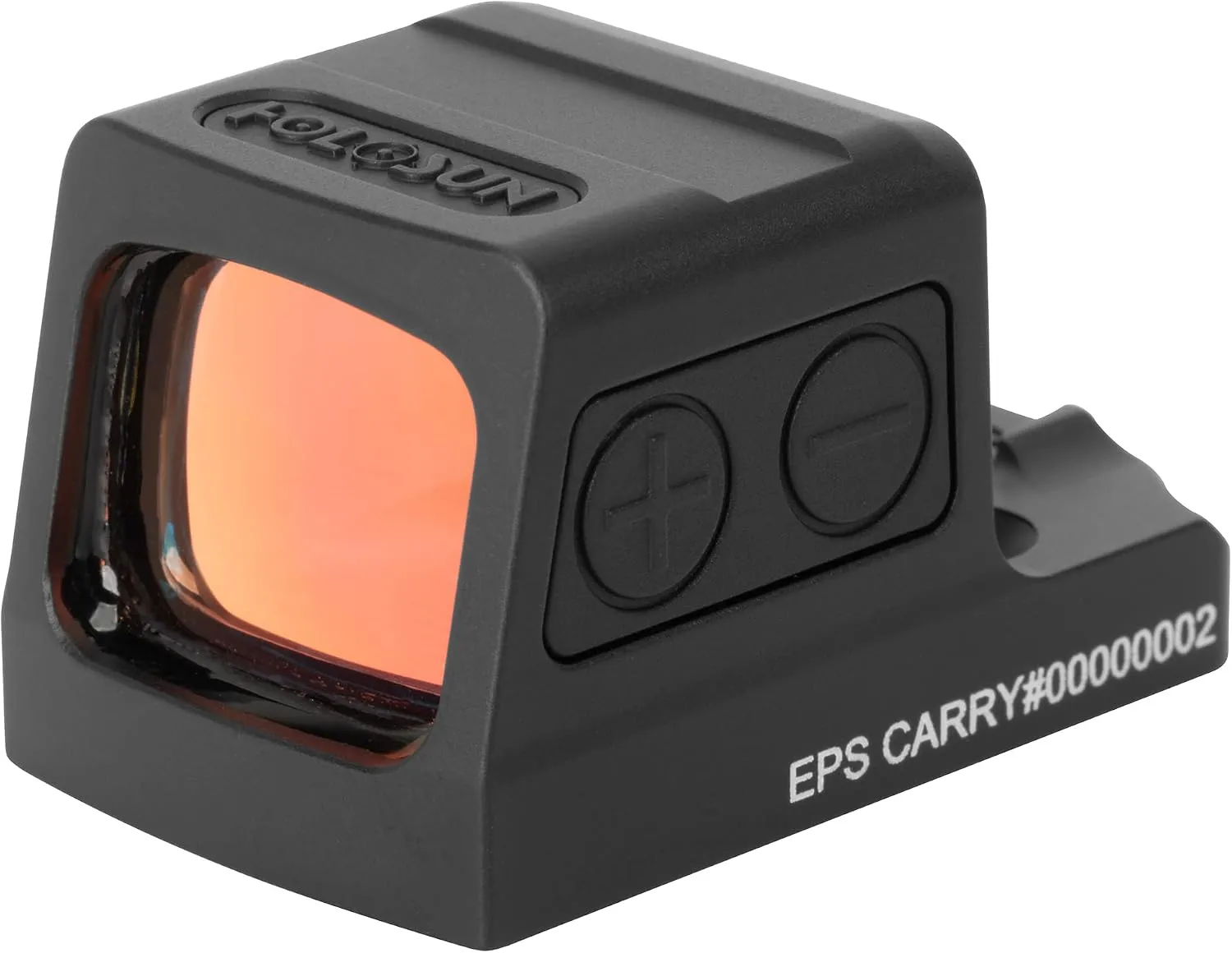
Want the sealed emitter without the duty-optic price? The Holosun EPS Carry is the enclosed option we point carry shooters toward when the RCR’s premium is more than the job calls for. It is smaller, lighter, and roughly half the money, with a correspondingly shorter track record on hard-use duty guns.
If you would rather trade the sealed channel for a lighter build on the same bolt pattern, the Trijicon RMR remains the open-emitter original the RCR is built from, and it is the one open-emitter alternative we think is worth cross-shopping directly against the RCR.