
Can you get real Aimpoint reliability without paying flagship money? Shooters have been asking that for years, and the Duty RDS is Aimpoint’s answer. Released as a working-rifle optic and now a staple on duty and home-defense guns, this compact reflex sight lists at $514 while carrying the same ruggedness pedigree that made Aimpoint the originator of the category.
In this review we will take a complete look at what makes the Aimpoint Duty RDS a compelling pick for the working rifle: the top features, the full spec sheet, and the pros against the cons. We will also share what other shooters have to say about the sight and point you toward a couple of alternatives at other price points.
Aimpoint Duty RDS Review
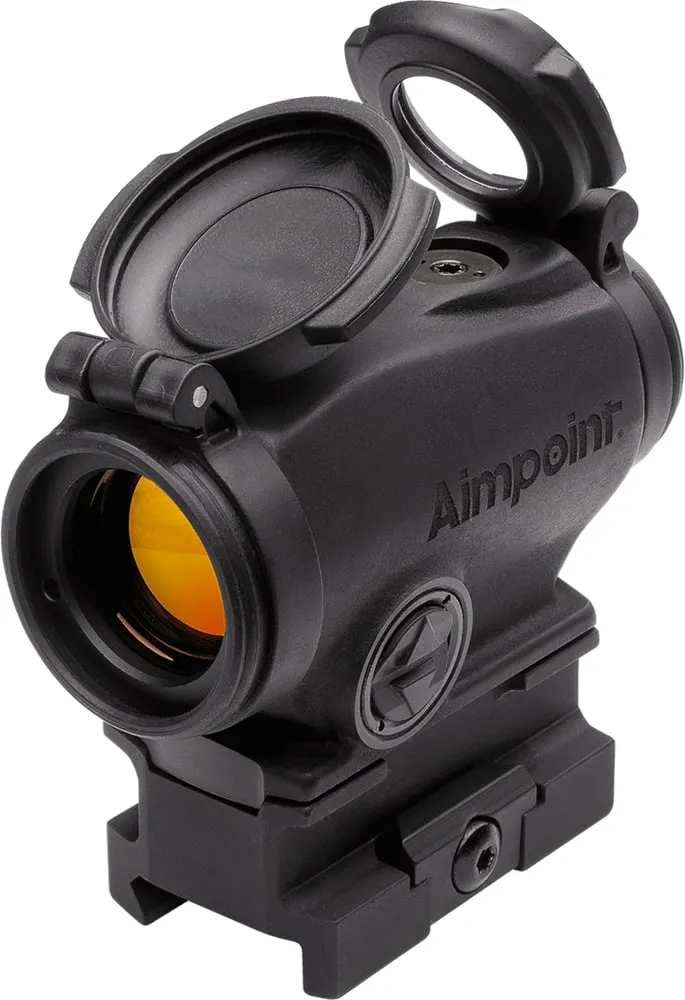
The Aimpoint Duty RDS is a rugged, compact reflex sight built on Aimpoint’s Micro footprint, with an aluminum housing and a 2 Minute of Angle (MOA) LED projected red dot reticle. Powered by a single A 3-volt lithium coin cell, 20mm across, and the most common red dot battery (about 210 to 240 mAh). Stocked almost everywhere, so a field swap is easy.Full comparison → lithium battery, the optic delivers an expected 30,000 hours, over three years, of constant operation at brightness setting 7. The sight weighs 3.8 oz on its own and roughly 5.6 oz once the included one-piece torsion nut mount is attached, with a sight body measuring about 2.7” x 1.5” x 1.7”. The featured configuration (model 200759) ships with Aimpoint’s 39mm one-piece torsion nut mount and spacer included (39mm refers to the mount height, setting the optic for a lower-third co-witness), so it is ready to bolt to a Picatinny rail for rifle and carbine duty straight out of the box.
Aimpoint AB is the recognized originator of the red dot sight. The Swedish company introduced the technology back in 1975 and has fielded optics in military service since 1997. The Duty RDS takes that proven engineering and packages it for law enforcement, patrol rifles, and serious civilian shooters who want a trustworthy optic without paying the premium of the Micro T-2. Aimpoint’s US store lists it at an MSRP of $514.
Top Features of the Aimpoint Duty RDS
Design
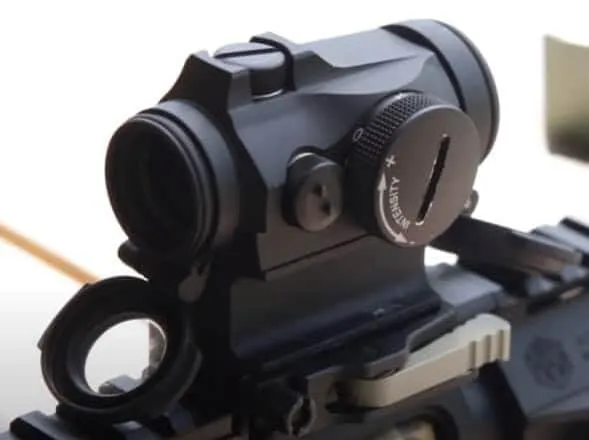
The Duty RDS is a compact reflex sight built from pressure-forged aluminum alloy with a hard-anodized, non-glare black finish that resists scratching and shrugs off contact with solvents and lubricants. Built on Aimpoint’s Micro footprint, it keeps a small, light form factor (3.8 oz for the sight alone) while the included full-height mount lifts it to a usable cheek-weld height on an AR.
At roughly 2.7 inches long by 1.5 inches wide by 1.7 inches tall for the sight body, the Duty RDS stays trim on its own. It is the included full-height mount that adds the bulk and weight over a bare micro optic. Aimpoint rates the sight as submersible to 80 feet (25 meters) and built to its standard shock and vibration tolerances, so water and dust intrusion are a non-issue. The optic is also rated across a wide operating temperature band, from well below freezing to extreme heat.
The multi-coated lenses are tuned for light transmission and dot clarity. Tactical Hyve found the reticle clarity as good as any other Aimpoint; The Firearm Blog’s tester thought it might be slightly bluer than the T-2’s, which mattered most in low light.
Reticle
The Aimpoint Duty RDS uses a single 2 MOA red dot reticle produced by a red Light-Emitting Diode (LED). The 2 MOA dot is the do-everything size: fine enough for precise shots at distance, yet fast to pick up for close-range work with both eyes open. It is a popular sweet spot on a duty or home-defense carbine, precise enough for a doorway shot yet quick enough to find under stress.
The sight offers 11 brightness positions in total: one off position, 6 daylight settings, and 4 night vision (NV) settings. That spread covers everything from bright midday glare down to the dimmest low-light conditions paired with night vision gear.
Operation
Brightness is controlled through a digital push-button keypad rather than a rotary dial. Some longtime Aimpoint shooters prefer the classic rotary switch, but the plus and minus buttons are sized to work with gloves on, and they make stepping through the daylight and NV settings quick and intuitive.
Powered by a single CR2032 3V lithium coin battery, the Duty RDS delivers approximately 30,000 hours, over three years, of constant operation at daylight setting 7, thanks to Aimpoint’s Advanced Circuit Efficiency Technology (ACET) low-power diode circuitry. Owners can realistically leave the optic on and ready for years at a time, then swap the inexpensive battery on a yearly schedule for peace of mind.
Windage and elevation adjustments are made in 0.5 MOA increments, translating to a half-inch point of impact (POI) shift at 100 yards per click, with audible, tactile clicks when zeroing. The turrets are flush-mounted and An optic's Ingress Protection (IP) code from IEC 60529: the first digit rates dust (0 to 6), the second rates water (0 to 8). A digit shown as X was simply not tested.Full comparison →, so there are no protective caps to remove or lose: a genuinely practical touch for a duty optic.
Reliability standing
Aimpoint Duty RDS (2 MOA)
Low confidence based on 6 sources, 3 first-hand.
- Battery
- CR2032: 30,000 hours (over 3 years) of constant-on use at daylight position 7, and longer on the 4 night vision settings (Aimpoint).
- Warranty details
- Aimpoint factory warranty: 10 years personal use and 2 years professional / competition use against defects in material and workmanship; non-transferable, voided by disassembly (manufacturer-stated).
What those tests were
- range, qualification and patrol use: pass . Chad Thompson (The Armory Life) zeroed the Duty RDS on a 5.56 SAINT Victor, qualified with a clean 100% on a day and night course, then carried it on patrol in North Carolina through some extreme weather without kid gloves; he says it held up extremely well. No high-round or abuse test.
- range use: pass . Dorr Overby (Tactical Hyve) used the Duty RDS for a few months and wrote that it had held up great, the dot stays parallel and does not shift during use, and it kept its zero once sighted in. No round count or abuse test.
Aggregated from others' first-hand testing, not our own: this standing deliberately reaches past any one shooter's round count. We surface a sourced reputation tier rather than inventing a score the evidence cannot support.
Full reliability data →Warranty standing
Aimpoint warranty
10-yr housing, 10-yr electronics, non-transferable
- Housing
- 10 yrs
- Electronics
- 10 yrs
- Transferable
- No
- Receipt required
- Yes
- Registration
- No
- Support
- active
Aimpoint sets two warranty periods by use, both counted from the date of purchase: 10 years for personal use and 2 years for professional or competition use, against the same defects in material and workmanship. Its US warranty page defines personal use as normal civilian or recreational activities, and professional or competition use as professional applications (military or law enforcement) or shooting competitions. Its global warranty page defines professional or frequent competition use as daily or highly frequent use in professional activities (military or law enforcement) or under conditions comparable to professional use.
Mounting
Unlike Aimpoint’s micro sights, the Duty RDS comes with a mount in the box. The included one-piece torsion nut mount attaches to any standard Picatinny / MIL-STD-1913 rail and pairs with a spacer to set your preferred height. The featured 39mm-height mount sets the optic at a lower-third co-witness with most AR-pattern iron sights, getting you on the rail and zeroed without a separate mount purchase. (The 39mm and 30mm figures on the two Duty RDS SKUs are mount heights, the height of the optical axis, not a body or tube diameter.)
For shooters who want an absolute co-witness, Aimpoint also offers the Duty RDS as a separate SKU with a lower 30mm-height one-piece torsion nut mount instead. Either way, the torsion nut design clamps securely and returns to zero reliably. If your platform is a pistol rather than a rifle, you are looking at a different footprint entirely, an open-emitter, slide-mounted design instead of this tube-style rifle dot. The Vortex SPARC AR stays in the same tube-style, rifle-ready category as the Duty RDS if you want a mid-tier comparison point, though Vortex has discontinued it, so expect leftover stock.
Details
Included with your purchase:
- Aimpoint Duty RDS (200759)
- One-piece torsion nut mount
- Mount spacer
- Flip-up front and rear lens covers
- CR2032 battery
- T10 Allen wrench
What Testers Reported
Published testing of the Duty RDS is short but finds no fault. Chad Thompson (The Armory Life, Springfield Armory’s site, June 2023, on a rifle Springfield sent) was hitting well within 40 rounds, shot a best five-shot group of 3/4 inch, qualified with a clean 100% on a day and night course, and carried it on patrol through some extreme North Carolina weather; he removed and remounted the sight and it returned to its original zero. Dorr Overby (Tactical Hyve, June 2023) used it for a few months and says it held up great and kept its zero once sighted in. Neither ran an abuse or high-round test.
On the glass, Overby found the reticle clarity as good as any Aimpoint he has used. Luke C. (The Firearm Blog, January 2024) found the T1, T2, PRO and Duty looked identical, but says the PRO’s and Duty’s glass might have a slightly bluer tint that does not matter in daylight and has a large effect in low light, and that the Duty tended to develop a halo around the edge of the window. The FBI chose the Duty RDS for its Red Dot Sights and Mounts Program after testing competing optics. The 30,000 hour battery and 80 foot submersion ratings are Aimpoint’s; no tester pushed them.
Pros & Cons
Pros
- Chosen by the FBI after testing, at a $514 list price with mount included
- 30,000-hour battery life on a single CR2032: over three years of constant-on operation at setting 7
- Full night vision compatibility: 4 NV settings work with all generations of night vision devices
- One-piece torsion nut mount and spacer included in the box: ready to mount out of the package
- Flush, capless windage and elevation turrets that are waterproof and stay put, with no caps to lose
- Submersible to 80 feet and built to Aimpoint's shock and vibration standards
- Crisp 2 MOA dot for fast both-eyes-open shooting
Cons
- Heavier and bulkier than micro-style optics like the T-2 once the full-height mount is installed
- Digital push-button controls instead of the rotary dial some Aimpoint shooters prefer
- 30,000-hour rating trails the 50,000 hours of the pricier Micro T-2
Conclusion
The Aimpoint Duty RDS is a no-nonsense workhorse that brings the brand’s proven reliability to a price point far more shooters can reach. With a 30,000-hour battery, full night vision compatibility, capless waterproof turrets, and an included mount, it is one of the easiest duty-grade red dot recommendations we can make for a duty or home-defense rifle.
Alternative(s)
If your budget can stretch further and you want the smallest, longest-running Aimpoint, step up to the Aimpoint Micro T-2 with its 50,000-hour battery and submersible micro housing. Think of it as moving up a weight class: same fighter, more endurance, higher price of admission.
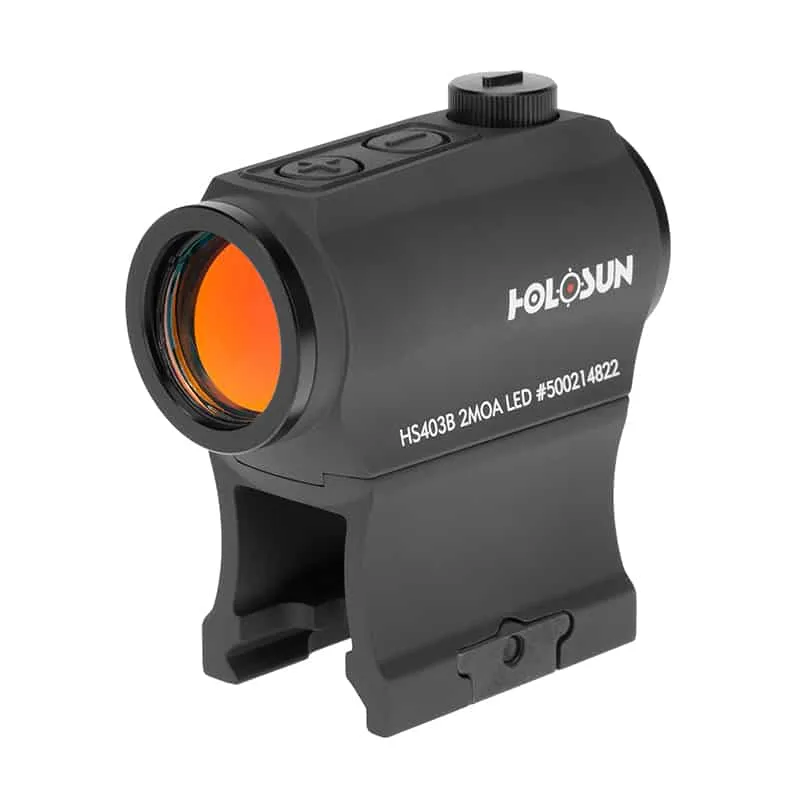
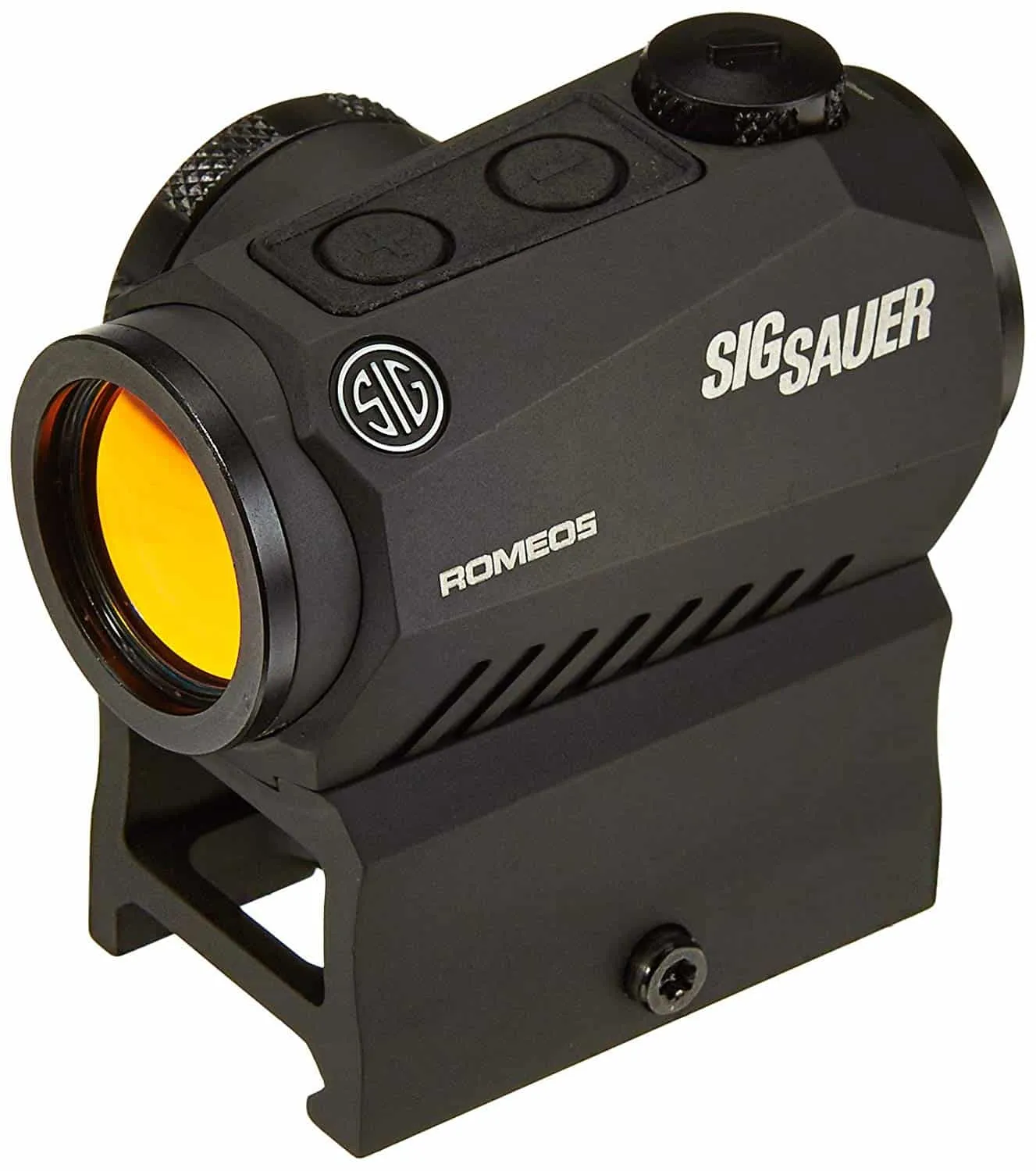
If you need to come in well under the Duty RDS price, the Holosun HS403B was a reliable, lower-priced tube sight that punched above its weight before Holosun discontinued it (leftover or used units only now), and the Sig Sauer Romeo5 (now replaced by the Romeo5 Gen II, which we have not reviewed) is another rifle-ready option that undercuts the Duty RDS on price while still delivering a 40,000-hour battery. Either one is a fine call for a range gun or a first AR build. If you want another tube-style option at a similar mid-tier price, the Vortex SPARC AR is worth cross-shopping too, as a leftover or used unit now that Vortex has discontinued it. But for a rifle that has to work every time, on duty or at home, the Duty RDS is a sight that earns its keep.